Knitted trainers a sign of the future

Managing IP is part of Legal Benchmarking Limited, 1-2 Paris Gardens, London, SE1 8ND

Copyright © Legal Benchmarking Limited and its affiliated companies 2026

Accessibility | Terms of Use | Privacy Policy | Modern Slavery Statement

Knitted trainers a sign of the future

Case of the Year 2012: Nike v Adidas

flyknit.jpg

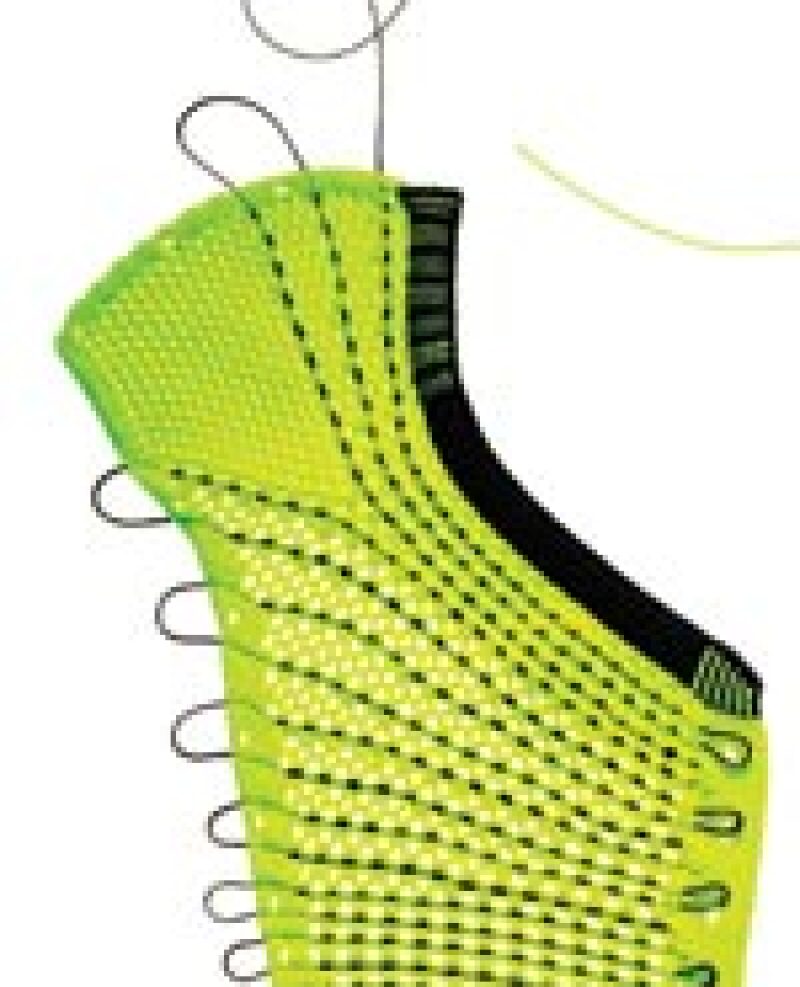
Sportswear manufacturers own a lot of patents, but rarely sue each other. "It's just like the car industry here," says a German patent lawyer. "Generally they cross-license, settle or learn to live with the infringement. It is not litigious." A case between Nike and adidas might see that change in the sportswear industry. Both companies sell a shoe made with a knitted upper part to it – to increase flexibility and reduce the number of seams needed. Nike introduced its first, the Flyknit, at the beginning of 2012 and adidas followed a few months later with the Primeknit.

Nike sued adidas in Germany for infringing a European patent covering the knitting process (which involves melting the polymer material slightly), and won an ex parte injunction in September. That was lifted the following month, though Nike says it will continue with the case.

As sportswear companies begin to include more technology in their products – including innovative materials, chemical compounds and apps that analyse your workout – this could prove to be the first battle in a long patent war.

This case was selected as one of Managing IP’s Cases of the Year for 2012.

To see the rest, click on one of the cases below.

The 10 cases of the year

A fillip for the EU pharmaceutical sector

Relief for trade mark owners in red sole saga

Australian TV streaming service held to be illegal

Smartphone war hits front page in the US

Liberalising the EU’s software market

India allows parallel imports

Victory for fair dealing in Canada

Lacoste loses its trade mark in China

Google prevails in Android attack

EU test case clarifies class headings

Ten you might have missed

Canada: Ambiguous claims can invalidate patents

Russia: Certainty on parallel imports

Italy: TV formats win copyright for the first time

First FRAND cases litigated worldwide

Monsanto loses in Brazil

Data exclusivity backed by Mexican courts

China: A shift over OEM manufacturing

Authors in the US able to reclaim joint copyrights

Germany: Knitted trainers a sign of the future

India: Financial Times loses trade mark

more from across site and SHARED ros bottom lb

More from across our site

Yossi Sivan explains how Israeli judgment is a pro-brand owner departure from the norm and why it sends a strong message that corporate structures are not always a shield
Halim Shehadeh, group CEO of IP firm CWB, says that in the rush to discuss what AI can do, IP firms are overlooking the more important question of whether they are ready
Caitlin Heard, who formally joined the firm from CMS last month, says she is excited by the ‘energy’ of the London office
Ranjna Mehta-Dutt, who moved to Chadha & Chadha after 25 years at Remfry & Sagar, says the firm plans to expand its life sciences practice through targeted recruitment and dedicated teams for bigger clients
The initial contempt of court claim targeted Stobbs and the firm’s client for allegedly interfering with the administration of justice
Acquisition of platform developed by Boehmert & Boehmert lawyer set to create a combined platform for patent drafting and prosecution in Europe
Partner Rob Jacob unveils plans to offer a beginning-to-end trademark service, how to make prosecution profitable, and why IP ‘buy-in’ from the CEO stands the firm in good stead
Attorneys at Di Blasi, Parente & Associados share how the protection of trade secrets strengthens innovation by bringing together legal practice, regulatory developments, and established international references
Jin Ooi, who joins as a partner today, said he is excited to offer a ‘rounded’ IP service as the firm deepens its litigation expertise in the UK and Europe
As generics celebrate, practitioners believe innovator companies should brace for an ‘uphill battle’ when trying to prove induced infringement
Gift this article