A summer of secrets
This summer, in Beijing, Brussels and Washington DC, politicians are discussing trade secrets.
As our Asia editor Peter Leung reported on Friday, a first draft of a revision to China’s trade secret law will be submitted later this month. The country has been looking to enhance protection for trade secrets, and last year a Shanghai court issued the first preliminary injunction against a defendant in a trade secrets case.
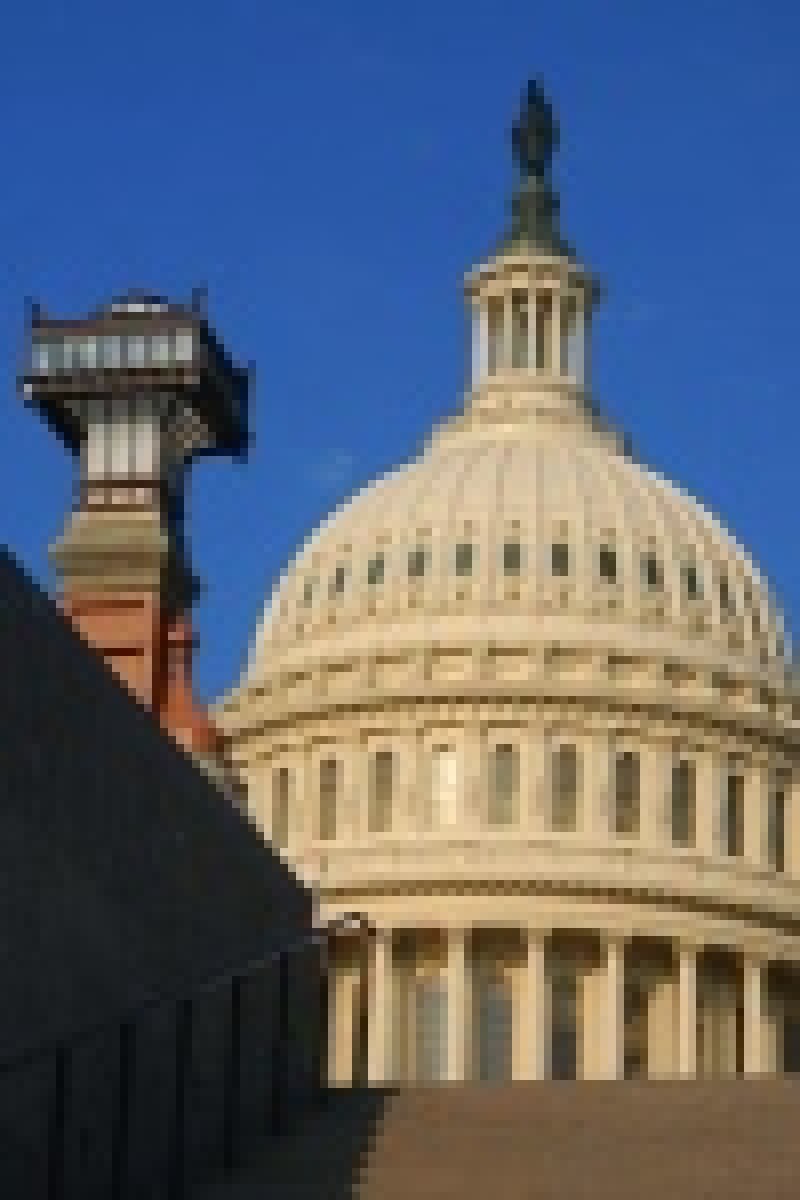
Meanwhile, in the United States, both houses of Congress (right) have introduced federal trade secrets bills that would update the Economic Espionage Act to provide stronger protection beyond state boundaries.
Finally, in Europe, the Commission published a draft directive on trade secrets in November last year, and the Council of the EU stated its position on the topic on May 26. The European Parliament is expected to debate the draft in the autumn, with some speakers at a recent conference I attended predicting that a directive will be adopted early next year. Member states will then probably have two years to implement it.
Why is it happening now?

It may just be coincidence that the world’s largest economic areas are all discussing trade secrets reform at the same time. But there are at least three common themes in the efforts.
First, many businesses place increasing value on data that cannot easily be protected by other IP rights. But that data can also easily walk out of the door in a single email, USB download or over an unsecure network (a downside of bring-your-own-device (BYOD) policies). So definitions have to be re-thought. In China, for example, the proposals seek to address how to prove that information was kept secret. In the US, as Aaron Cooper told us, the bills seek to balance the need for quick action with protecting innocent third parties.
Second, how do you prove misappropriation? At our recent China International IP Forum in Beijing (left), speakers discussed the challenges of establishing trade secrets claims in countries such as China and Japan where it can be hard to obtain relevant documents. As more valuable corporate assets exist in the form of information, it is vital to be able to show when they have been taken.
Third is the desire for harmonisation. The EU directive is explicitly designed to harmonise protection in the 28 member states, in the words of the EU Council to create “a single, clear and coherent regime”. In the US, as our Americas editor Michael Loney explains, there is no federal civil remedy to protect trade secrets, though 48 states have adopted the Uniform Trade Secrets Act, and the bills in Congress would remedy that.
Protection across jurisdictions is key for today’s information-rich businesses, where data can be transferred across borders in milliseconds. In fact, for many companies, pan-US or pan-EU harmonisation will not go far enough: the dream would be a treaty that defines trade secrets, sets out minimum levels of protection and provides guidance on remedies worldwide. That, however, will surely remain a dream for a generation at least.
Reform may be controversial
Don’t underestimate the possibility of opposition to these proposals. Post-Wikileaks and Snowden (right), many people have concerns about who controls data (see our article on the TPP). They will want to see safeguards for whistleblowers as much as big business wants to see fences placed around valuable information. There could yet be some big fights as these legislatives proposals are further debated, and it may take a while before any reform is passed.
In some cases, though, that may not matter too much. While there are examples of large-scale corporate espionage, much trade secrets misappropriation takes place at the individual level, at least according to some of the speakers I heard at the conference mentioned above. It may not please lawyers to hear it but education, technical tools, simple employee checks, preventative measures such as reporting hotlines and simple, clear contracts may all be more important in the long term than new legislation in keeping secrets safe.