
The result
Louboutin’s mark was reinstated but limited, and YSL did not infringe
The impact
Single colour trade marks are permissible in fashion
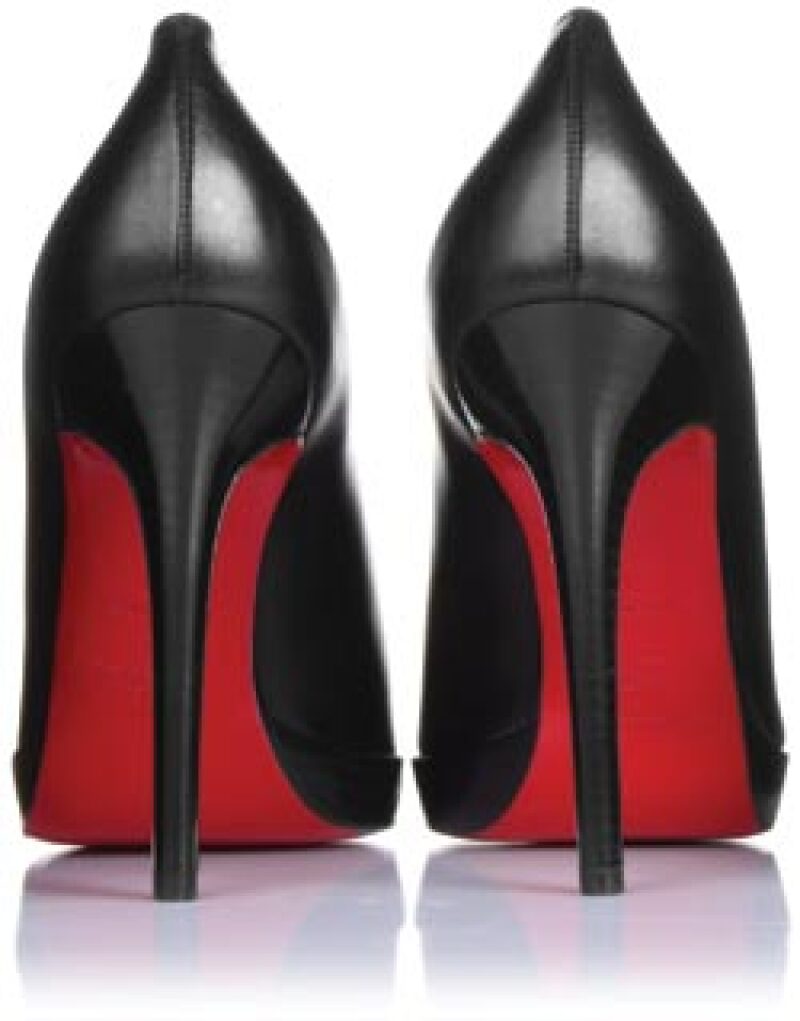
Both Christian Louboutin and Yves Saint Laurent claimed victory after a US appeals court reinstated Louboutin's red sole trade mark but ruled that YSL did not violate it with a monochromatic red shoe.
The second circuit decision reversed a district court ruling from August 2011, which invalidated Louboutin's trade mark because "a monopoly on the colour red would impermissibly hinder competition among other participants".
The dispute addressed the question of when a single colour trade mark crosses the line into a functional element of a design. This hotly debated issue, and the two prominent adversaries, made it one of the most closely watched cases of the year.
The dispute began in April 2011,when Louboutin sued YSL for trade mark infringement. After district court judge Victor Marrero cancelled the red sole mark, Louboutin appealed to the second circuit.
YSL counterclaimed for tortious interference with business relations, alleging that its rival persuaded department stores not to stock YSL's shoes. YSL also claimed that the red sole mark should be cancelled because colour is a functional element of design, and thus ineligible for trade mark protection.
Louboutin was supported by amicus briefs from parties including INTA and jewellery retailer Tiffany's, which is famous for its blue boxes. Both were concerned that the district court's ruling would be disadvantageous to fashion brand owners, since single colour marks had been ruled permissible in other industries.
The case also clarified the controversial and somewhat obscure aesthetic functionality doctrine. In the original ruling, Marrero said that in fashion, colour is a useful aesthetic feature of design and therefore always functional. Citing the US Supreme Court's decision in Qualitex v Jacobson Products, he concluded that colour could therefore not receive trade mark protection in fashion.
However, the second circuit found that the Qualitex decision could not be interpreted to create industry-specific rules, and that functionality should be examined on a case-by-case basis.
The court concluded that the red sole had acquired limited secondary meaning "as a distinctive symbol that identifies the Louboutin brand". It reinstated the mark, but limited it to a red outsole with a contrasting upper.
The court did not rule on YSL's counterclaims concerning functionality and tortious interference with business relations. YSL later dropped the counterclaims.
Trade mark owners were reassured that single colour trade marks were permissible in fashion. However, the limitations placed on Louboutin's mark suggested that brand owners should avoid being too broad in their claims concerning single colour marks.
The case also served as a warning to trade mark owners to think carefully before suing for infringement. Having initiated the litigation, the Louboutin brand reaped the disastrous consequence of having its mark invalidated by the district court before the second circuit reinstated it.
Finally, brand owners were reminded of the importance of registering a mark as early as possible. Louboutin had been using the red sole since 1992, but the trade mark registration was not sought until 2007.
Case details |
| Louboutin v YSL Design office: United States Design number: 3361597 Design holder: Christian Louboutin Other party: Yves Saint Laurent Court: Court of Appeals for the Second Circuit Case number: 11-3303-cv For Louboutin: McCarter & English For YSL: Debevoise & Plimpton |
This case was selected as one of Managing IP’s Cases of the Year for 2012.
To see the rest, click on one of the cases below.
The 10 cases of the year
A fillip for the EU pharmaceutical sector
Relief for trade mark owners in red sole saga
Australian TV streaming service held to be illegal
Smartphone war hits front page in the US
Liberalising the EU’s software market
Victory for fair dealing in Canada
Lacoste loses its trade mark in China
Google prevails in Android attack
EU test case clarifies class headings
Ten you might have missed
Canada: Ambiguous claims can invalidate patents
Russia: Certainty on parallel imports
Italy: TV formats win copyright for the first time
First FRAND cases litigated worldwide
Data exclusivity backed by Mexican courts
China: A shift over OEM manufacturing
Authors in the US able to reclaim joint copyrights



