
Starbucks coffeehouses can be found in myriad regions of the globe. However, Starbucks' trajectory in Russia has not been easy. Even prior to 2000, Starbucks had its sights on Russia, noting its affection for lattes and cappuccinos. It even registered its trade mark there. However, the trade mark was not used for several years for some reason.
A far-sighted Russian trade mark squatter seized this opportunity and registered the trade mark in the name of his company Starbucks Ltd, set up specifically for the purpose of squatting. Starbucks Ltd was a paper company. It had no inventory or personnel. It did not consist of anyone except its owners. As soon as the real Starbucks stepped on to Russian territory, it was confronted by the squatter who demanded $600,000 for the return of the trade mark. Unlike other companies which prefer to pay up, Starbucks preferred to fight and managed to cancel the pirated trade mark at the Russian office.
Starbucks capitalised on the successful outcome and registered a chain of trade marks that include word elements. These are:
No 349070, priority February 19 2007

No 336367, priority August 1 2006

No 323308, priority August 10 2004

No 325164, priority August 10 2004
No 323307, priority November 19 2002

No 323304, priority April 2 2002
No 254933, priority December 24 2001
As is evident, the trade marks are mostly similar (differing in font or in colour) or registered for different kinds of goods. As they say, once bitten, twice shy: Starbucks protected itself against any kind of mishap.
A little while later the precaution proved to be wise. A trade mark application for "One Bucks Coffee" was filed in 2016.
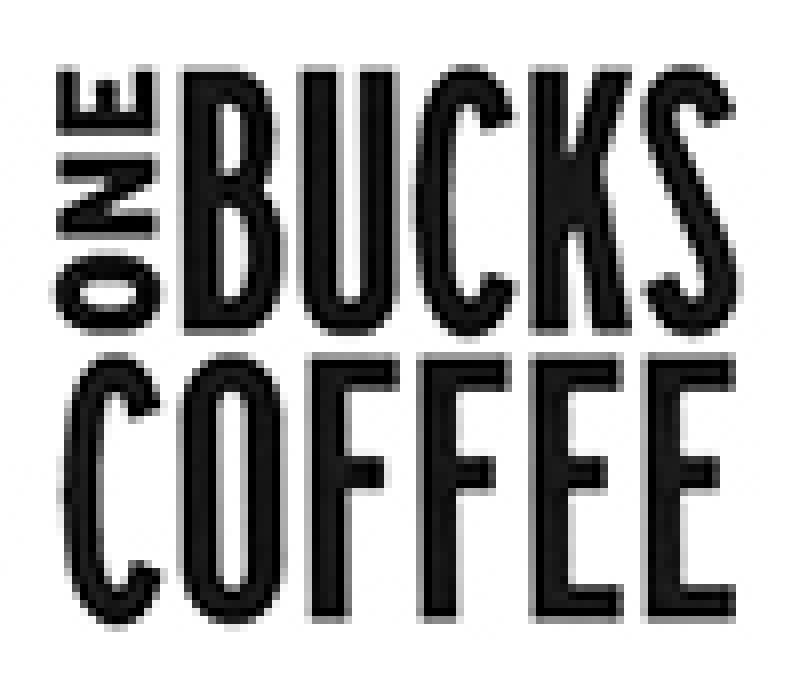
The patent office refused registration citing the chain of Starbucks trade marks. The applicant appealed the decision of the examiner at the Chamber of Patent Disputes. The Chamber supported the rejection of the registration. It stated that the basic individualising function in the trade marks is in the words. The words are easily remembered by the consumer. His perception of the trade mark begins with the word. The basis for the rejection was that the claimed designation is confusingly similar to the series of trade marks that include word elements STARBUCKS COFFEE registered in the name of Starbucks Corp., USA in respect of similar services in Classes 42 and 43. The claimed designation contains the words ONE, BUCKS and COFFEE while the cited trade marks contain the words STARBUCKS COFFEE.
When the consumer perceives the claimed designation he fixes his attention in the first place on the words BUCKS and COFFEE written in large font in the central part of the designation while the word element ONE is located vertically in the top left part of the designation. As a result of this, the attention of the consumer is less directed to it.
The word elements of the claimed designation, BUCKS and COFFEE, form part of the cited trade mark STARBUCKS COFFEE. They sound the same phonetically.
Even though the cited trade marks differ in their initial part, i.e. they contain the element STAR, the remaining part of the word designation sounds much longer, BUCKS COFFEE. As a result, eight out of twelve sounds in the compared designations coincide. The sounds follow in the same sequence which leads to an identical aural perception of the compared designations.
It is not possible to compare the meaning of word elements ONE and BUCKS with the coined word STARBUCKS cited against the claimed designation.
The Chamber also examined the criteria of visual similarity of the designations. According to the appellant some of the cited trade marks contain a stylised image of a woman with a crown on her head which creates visual differences between the registered trade marks and the claimed designation. The Chamber agreed with that argument. However, it pointed out that when comparing the designations, the Chamber proceeded from the first impression that those trade marks produce on the consumer. That impression is similar and is based on the similar sound of the word elements ONE BUCKS COFFEE and STARBUCKS COFFEE.
Based on the above information the Chamber of Patent Disputes came to the conclusion that the claimed designation and the cited trade marks are similar despite the difference that exists in some elements.
The Chamber of Patent Disputes also took into account the fact that the owner of the cited trade marks is Starbucks Corporation founded in 1971 and represented in more than 50 countries. By 2017 Starbucks had opened more than 100 coffeehouses in several cities (Moscow, S-Petersburg, Ekaterinburg, Rostov-na-Donu, Samara and many others).
The established presence of the company in the market, the scope of its products and the coverage of the territory which its products and services span under the STARBUCKS designation demonstrate the fame of the Starbucks Corporation in Russian territory. From this an obvious conclusion follows: the wider the fame and reputation of the trade mark, the more probability there is that the use of a similar designation will cause confusion.

|
Vladimir Biriulin |
Gorodissky & Partners
Russia 129010, Moscow
B. Spasskaya Str
25, stroenie 3
Tel: +7 495 937 6116 / 6109
Fax: +7 495 937 6104 / 6123






