Firm

IP firm's new base will be located inside the tallest office space in the UK's ‘second city’

Practitioners at four firms across Asia and Europe share the do’s and don’ts of mindful networking ahead of the INTA Annual Meeting

Attorneys at Gibson Dunn share why plaintiffs’ growing reliance on DMCA anti-circumvention claims in AI scraping cases exposes a critical vulnerability

US law firms highlight litigation profitability and client demand as driving forces behind a boom in lateral hires in the life sciences sector
Sponsored
Sponsored
-
 Sponsored by Liu, Shen & AssociatesXiaoming Zhang of Liu Shen & Associates takes a closer look at the Draft for Comments to the Patent Examination Guidelines and discusses its positive approach towards AI-related applications
 -
Sponsored by Vivien Chan & CoExperts from Vivien Chan & Co report on significant developments from the IP world across China and the Asia-Pacific
-
Sponsored by Griffith HackKaren Sinclair and Sarah Cox of Griffith Hack review the Australian federal government’s budget measures for R&D, innovation, and medical technology funding
-
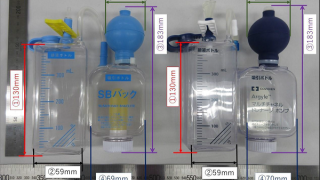
Sponsored by ABE & PartnersSumitomo Bakelite has manufactured and sold each device comprising a portable and disposable device for continuous low pressure suction or a set of these devices (collectively SB Bag) with the product name "SB Bag" since 1984. Those consisting of a drainage bottle and a suction bottle in SB Bag are the relevant products belonging to Sumitomo Bakelite in this case. Nippon Covidien has manufactured and sold its product since January 2018.
-
Sponsored by Hanol IP & LawKorea Seed Industry Act (KSIA) and its Implementing Regulation, effective as of June 19 2020, a person who intends to sell propagating materials of certain types of foreign plant varieties should report this fact to the Ministry for Agriculture Food and Rural Affairs (MAFRA), along with submission of evidence proving that such propagating materials have been "legally obtained" (Article 38 of KSIA, Article 27 of Implementing Regulation thereof). In other words, in order to sell propagating materials of foreign plant varieties in Korea, a seed supplier shall have a duty to prove that he has lawfully acquired the same.
-
Sponsored by Tilleke & GibbinsOctober 31 2020, marked the closing of the public comment period for Thailand's proposed amendments to the Patent Act B.E. 2522 (1979). The Department of Intellectual Property (DIP) had published its latest draft of the amendments on September 30 for the month-long period of public feedback.