Firm

In the second of a two-part article, Gabrielle Faure-André and Stéphanie Garçon at Santarelli unpick EPO, UPC and French case law to assess the importance of clinical development timelines in inventive step analyses

Public figures are turning to trademark protection to combat the threat of AI deepfakes and are monetising their brand through licensing deals, a trend that law firms are keen to capitalise on

Tom Melsheimer, part of a nine-partner team to join King & Spalding from Winston & Strawn, says the move reflects Texas’s appeal as a venue for high-stakes patent litigation
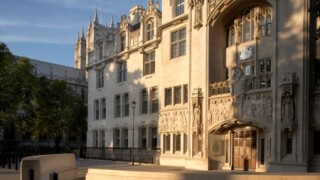
AI patents and dairy trademarks are at the centre of two judgments to be handed down next week
Sponsored
Sponsored
-
 Sponsored by Hechanova GroupOn November 16 2020, the 2020 Revised Rules of Procedure for Intellectual Property Rights Cases (A.M. No. 10-3-10-SC) promulgated by the Supreme Court of the Philippines (SC) took effect. The object of the revised rules is to improve and expedite IP cases recognising that an effective IP system is vital to the development of domestic and creative activity, facilitating transfer of technology, attracting foreign investments and ensuring market access to Philippine products. This is the spirit of the IP Code or Republic Act 8293. The salient points of the revised rules are as follows:
 -
Sponsored by Gorodissky & PartnersAn individual entrepreneur filed a trademark application no 2018755695. The trademark application is a combined designation as below.
-
Sponsored by ABE & PartnersIn the past, Japanese patent litigations were notorious for being slow, having narrow claim interpretation, low damages awards, poor evidence collection procedures, and having a low winning rate. Cases and Materials on Patent Law, Second Edition says, "No countries' patent system has received more criticism than that of Japan. Among the chief complaints is that the courts award patent claims with an extremely narrow scope, and that the Doctrine of Equivalents does not exist at all." Global Patent Litigation: How and Where to Win, Third Edition, edited by Finnegan says that the winning rate of patentees from 2006 to 2016 was 24% in Japan, ranked second from the bottom out of the 10 countries. However, Japanese patent litigation has been reformed and is now transformed in order to be more convenient for patentees than ever before.
-
Sponsored by OLIVARESIt is important not to forget that the Civil Code states that debtors respond to the fulfilment of their obligations with their assets, except for all those assets considered by law as inalienable or which cannot be seized.
-
Sponsored by Griffith HackSoftware and patents have always had a difficult relationship. Around the world, different rules in different jurisdictions create uncertainty for innovators wanting to know if their key innovations can be secured or whether the market is a free-for-all against competitors.
-
Sponsored by Daniel LawIn view of its very large territory, Brazil has always faced many challenges implementing a successful anti-counterfeiting programme. Lack of a uniform approach and the absence of a political will to tackle IP infringements on a large scale were some of the problems that held IP owners back in the past.