

The High Court judge, and copyright specialist (right), argued that international harmonisation, technological change and new business models that have developed since the last UK Copyright Act in 1988 make a new law necessary, and that a holistic approach should be taken.
I don’t think many people, despite the many and varied views on copyright today, would disagree with that.
He also proposed that the best way to develop a new law would be to set up a departmental committee or Royal Commission (as happened with the three previous UK Acts), rather than the individual-led reviews such as those by Andrew Gowers and Ian Hargreaves.
That committee should comprise people with experience in copyright, said Arnold, including at least one academic.
Again, I don’t think anyone would disagree in principle. But the problems begin when you start to think about who should be on the committee.
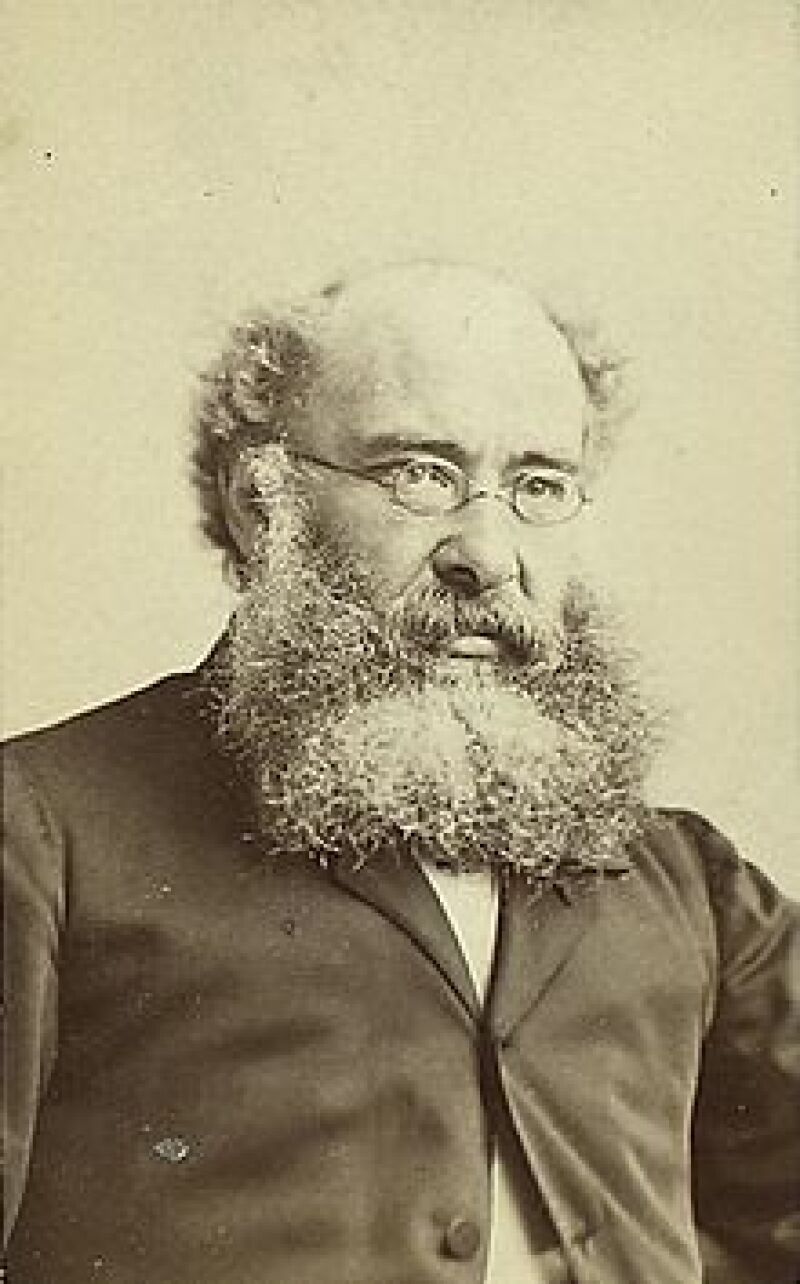
Arnold helpfully provided the names of the members of previous committees during his lecture. Many distinguished figures were among them, such as the writer Anthony Trollope (left) and the physicist Thomas Allibone, as well as lawyers, academics and politicians.
But who would you have on the committee today? Depending on their availability, we could probably identify some senior solicitors, barristers, civil servants and academics and maybe even a judge or two (any names spring to mind?).
The various copyright-dependent industries (film, music, TV, computer games, publishing, broadcasting and so on) would probably also want to be represented. And what about individual creators, such as artists, musicians, authors and poets?
Then it begins to get complicated. Any review today would have to reflect the views of the large technology companies that are affected by copyright laws. Should Google and Amazon be included?

And what about copyright users? Libraries (paradoxically) have a loud voice in these debates, as do students. Should a body like the National Union of Students take part? And what about those who have fundamental criticisms of copyright? I’m sure the Open Rights Group (whose submission in the recent Richemont case was described by Arnold himself as “brief, moderate and helpful”) would like to be involved. Maybe the Pirate Party would too.
This seems to me the challenge of reforming copyright today, compared to a generation ago: before you can consider what reform is needed, or how it is to be achieved, you need to consider whose voice counts.
Presumably the type of committee that Arnold proposes would be able to take submissions and even hear evidence from the kinds of groups I’ve mentioned above. But if some parties are limited to presenting their case, while others have a seat on the body that makes the decisions, there is a risk that any reform proposed would lack credibility and face immediate criticism.




