
supreme20court300.jpg SCOTUS takes on new patent case
The Supreme Court this week heard two trade mark cases, first B&B Hardware v Hargis and, second Hana Financial v Hana Bank, but will soon be turning its attention back to patents.
Today it took on a new IP case, granting cert in Commil USA v Cisco Systems. However, the Court did not grant cert to all questions presented. It said: “The petition for a writ of certiorari is granted limited to Question 1 presented by the petition. Justice Breyer took no part in the consideration or decision of this petition.”
Commil has asked the Court to consider: “(1) Whether the Federal Circuit erred in holding that a defendant's belief that a patent is invalid is a defence to induced infringement under 35 USC § 271(b); and (2) whether the Federal Circuit erred in holding that Global-Tech Appliances, Inc v SEB SA required retrial on the issue of intent under 35 USC § 271(b) where the jury (A) found the defendant had actual knowledge of the patent and (B) was instructed that “[i]nducing third-party infringement cannot occur unintentionally.”
The Federal Circuit had found in June 2013 that the district court gave the jury a legally erroneous instruction with respect to indirect infringement, and also that Cisco’s evidence of a good-faith belief of invalidity may negate the requisite intent for induced infringement. However, it also found that the district court did not err in granting a partial new trial.
Cisco Systems had appealed from the final judgment of the United States District Court for the Eastern District of Texas, which was based on the findings of two separate jury verdicts finding that: Cisco directly and indirectly infringed specified claims of Commil’s 6,430,395 patent; the specified claims of the ’395 patent are not invalid as indefinite, for lack of enablement, or as lacking adequate written description; and that Cisco was liable for $63,791,153 in damages as well as pre-judgment interest and costs.
The ’395 patent relates to a method of providing faster and more reliable handoffs of mobile devices from one base station to another as a mobile device moves throughout a network area.
cisco20logo.jpg Cisco accuses Arista of copying
Another story involving Cisco emerged this week, when it filed a lawsuit against Arista Networks accusing it of both copyright and patent infringement.
The case was filed in the Federal District Court in Northern California, and asks for Arista to withdraw all its main products from the market. Cisco will also likely seek damages.
“We are not a litigious company,” The New York Times quoted Mark Chandler, the compay’s general counsel, as saying. “This was so blatant.”
Jayshree Ullal, Arista’s chief executive, said in a statement: “I am disappointed at Cisco’s tactics.”
The case involves 14 patents, as well as Cisco claiming that Arista’s command line interface, a way of operating its switch, includes more than 500 of the commands used in Cisco gear. Cisco believes Arista did this so it could win over Cisco customers.
us20congress.jpg Reform pushback
This week saw pushback on the calls for patent reform in the US.
At a discussion put on by the Federalist Society for Law and Public Policy Studies, law professor Adam Mossoff said that was no “explosion” in patent lawsuits. Former Chief Judge of the Federal Circuit Paul Michel described the debate around patent reform as “juvenile”, adding that reform advocates use terms like “trolls” and “patent hold-up.”
PCWorld quoted Michel as saying the push for patent reform comes from “massive PR and what I would characterise as propaganda”.
And today, Drinker Biddle & Reath partner Bob Stoll wrote an op-ed in The Hill urging caution.
“Even if the prospects for patent reform seem to have brightened, there is an increasing amount of data that suggest the need for aggressive congressional action has waned. As we look toward the next Congress, it would be wise to take time to fully consider these developments. When it comes to patent reform, it is critically important that Congress deliver solutions using a scalpel instead of a buzz saw.”
Stoll referenced the effect of Supreme Court rulings this year, as well as the Federal Circuit “fixing many of the potholes in the patent superhighway with their recent rulings”.
This week there was also a call for caution in the rush to pass patent reform from this guy.
canada20flag.jpg Canada’s lack of application
A new study has revealed that all Canadian provinces have seen a fall in patent application rates in the past decade.
CBC reports that a CD Howe Institute study reveals that Alberta and Ontario outperform the national average for domestic patent applications per capita. The think tank said that Canadians filed about 25,000 patents a year in the mid-1990s, which increased to about 40,000 in 2007.
However, this figure has now fallen to below 35,000 a year.
The study estimated that up to 40% of Canadian patents are for something the applicant has no intention of using, instead intending to stop somebody else using it.
Nintendo in the news
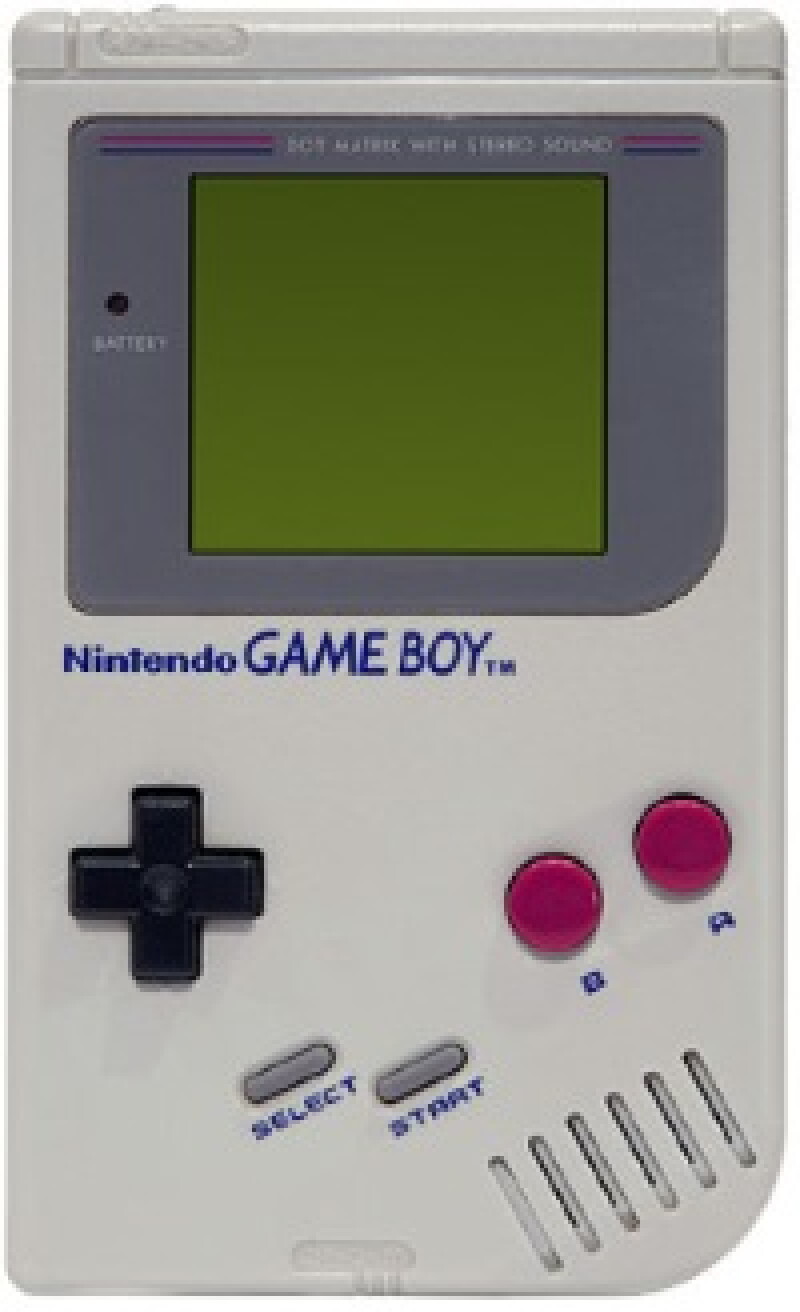
Electronics company Nintendo featured in a couple of IP stories this week.
It resolved its patent disputes with Koninklijke Philips Electronics and agreed a patent licence agreement with the firm. The patent infringement proceedings that Philips had initiated in Germany, the UK, France and the USA against Nintendo’s Wii, Wii U and DS handheld products have ended. Both companies will cross-license portions of each company’s patent portfolio.
It was also revealed that Nintendo is seeking a patent for Game Boy, Game Boy Color and Game Boy Advanced emulators. The patent covers "Hand-Held Video Game Platform emulation". It was filed in June and published by the USPTO on November 27. The application is interesting because it stokes rumours that Nintendo will allow its titles on non-Nintendo hardware for the first time. But, as CNET noted, this latest story probably will not amount to anything soon.
Also on the blog this week:
Business method patent issuance has plummeted since Alice
Don't miss our US IP events next week
Guest post: Has UK copyright reform gone far enough?
Progress on UPC Rules highlights inertia on fees
And in our news and analysis:
Don’t be afraid of bifurcation
Andean Court can rule on questions from IP offices
Sony’s Toshimoto Mitomo: IP monetisation as marketing - interview
Ulmer & Berne hires patent attorney in Cleveland
Novak Druce adds three litigators in California
ASIPI in Mexico City: day 3 report
ASIPI in Mexico City: day 2 report
ASIPI in Mexico City: day 1 report
UK clarifies Patent Box changes
PTAB appeals at Federal Circuit to test boundaries of institution
Shook Hardy & Bacon adds two from Microsoft
Compensation for IP infringement in Ukraine


