
The result
Apple awarded $1 billion in damages in US jury trial
The impact
Spotlight cast on design patents and juries
The startling award in August of $1.05 billion to Apple for infringement by three patents and three design patents by Samsung sparked debate on two issues – one deserved, the other less so.
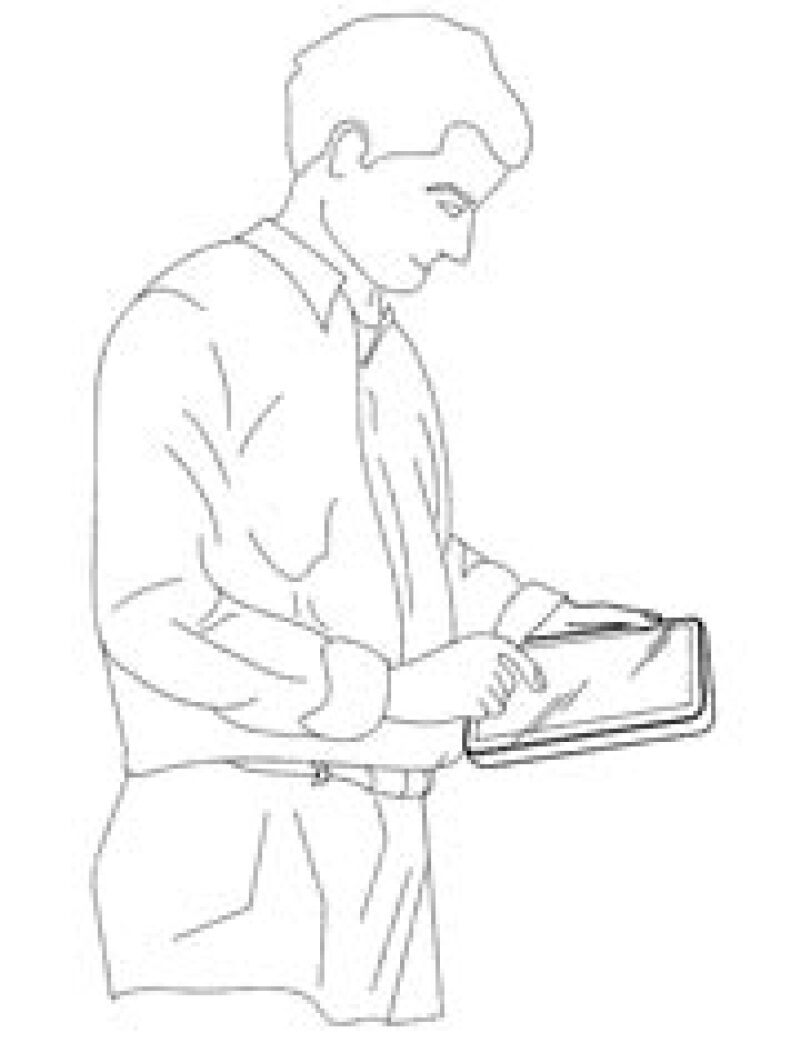
The debate over design patents ignored a fundamental aspect of the case: of all the patents that were found to have been infringed, the only one that was not was the famous D504889 tablet design – the "rectangle with rounded corners" in the words of a Samsung statement. Three others were infringed though, and it was the biggest ever damages award in a US design case.
The second debate, on the importance of juries, was more justified. This was the biggest patent jury case for years, with post-case interviews by foreman Velvin Hogan adding to the focus on those nine men and women.
In his interviews Hogan revealed that the jury was most swayed by discovery documents containing minutes of a Samsung meeting in Korea, which included comments from Google executives expressing discomfort about the similarity of the products to Apple's. In another document, a Samsung VP said the products weren't close enough to Apple's. "You need to move closer," said the VP according to Velvin, who added: "They did move closer, but in moving closer, they crossed the line."
It is perhaps understandable that, faced with technical products and an unsettled area of law, the jury focused on such smoking gun statements. In fact, jury consultant Ronald Beaton of Trial Graphix had predicted to Managing IP in advance of the case that it would play out this way. "Even with a smart jury, cases are sold to juries like houses ‑ on memorable features that stick with you. It's going to come down to emails and documents that clue us in to what Samsung was thinking when designing these devices," he said.
The size of the damages award took most people by surprise, and demonstrated the unpredictability of jury awards in such cases. Although substantially less than the $2.7 billion claimed by Apple, this will be the largest ever patent award if it survives appeal at the Federal Circuit.
While waiting for the appeal, Apple has asked for injunctions against sales of several Samsung products and a further $707 million in damages, following the finding by Judge Lucy Koh that Samsung's infringement was willful. Samsung has asked for a new trial.
Case details Designs |
| Apple v Samsung Patents and design patents: tablet design, and patents for scrolling and scaling text on a touch screen Patent office: United States Patent numbers: 7469381, 7844915, 7864163 Design numbers: 504889, 593087, 618677, 604305 Design/patent holder: Apple Other party: Samsung Court: District Court for the Northern District of California Case numbers: C 11-1846 and C 12-0630 For Apple: Morrison & Foerster (Harold McElhinny) For Samsung: Quinn Emanuel Urquhart & Sullivan |
This case was selected as one of Managing IP’s Cases of the Year for 2012.
To see the rest, click on one of the cases below.
The 10 cases of the year
A fillip for the EU pharmaceutical sector
Relief for trade mark owners in red sole saga
Australian TV streaming service held to be illegal
Smartphone war hits front page in the US
Liberalising the EU’s software market
Victory for fair dealing in Canada
Lacoste loses its trade mark in China
Google prevails in Android attack
EU test case clarifies class headings
Ten you might have missed
Canada: Ambiguous claims can invalidate patents
Russia: Certainty on parallel imports
Italy: TV formats win copyright for the first time
First FRAND cases litigated worldwide
Data exclusivity backed by Mexican courts
China: A shift over OEM manufacturing
Authors in the US able to reclaim joint copyrights






