

Political background
There has long been a strong element of Euroscepticism on the right of British politics, and in recent years the UK Independence Party has achieved some popularity by advocating withdrawal from the EU. (It has one seat out of 650 in the UK Parliament at present, but is better represented in local government and in the European Parliament).
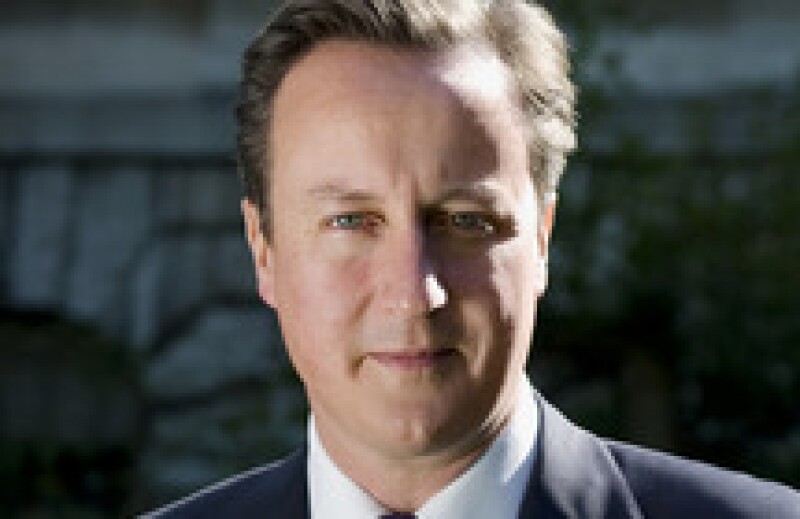
In response, before the UK General Election in May this year, Prime Minister David Cameron promised to renegotiate the UK’s membership of the EU and then hold a referendum before the end of 2017. His party won the election, and he recently set out his four demands for reform in a letter to European Council President Donald Tusk. It’s worth emphasising that assuming he can claim success in this renegotiation, Cameron and the bulk of his party will campaign to remain in the EU in the 2017 referendum. The main opposition parties (Labour and the Liberal Democrats) are also likely to support staying in, as will the Scottish and Welsh nationalist parties. The leading business organisation and most trade unions are also likely to support EU membership.
Readers might deduce from this that it is highly likely that the UK population will vote to remain in the EU in the referendum. But of course it is useful to be prepared for all possibilities. Last month the Law Society published a report on the legal implications of Brexit, and law firms such as Freshfields and HGF have set out some priorities for businesses to consider now.
No country has yet left the EU, but Article 50 of the Lisbon Treaty provides for that possibility: if it decides to leave, a member state will sign a withdrawal agreement with the EU, and the treaties will cease to apply in that state when that agreement enters into force, or two years after the state's departure is notified to the EU Council.
Implications for IP
Brexit could affect three main topics in IP: the Unitary Patent and Unified Patent Court; existing EU-wide trade mark and design rights; and EU legislation and case law from the CJEU.
1. Unitary Patent and UPC
These have of course not yet come into effect, and there was some speculation (which may have been wishful thinking among those who oppose the new patent system) that the referendum would delay UK ratification of the UPC Agreement, thus putting the new system on hold. However, the IP minister Baroness Neville-Rolfe made it clear in an interview at our Patent Forum earlier this year, and has since repeated, that ratification will proceed and it is expected to be finalised early next year. The development of the system is therefore proceeding and it is due to begin in early 2017.
If the UK ceased to be an EU member it could not be part of the UPC or Unitary Patent. Moreover, UK ratification is important because the UPC Agreement must be ratified by the three biggest states, which are France, Germany and the UK, before it can come into force. In principle, however, UK withdrawal would not be a problem for implementation as either Italy or the Netherlands would take the place of the UK as one of the big three and the system could proceed with 24 instead of 25 members. The EPO’s vice president – legal/international affairs, Raimund Lutz, reportedly told a conference last month that the Unitary Patent would be unaffected by Brexit.
In practice, though, the absence of the UK would raise several questions: What will happen to the branch of the central division dealing with chemical/pharmaceutical cases, which is to be located in London? Will a Unitary Patent still be attractive to applicants if one of Europe’s biggest economies is not included in it, and will the fees have to be reviewed? And what would happen if the UK (or any other EU state) ratified the UPC Agreement, but then subsequently voted to leave the EU? Some of these are discussed in more depth in a blog post by Zack Mummery of Reddie & Grose and in an article by Rouse.
Note that there has been no desire expressed (as far as we are aware) for the UK to leave the European Patent Convention, so there would be no change to European patents designating the UK.
2. Existing IP rights
While speculation about the Unitary Patent remains hypothetical at this stage, it’s worth remembering that there are hundreds of thousands of Community trade marks and registered Community designs in existence, all of which cover the entire EU, including the UK.
As Steve Jones of Adamson Jones has argued, if the UK were to leave, then there would probably have to be a mechanism for CTM (soon to be renamed EUTM) and RCD owners to convert their rights to UK national trade marks and designs. This could surely be done, but again it raises several practical questions: How would the transfer be paid for? Would there be a one-off fee? What renewal dates would apply? And, ultimately, would there be calls for CTM/EUTM and RCD fees to be reduced if they are only covering 27 rather than 28 countries?
3. EU law and CJEU

It’s received less attention, but arguably the biggest impact of a Brexit on IP would be that the UK would no longer have to implement EU Directives and judges would not have to defer to the CJEU. Some judges might welcome this, given their scepticism regarding the delays at the CJEU and the wisdom of its interventions in matters involving trade marks, designs, copyright, IP enforcement, biotechnology and supplementary protection certificates (all of which are affected by EU law). One view is that if the UK were to leave the EU, it would continue to follow CJEU case law to a large extent, given that the EU will remain a significant trading partner, and business generally prefers predictability and consistency between countries that are geographically and culturally proximate. This would be the case in particular if the UK were to join EFTA.
An alternative view is that many of those who want to leave dislike much EU law, particularly what they see as over-regulation of business, and would celebrate the fact that the UK would be free to ignore restrictive CJEU rulings. In IP, this could lead to new law on issues as diverse as what constitutes trade mark infringement (would the L’Oréal v Bellure case be decided differently?), parallel imports (no regional exhaustion doctrine for the UK) and the patenting of genes (would a UK court disagree with the Brüstle judgment, for example?).
As the Law Society report says: “Unpicking [recent IP legislation] would be likely to prove arduous.” But, over time and depending on particular judgments, it is possible that the UK could develop distinct approaches and policies on IP compared to the rest of the EU. Would that be good or bad for businesses in the UK or elsewhere? Would it reduce certainty for business, or increase options for forum shopping?
Life outside the Union
Questions such as these will remain of only academic interest assuming the UK votes to stay in the EU. But if not, they will become pressing for IP owners and practitioners, especially considering the relatively short two-year transition period. Moreover, many of the same questions would apply to any other member state that at some point decided that it was better off not being part of the Union.





