A Chinese design patent application shall undergo preliminary examination before the design patent is granted. The preliminary examination of a design patent application includes the examination of obvious substantive defects of the application documents, and the examination of obvious substantive defects includes the examination of whether it obviously does not comply with Article 2.4 of the Patent Law.
As stipulated in Article 2.4 of the Patent Law (2008 version), ‘design’ means any new design of the shape, pattern, or their combination, or combination of the colour with shape or pattern, of a product, which creates an aesthetic feeling and is fit for industrial application.
In accordance with the provisions of ‘Guidelines for Patent Examination’, for the obvious substantive defects in the application documents that cannot be overcome by means of supplements and corrections, the examiner shall issue an office action, and analyse the fact that there are obvious substantive defects in the application documents, when necessary, in combination with relevant evidence.
In practice, regarding the office action concerning such obvious substantive defects in the sense of Article 2.4 of the Patent Law, it is common for the examiner to only point out the existence of obvious substantive defects, and it is not common to give analysis in combination with relevant evidence in the office action. In the case of the office action, the applicant needs to make a response by way of a statement of opinions. This article explains, in combination with cases, how to overcome such defects by making a statement of opinions.
Case one
The product involved in the design patent application concerned is a cosmetic applicator, with the classification number of 28-03. The perspective view of the product is as follows:
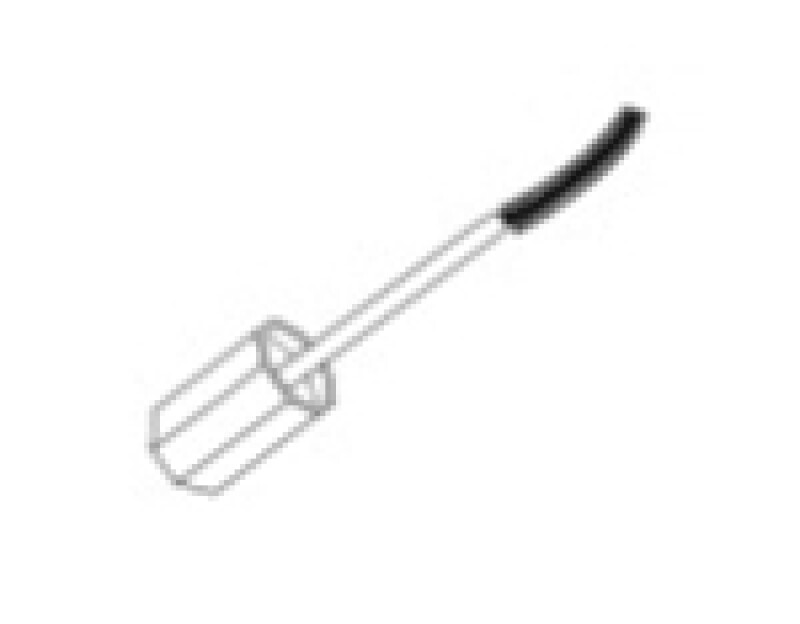
Perspective view of design application concerned
The office action pointed out that there was a substantial defect: “The content represented by the view of the above application is a design composed of a common shape and structure in the field to which the product belongs and belongs to the conventional design of this type of product, so it is obviously not a new design in the sense of the Patent Law, does not comply with the provisions of Article 2.4 of the Patent Law, and shall not be granted a patent right.”
|
|
“This article explains, in combination with cases, how to overcome such defects by making a statement of opinions.” |
|
|
To make a response to the office action, the applicant provided evidence of prior art in this field, and explained that this design was obviously different from the prior art, and met the requirements of Article 2.4 of the Patent Law. The specific opinions are stated as follows: According to the prior art, the grip part (bottom cover) of this design is in the shape of an octagonal prism, which not only forms an aesthetic feeling, but is also suitable for industrial applications; moreover, the shape of the octagonal prism of the grip part is different from the design shape in the prior art, and belongs to a new design.
In addition, the applicant entrusted the Patent Search and Consultation Center of China National Intellectual Property Administration (CNIPA) to conduct a novelty search for the design application, submitted the search report as proof materials, and compared this design with the most related prior design application number CN201530322890.3 (hereinafter referred to as Reference Design 1) in the search report.
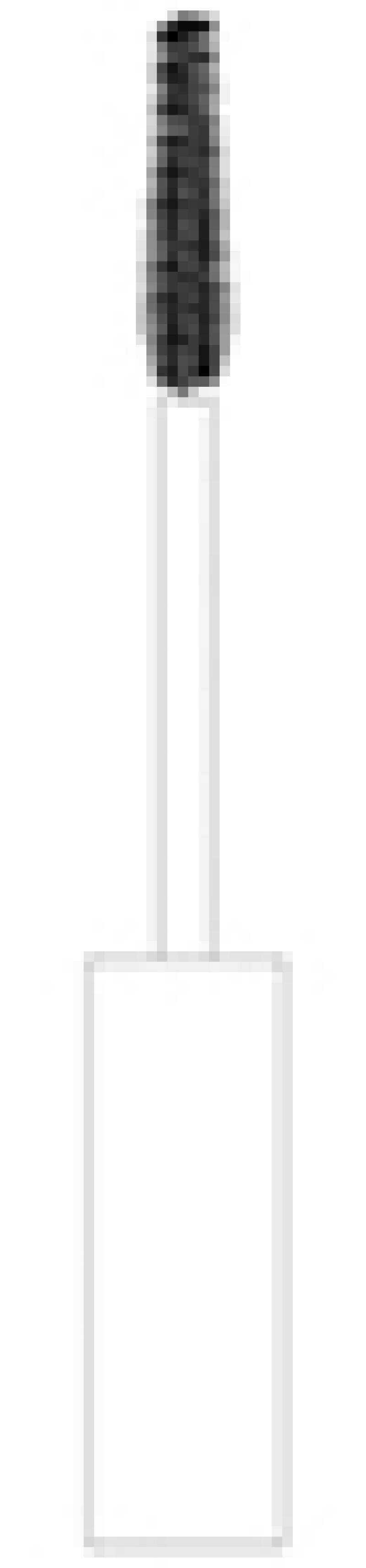
Front view of Reference Design 1
The specific opinions are stated as follows. In the search report, the Chinese design, of which product is titled ‘makeup brush’, is considered as Reference Design 1 and mainly distinguished from the design concerned in the following:
Difference in the bristle arrangement at the brush head part: bristles are arranged in clusters in the design concerned, while bristles are arranged in a plane spiral in Reference Design 1.
Difference in the ratio of the bottom cover to the whole: the bottom cover of the design concerned is shorter, while the ratio of the bottom cover in Reference Design 1 is relatively slender.
Difference in the shape of the end of the brush rod, the diameter of the design concerned is slightly retracted, while the diameter of Reference Design 1 is the same.
Difference in the shape of the bottom cover: the outer edge of the design concerned has an octagonal section, while the outer edge of Reference Design 1 has a cylindrical section.
Based on the prior designs retrieved, for eyelash brush products, the shape of the bottom cover, the shape of the brush head, and the shape of the bristles are all concerned by the general consumers. Through overall observation and comprehensive determination, the design concerned and Reference Design 1 are obviously different in the specific design of the bristles and the shape of the bottom cover, which all cause significant differences in the overall visual effect of the design. Therefore, the design concerned is significantly different from Reference Design 1, and the difference between the design concerned and other reference designs is more significant.
With the evidence provided and the above statement of opinions in combination with the evidences, the examiner was finally persuaded and the design application was thus granted a patent right.
It can be seen from the above case that the examiner does not combine the evidence for analysis. The applicant may provide the existing technical evidence documents and search report by himself, and compare in detail the difference between the design to be claimed and the existing design to prove that the design is a new design and complies with the provisions of Article 2.4 of the Patent Law.
Case two
The product involved in the design patent application concerned is a trampoline shade cover, with the classification number of 21-02. The perspective view of the product is as follows:

Perspective view of a heptagon shade cover
The examiner thinks that the design is a design composed of a conventional shape and pattern in the field to which the product belongs and is not a new design. In order to prove that the design is a new design, the applicant specially provided the following view of the design in use to illustrate the unique design of the shade cover of the design.

A view of the heptagonal shade cover in use
The applicant explained in the observation: the uniqueness of the design lies that the design is of the shade cover for a trampoline, especially as a design of an edge of the shade cover. The edge of the shade cover of this style forms a cover and covers poles of the trampoline, thus forming a unique shade cover. Prior designs of shade covers for a trampoline in the field to which the product of the present application belongs do not have an edge of this style.
|
|
“An applicant usually needs to respond to a notification of office action of an obvious substantive defect such as those in Article 2.4 of the Patent Law by combining a statement of opinions with evidence.” |
|
|
In this case, the applicant provided a view of the product in use to illustrate that the field to which the design is applied is a trampoline. The edge of the shade cover for the trampoline matches the top of the trampoline, thereby producing a unique visual effect.
As a result, the examiner was successfully persuaded and the design application was thus granted a patent right. It can be seen from this case that for a design of a component of a product that needs to be used in conjunction with other product, the applicant may consider submitting, when filing the application, a view of the design in use as a reference view, so as to help the examiner determine whether the design is a new design.
Persuading the examiner
It can be seen from the above two cases that an applicant usually needs to respond to a notification of office action of an obvious substantive defect such as those in Article 2.4 of the Patent Law by combining a statement of opinions with evidence. The evidence may take the form of a prior art evidence file, search report, reference view in a use state, etc.
The content of the statement of opinions focuses on comparing elements of designs in combination with evidence to illustrate a significant difference between the design of the present application and a prior design. Pay special attention to providing as detailed a statement of opinions as possible. Sometimes, if no appropriate evidence is found, it is also possible to explain, in the observation, in detail the design point of a design and how the design point affects the overall visual effect of the design. When necessary, even a reference view in a use state can be submitted to illustrate the design uniqueness of a design product in the field to help the examiner to understand a difference between the design and a conventional shape and structure in the field, so as to achieve the purpose of persuading the examiner.
Click here to read all the chapters from Asia-Pacific IP Focus 2021

Yanling Zhou
Patent attorney
DEQI Intellectual Property
T: +86 10 8233 9088
Yanling Zhou is a patent attorney at DEQI Intellectual Property.
Yanling focuses on IP legal services and has significant experience in preparing and prosecuting patents, as well as the patent reexamination and invalidation in the areas of mechanics, fluid power, automatic control and manufacturing. In addition, she has experience with the analysis and advice regarding patent protection, including evaluation of patentability.
Yanling obtained a master’s degree in mechatronic engineering from Beijing University of Science & Technology, and has technical research and development experience for about two years. She is a member of the All China Patent Agents Association.