
Branding your homeland
We’ve all seen and heard them in newspapers, magazines and TV adverts: brands, flags, logos, music and jingles urging us to visit/invest in/find out more about countries and their peoples. “Nation brands” were the subject of a well-received panel at the Congress this morning, and may be the focus of an ASIPI committee in the future.
Vinicius Bogea Camara of Brazil’s INPI shared some examples from around the world, and asked how such brands should be protected. “Do all countries need a trade mark? Do all trade marks need a country?” he asked.
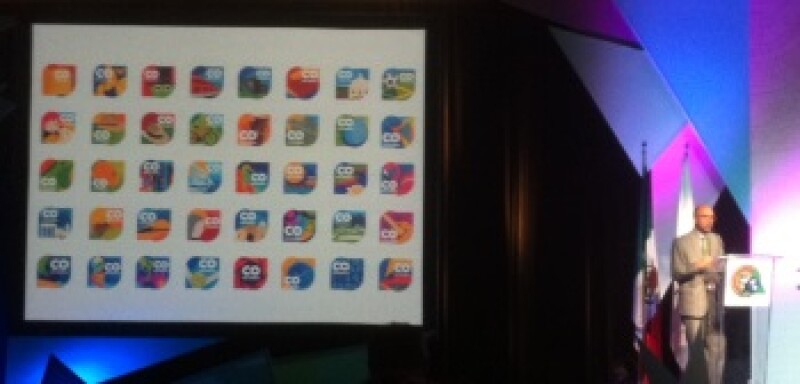
Jose Pablo Arango of Proexport Colombia (right) illustrated how one country has developed a brand that can be used in many different ways and, he said, “can represent an endless gamut of possibilities”. It has been used to promote events, animals, cuisine and industries among other things and is widely licensed: “From the marketing point of view the dream is that everyone uses it but it is not degraded. This is a huge challenge.”
It’s not all good news though. Arango noted that the trade mark had just been registered at the USPTO, after two years of work and spending “a considerable amount of dollars”. “There are some concepts that they don’t seem to understand in the US,” he reflected.
Plain sailing in Panama
The Panama Canal is being expanded, with capacity expected to double by 2016. While this is good news for global trade, it puts more pressure on border protection. In a session yesterday, Jose Ayu Prado of Panama’s Supreme Court of Justice explained how the country’s National Customs Office has been given more powers to seize IP-infringing goods, partly as a result of free trade agreements the country has signed.
Since 1996, goods in transit can be seized and destroyed, and a further reform in 2012 extends jurisdiction to goods stored in free-trade areas. “Customs authorities can help stop illegal merchandise entering the territory,” said Prado. “This is a new role Customs are playing and courts must be aware of it.”
Speaking on the same panel, former Federal Circuit Chief Judge Randall Rader described the Canal as a “chokehold” for North and South America, and welcomed improved enforcement measures. He also encouraged IP rights owners to use the ITC in the United States: “Anyone can use the ITC to enforce their IP in the US. You do not have to be a US citizen. If you have a US IP right, you can petition if you can establish a link to a domestic industry.”
One question from the audience concerned what happens to seized goods, and how they are destroyed. Rader said in the US they are nearly always incinerated. In Panama things are different: due to the large quantities of drugs that are recovered, incineration is not always an option.
All about Myriad
“Did you understand?” Gabriel Kleiman of Pfizer asked the audience after he had summarised the US Supreme Court’s decision in Myriad Genetics. When no hands went up, he embarked on a guide to genetic engineering, aided by some colourful slides, striking numbers (each human body has 37 trillion cells and each cell has 3 billion base pairs) and enthusiastic gestures (right).
The growth of personalised medicine, tools and diagnostics has blurred the boundaries between discoveries and inventions, said Kleiman, meaning that “mechanistic rules” become less useful. He suggested the solution is to review the broader values behind the IP system – including creating science and innovation, economic effects and moral and religious issues.
The Supreme Court’s decision in Myriad that isolated DNA is not patent-eligible represented “a change in [US] law that had been accepted for 30 years”, said Joseph Schaper of Monsanto. Its impact has been exacerbated by USPTO guidance, which sets out a three-step test: Schaper described the third step (does the claim recite something “significantly different” than a judicial exception?) as particularly problematic. This could mean that inventions such as Taxol, Insulin, Penicillin and Tramadol may not now be patentable, he said. A revision of the USPTO guidance is expected soon.
day3204.jpeg The real Mexico
Following Monday evening’s 1980s-themed reception, Tuesday’s Mexican Night at Restaurant Tenampa was more traditional, with typical Mexican food (including large slabs of meat), free-flowing tequila, a Mariachi band and some sophisticated dancing.
The Congress closes tonight with a black-tie dinner at the College of Vizcainas.
Did you know …?
Mexico is not just about tequila and tacos. Speaking in this week’s opening session, David Arellano Cuan of the Ministry of Interior noted that Mexican inventors have also made an impact around the world. He mentioned a few of the notable inventions to come out of the country: colour television (Guillermo González Camarena), the contraceptive pill (Luis Ernesto Miramontes Cardenas) and indelible ink used in elections (Filiberto Vázquez Dávila).
Next year’s ASIPI Congress is in Cartagena. Can any readers suggest famous inventions from Colombia?


