
Not what you think
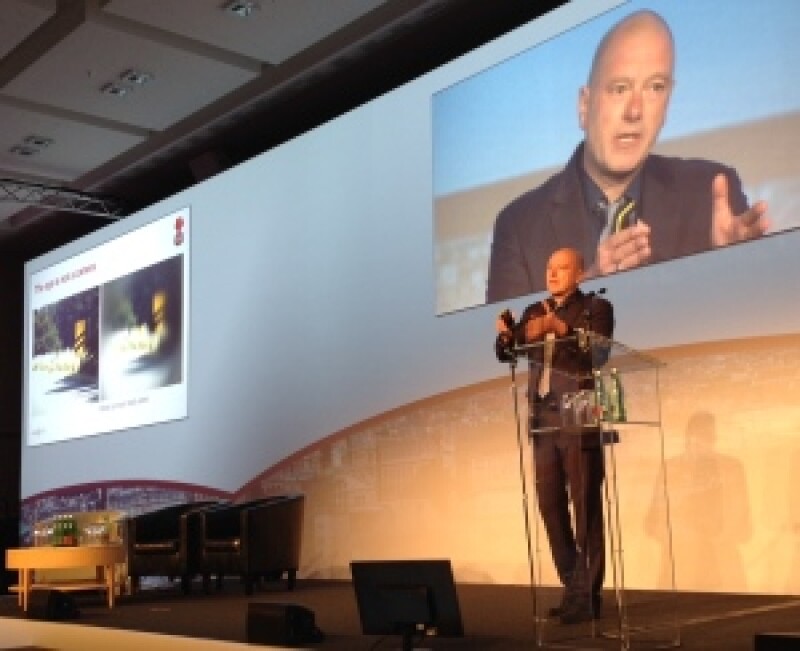
Some people might have wondered if they had wandered into the wrong meeting: the 29th MARQUES Annual Conference opened today with a presentation not on trade mark law, the latest IP cases or the fight against counterfeits, but on neuroscience.
In a lively and well-illustrated presentation, Christian Scheier of Decode Marketingberatung revealed how the brain perceives brands as rewards, and price as pain. “A brand is a pain pill,” he explained. This was just one insight in his talk, which also addressed how people make purchasing decisions and why we “think” less than we think we do; how the brain interprets images and what that says about likelihood of confusion; and why perception is hierarchical (which is important for the use of colours in branding).
It was mostly welcome news for brand owners, particularly when Scheier explained how brands trigger “diagnostic cues” (features that define an object), just one of which – if it is familiar enough – can prompt a purchasing decision, whether it is the McDonald’s Golden Arches or the Coca-Cola bottle. The good news: customers (literally) don’t have to think about buying your brand. The bad news: it’s very easy for lookalikes to capitalise on that.
Brains and brands
In a panel discussion following Scheier’s talk, Judge Joachim Bornkamm of the German Federal Court of Justice and Gregor Vos of Klos Morel Vos & Reeskamp discussed how legal principles in Europe such as the trade mark function, the overall impression and likelihood of confusion fit with what we know about the brain.
The answer, depressingly but not surprisingly, was not very well. For example, since the Henkel case C-218/01 14 years ago, judges have assumed that only a word can be a sign of origin. As Vos said: “This is based on judges’ assumptions, not on science.” On the other hand, the principle (first stated in Puma v Sabel) that “the more distinctive the earlier mark, the greater will be the likelihood of confusion” correlates with the scientific evidence that our brains process information very quickly.
As Bornkamm concluded: “Assumptions could and should be challenged. We have to redesign them … Judges have to be open to challenges.” Try telling that to the bench next time you have a tricky trade mark case to argue.
Sorry surveys
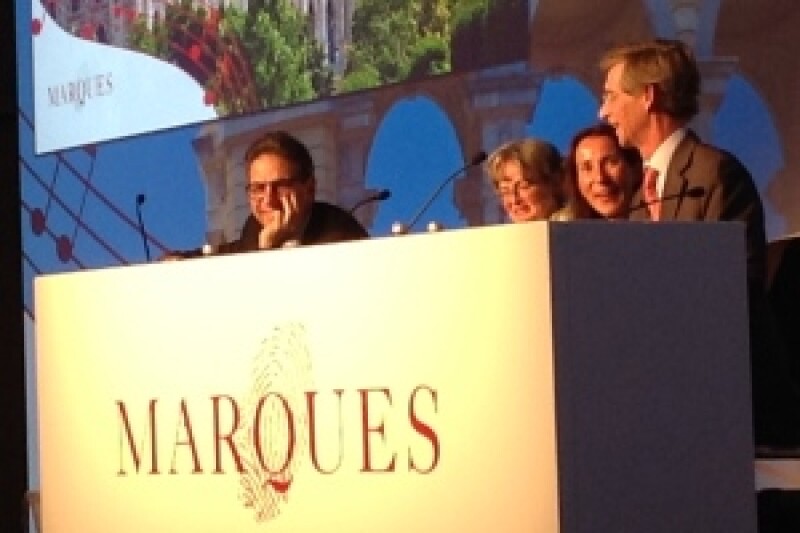
We’ve written before about the confusion and uncertainty over the use of surveys in trade mark cases, and it was emphasised again today. Ray Black, of Mishcon de Reya, discussed the somewhat unclear (and probably unfinished) trend in UK cases, where judges have been sceptical of surveys but left just enough of a window for parties to optimistically submit them.
Black described it as a “move closer” to other EU member states but added: “We are still stricter in the way we go about conduct of surveys”. Liesbeth Marijnissen of the OHIM Boards of Appeal noted that surveys are important at OHIM, but that the Boards are required to follow national laws – which is difficult when there is no consensus: “As long as national laws are not harmonised, we take them into account.”
Meet me in Madrid
The Madrid Protocol was the focus of a session this afternoon, with speakers Marie Paule Rizo from WIPO and Tove Graulund of Graulund Consulting, who gave a users’ view of the pros and cons. One thing that has become clear is that, with 95 contracting parties covering 111 countries and 80% of the global market, Madrid is close to becoming a truly global, rather than a Euro-centric, system. Over time, that may have implications for the way it is run (notably the dependency principle).
Next Thursday we’re holding a webinar on Madrid from a US perspective, with speakers including Fran Jagla of Lane Powell and Jeff Epstein of Cowan Liebowtiz & Latman. They will discuss how the system works for American users, in the light of the recent accessions (such as Mexico) and those expected in the next few years (Canada). For more information, and to sign up, click here.
#1 for quality of life
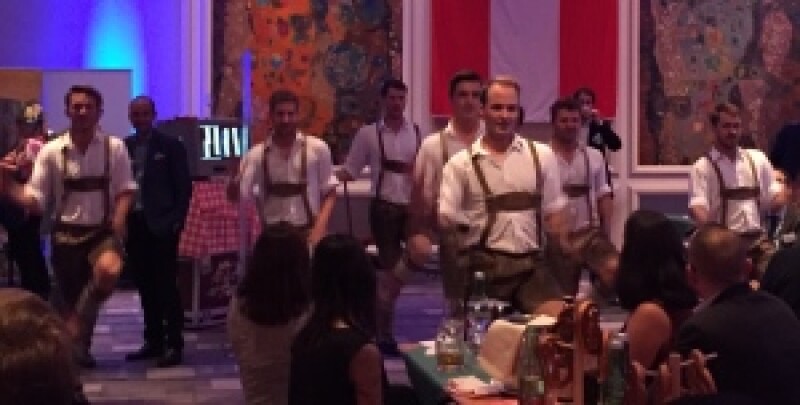
Welcoming the record 817 attendees to Vienna, MARQUES Chair Uwe Over of Henkel noted that the city has six times been voted the number one in the world in the Mercer Quality of Living Survey.
That may have something to do with the musical entertainment that was in evidence at the opening reception last night (pictured).
The Conference was formally opened by Andrea Scheichl, vice-president of the Austrian Patent and Trade Mark Office, who emphasised that “intangible assets are the very basis of existence for many companies” but added that work needs to be done in promoting trade mark awareness: “The majority of SMEs do not consider trade marks important to their business.”
Nevertheless, the top 10 Austrian trade marks are valued at €31 billion, with the most valuable brand worth a whopping €15 billion. If you don’t know what brand that is, read tomorrow’s roundup on managingip.com to find out.





