First FRAND cases litigated

Managing IP is part of Legal Benchmarking Limited, 1-2 Paris Gardens, London, SE1 8ND

Copyright © Legal Benchmarking Limited and its affiliated companies 2026

Accessibility | Terms of Use | Privacy Policy | Modern Slavery Statement

First FRAND cases litigated

Case of the Year 2012: FRAND cases in the UK, Germany and US

smartphone.jpg

The result

Courts begin to define what is reasonable

The impact

Telecoms companies will finally find out what all those patents are worth

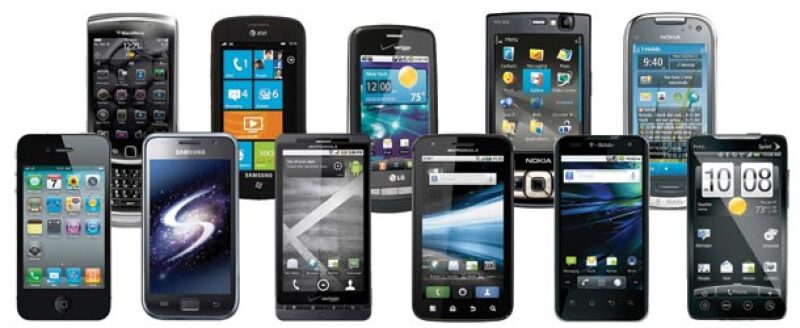
Apple, Samsung, Microsoft, HTC, Nokia, Google, Ericsson ... the smartphone patent wars have sucked in almost the entire telecoms industry. The battles are being fought on many fronts, but the cavalry is standard-essential patents (SEPs) – either developed or (in the case of Google and Apple) expensively acquired.

In an industry where products incorporate many thousands of patented features, and interoperability is key, SEPs can be very lucrative. But concerns about over-claiming have led to disputes as to their validity, essentiality and above all what is a fair, reasonable and non-discriminatory (FRAND) licence.

Now judges are being asked to step in. In Karlsruhe, Germany, a court stayed an injunction granted to Motorola against Apple, as Apple had offered to take a licence. Last month, in Seattle, a judge heard a case between Motorola and Microsoft over WLAN and Blu-Ray patents. With more decisions due next year, at long last we may finally fathom out FRAND.

This case was selected as one of Managing IP’s Cases of the Year for 2012.

To see the rest, click on one of the cases below.

The 10 cases of the year

A fillip for the EU pharmaceutical sector

Relief for trade mark owners in red sole saga

Australian TV streaming service held to be illegal

Smartphone war hits front page in the US

Liberalising the EU’s software market

India allows parallel imports

Victory for fair dealing in Canada

Lacoste loses its trade mark in China

Google prevails in Android attack

EU test case clarifies class headings

Ten you might have missed

Canada: Ambiguous claims can invalidate patents

Russia: Certainty on parallel imports

Italy: TV formats win copyright for the first time

First FRAND cases litigated worldwide

Monsanto loses in Brazil

Data exclusivity backed by Mexican courts

China: A shift over OEM manufacturing

Authors in the US able to reclaim joint copyrights

Germany: Knitted trainers a sign of the future

India: Financial Times loses trade mark

more from across site and SHARED ros bottom lb

More from across our site

New filing data suggests Germany's grip on UPC litigation remains strong, while Bardehle Pagenberg, Arnold Ruess, Hogan Lovells and Carpmaels notch up notable cases
In 27 years, KASS has expanded to seven countries in southeast Asia and is now eyeing further growth opportunities. Its CEO shares her perspective
Mine Güner discusses bridging law and business, taking the initiative, and why Taylor Swift helped put copyright on the map
Cindy Goh discusses why she launched Cheang & Ariff's IP department, the improving litigation environment in Malaysia and what to consider when using AI
Increased focus on adding patent litigation depth to the firm’s Dallas office was behind the boutique’s most recent hires
IPH's Canadian acquisitions are paying off on paper, but a couple of strong years may not be enough to show that the group's strategy has truly won over the market
Examiner statistics could help patent prosecution practitioners tailor strategies, turning an area of high variability into a potential competitive advantage
The England and Wales High Court’s ruling in Accord v Novartis may not rewrite the law on plausibility, but it does signal a pragmatic approach that could provide greater certainty for life sciences innovators
Firms with established sports relationships and specialised expertise are well positioned to capture the market’s expanded pool of IP work
Gunjan Paharia discusses developing RIA, an AI platform built to draw on decades of institutional knowledge, support junior lawyers, and reshape how legal teams work
Gift this article