Judges slam useless objections at AIPLA Annual Meeting

Managing IP is part of Legal Benchmarking Limited, 1-2 Paris Gardens, London, SE1 8ND

Copyright © Legal Benchmarking Limited and its affiliated companies 2026

Accessibility | Terms of Use | Privacy Policy | Modern Slavery Statement

Cookies Settings

Judges slam useless objections at AIPLA Annual Meeting

Hochberg Faith

Judges and private practice lawyers yesterday warned it hurts clients when lawyers tussle over every claim construction term and discovery request, regardless of whether they affect the outcome of the case

Hochberg Faith AIPLA

Judge Hildy Bowbeer, magistrate judge in the District of Minnesota, said lawyers instead need to think carefully and identify the issues that are central to the case. The goal is to ensure that both sides’ rights are protected while reining in the “autopilot shotgun” style of litigation that has come to characterize many patent disputes.

Judge John Koeltl, district judge for the Southern District of New Jersey, said: “It’s not uncommon for a firm to put what must be an associate on a deposition and to give the instruction to object to everything in the deposition, so you get objections to every line which read ‘401, 403, irrelevant, overly prejudicial,’” he said. “It is utterly useless.”

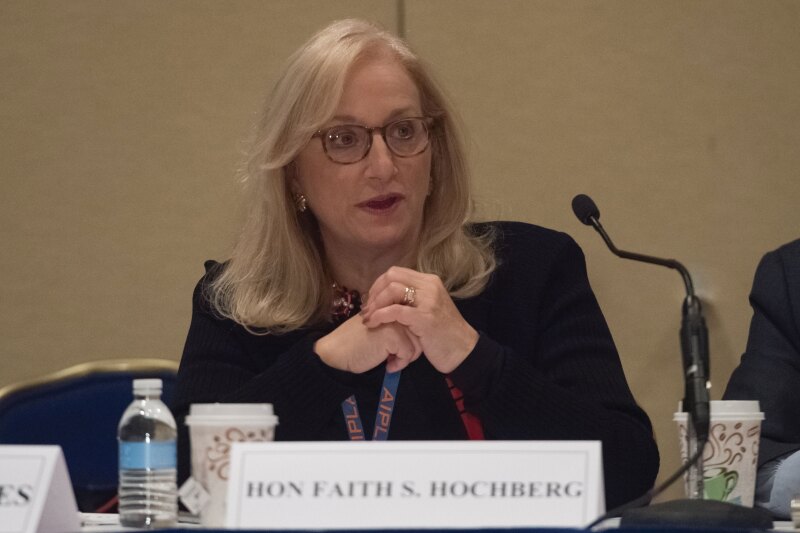
Retired judge Faith Hochberg, formerly a district judge in the District of New Jersey, made a similar point. Sometimes when she asks why a lawyer made a particular objection in the record, the lawyer is unable to answer. “I think it was to keep somebody awake during a deposition; if you have to speak, you can’t sleep,” she joked.

Hochberg also stressed the need for lead counsel to be involved early. In one case, when she requested draft findings of fact and conclusions of law for a short and not particularly complicated bench trial, the parties submitted 800 pages on these issues.  She issued an order for the parties to re-file after lead counsel has read and edited the original submissions and got 49 pages back. “If I hadn’t done what I did, my law clerk would have been lost in 751 pages of unnecessary reading and probably lost the important stuff that they really wanted us to know,” she said.

more from across site and SHARED ros bottom lb

More from across our site

The Unitary Patent has passed 100,000 registrations, but new data raises the question of whether 30% uptake is a ceiling or a staging post for further growth, say Michael Nielsen and Darren Smyth of EIP and Andrew Samm at Patently
The new generation of in-house IP leaders want commercial judgment, accessibility and flexibility, with AI raising expectations around both fees and delivery
The firm launched a San Diego office earlier this month, but California investment and expansion is far from complete
The industry’s response to AI requires an unfamiliar ingredient as firms battle to shape their futures
The firm is looking beyond replacing recently departed talent, betting instead on senior leaders to strengthen and expand its patent litigation platform
Olga Partington, director in Sterne Kessler’s biotechnology and chemical practice group, shares why a patent's vulnerability peaks when it is young, rather than when it is most valuable, under the PTAB's new framework
IP experts gathered in San Francisco last week to discuss the changing global SEP landscape and new licensing models for AI infrastructure
SKW Schwarz partner Daniel Kendziur explains how new green claims rules are changing his workload and bringing him into direct contact with marketing, PR and government affairs teams
The government is targeting earlier resolution of SEP disputes while ruling out a standalone IPEC rate determination track and restrictions on injunctions
Ana Castedo, who brings a strong focus on patent litigation, will help build the firm’s IP litigation offering in Madrid
Gift this article