-
 Sponsored by MaiwaldChristian Meyer of Maiwald explores a recent decision which prevents the distribution of medicinal products by means of an automatic dispenser from a foreign mail-order pharmacy
 -
Sponsored by Liu, Shen & AssociatesXiaoming Zhang of Liu Shen & Associates takes a closer look at the Draft for Comments to the Patent Examination Guidelines and discusses its positive approach towards AI-related applications
-
Sponsored by Vivien Chan & CoExperts from Vivien Chan & Co report on significant developments from the IP world across China and the Asia-Pacific
-
Sponsored by Griffith HackKaren Sinclair and Sarah Cox of Griffith Hack review the Australian federal government’s budget measures for R&D, innovation, and medical technology funding
-
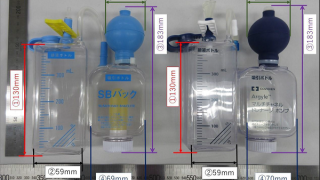
Sponsored by ABE & PartnersSumitomo Bakelite has manufactured and sold each device comprising a portable and disposable device for continuous low pressure suction or a set of these devices (collectively SB Bag) with the product name "SB Bag" since 1984. Those consisting of a drainage bottle and a suction bottle in SB Bag are the relevant products belonging to Sumitomo Bakelite in this case. Nippon Covidien has manufactured and sold its product since January 2018.
-
Sponsored by Gün + PartnersThe first instance Civil Court for Intellectual and Industrial Rights (IP court) in its decision rendered in October 2020 pointed out that the use of the subject mark as a domain name solely is not deemed sufficient to prove the use of the mark as a trademark.
-
Sponsored by Bird & BirdIn the first English court decision to consider the issue of AI inventorship, the High Court has held that an AI system cannot be considered an inventor under the Patent Act 1977.
-
Sponsored by Tilleke & GibbinsA decade ago, intellectual property lawsuits were rarely handled by Vietnamese courts. They have become more common in recent years, but almost always with overseas IP owners in the plaintiff role, charging local Vietnamese entities with infringement, piracy, or counterfeiting.
-
Sponsored by Hanol IP & LawKorea Seed Industry Act (KSIA) and its Implementing Regulation, effective as of June 19 2020, a person who intends to sell propagating materials of certain types of foreign plant varieties should report this fact to the Ministry for Agriculture Food and Rural Affairs (MAFRA), along with submission of evidence proving that such propagating materials have been "legally obtained" (Article 38 of KSIA, Article 27 of Implementing Regulation thereof). In other words, in order to sell propagating materials of foreign plant varieties in Korea, a seed supplier shall have a duty to prove that he has lawfully acquired the same.
-
Sponsored by Tilleke & GibbinsOctober 31 2020, marked the closing of the public comment period for Thailand's proposed amendments to the Patent Act B.E. 2522 (1979). The Department of Intellectual Property (DIP) had published its latest draft of the amendments on September 30 for the month-long period of public feedback.
-
Sponsored by ABE & PartnersIn the past, Japanese patent litigations were notorious for being slow, having narrow claim interpretation, low damages awards, poor evidence collection procedures, and having a low winning rate. Cases and Materials on Patent Law, Second Edition says, "No countries' patent system has received more criticism than that of Japan. Among the chief complaints is that the courts award patent claims with an extremely narrow scope, and that the Doctrine of Equivalents does not exist at all." Global Patent Litigation: How and Where to Win, Third Edition, edited by Finnegan says that the winning rate of patentees from 2006 to 2016 was 24% in Japan, ranked second from the bottom out of the 10 countries. However, Japanese patent litigation has been reformed and is now transformed in order to be more convenient for patentees than ever before.
-
Sponsored by OLIVARESIt is important not to forget that the Civil Code states that debtors respond to the fulfilment of their obligations with their assets, except for all those assets considered by law as inalienable or which cannot be seized.