Firm

Sim & San, which secured the $16m victory for their client, previously led Communications Components Antenna to a $26m damages win in 2024

Emotional Perception AI is seeking more than £200,000 after the UK Supreme Court backed its appeal
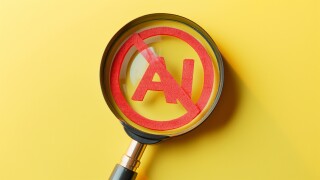
Lawyers at Pinsent Masons discuss why the advent of ‘AI-free’ might be a crucial moment for brands seeking to protect their identity

Ryan Dykal and John Wittenzellner of Boies Schiller Flexner tell Managing IP what’s driving the firm’s patent litigation expansion
Sponsored
Sponsored
-
 Sponsored by Beijing East IPYongyu Zhang of Beijing East IP examines trends and developments in the fields of patents and trademarks, looking at application patterns, disputes and changes in the law
 -
Sponsored by SS RanaVikrant Rana of SS Rana analyses Japan and India’s close relationship in the field of IP, examining the Patent Prosecution Highway programme, the countries’ digital partnership and the establishment of a start-up hub
-
Sponsored by Bird & BirdRichard Vary, Clemens Heusch and Matthias Schneider reveal their views on component-level versus end-point licensing and Unwired Planet
-
Sponsored by Jiaquan IP LawMark Weifeng Lin of Jiaquan examines the issues that can arise during patent translation, for example those relating to grammar, terminology and fluency, and suggests ways to overcome these challenges
-
Sponsored by Bugnion SpAGiancarlo Penza of Bugnion examines the different elements involved in establishing a FRAND licence, including NDAs, counter-offers and litigation
-
Sponsored by Liu, Shen & AssociatesInvention has long been regarded as a mental activity that can only originate in human beings. However, with the booming of artificial intelligence (AI) technology in recent years, AI has been endowed with the ability to simulate human mental activities and perform innovative tasks by itself. So far, it is reported that AI technology is capable of conducting scientific experiments, developing technical crafts and completing industrial designs. In the near future, AI is even expected to have the capability to discover natural principles and create fundamental knowledge. Against this background, demands have risen for the protection of AI innovation. In particular, the question being asked is can those inventions solely made by AI "inventors" be protected through filing a patent application and be granted, just like those made by human beings?