Breaking: USPTO plans to cut Russia PCT authority

Managing IP is part of Legal Benchmarking Limited, 1-2 Paris Gardens, London, SE1 8ND

Copyright © Legal Benchmarking Limited and its affiliated companies 2026

Accessibility | Terms of Use | Privacy Policy | Modern Slavery Statement

Breaking: USPTO plans to cut Russia PCT authority

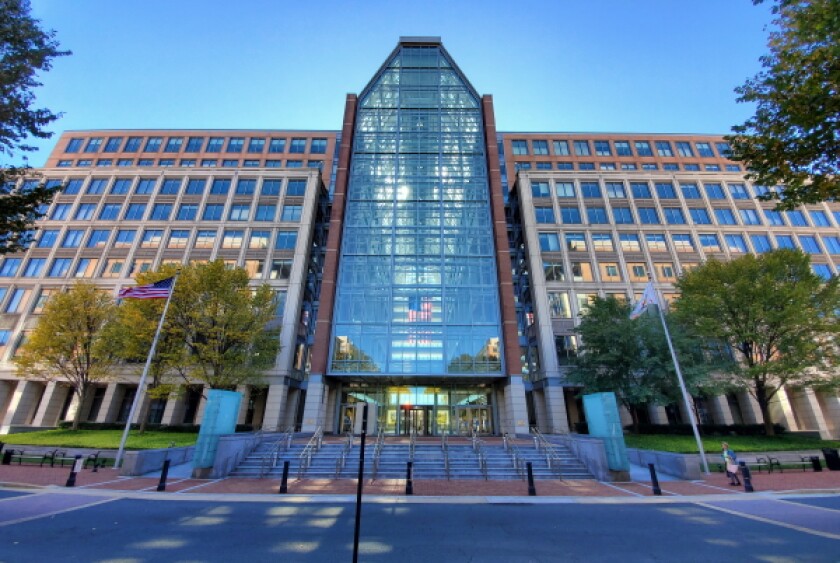
The USPTO HQ in Alexandria, Virginia

The USPTO has warned applicants not to select Rospatent as a PCT examining authority

The USPTO warned US applicants not to select Rospatent as a search or examining authority under WIPO’s Patent Cooperation Treaty today, March 22.

The USPTO sent out an alert stating that applicants should exercise caution before selecting Rospatent as an international searching authority or international preliminary examining authority under the PCT.

Related stories

Doing so, it said, might prevent international applications under the PCT from being successfully processed, including the transmittal of required fees through financial institutions.

A source at the USPTO said the office had issued this warning because it was working with the Department of State to terminate the agreement allowing US applicants to select Rospatent as a search or examining authority under the PCT.

As per the agreement, the termination would become effective six months after formally notifying Rospatent.

This development follows a growing trend of IP offices severing ties to Russia and Belarus in reaction to the war in Ukraine.

The EPO announced that it had suspended its co-operation with the Belarus and Russia IP offices and the EAPO on March 1. The EUIPO similarly cut ties with Rospatent and the EAPO on March 9.

In contrast, the CNIPA said on March 8 that it would extend its PPH agreement with the EAPO.

The update comes just over two weeks after the USPTO ended co-operation with officials from the Russian intellectual property office Rospatent and the EAPO on March 4, and more than a week after it ended its Global Patent Prosecution Highway (PPH) agreement with Rospatent on March 11.

 

more from across site and SHARED ros bottom lb

More from across our site

News of Dolby suing Snap over AV1 and HEVC patents and SCOTUS offering guidance on the liability of internet service providers were also among the top talking points
Arrival of Caitlin Heard will bolster the soon-to-be-created Ashurst Perkins Coie’s IP presence in the capital
AI, cybersecurity and data practice group will provide clients with legal guidance around AI alongside a 'deep technical foundation’ in IP
Lawyers at Vondst and Biopatents say a ruling concerning the protected status of trade secrets could see the UPC flooded with requests to prevent access to confidential information
Sharad Vadehra of Kan & Krishme discusses why older IP firms still have an edge over up-and-coming boutiques and how the firm is using AI to provide quick and cost-effective service
Lawyers at Appleyard Lees share how they picked apart a plant breeder’s infringement claims concerning the ‘Tango’ mandarin
A further decision on long-arm status, and a new hire for Pentarc in Germany from Taylor Wessing were also among top developments
The US decision marks a rare grant of a request under the Uniform Fraudulent Transfer Act in a patent case
Stobbs has applied to strike out a contempt of court application filed against the firm and two of its lawyers
With trademark volumes surging, trademark teams need to think beyond traditional clearance searches, towards a continuous, intelligence-led workflow, says Meghan Medeiros of Corsearch
Gift this article