Libraries can digitise books, says CJEU

Managing IP is part of Legal Benchmarking Limited, 1-2 Paris Gardens, London, SE1 8ND

Copyright © Legal Benchmarking Limited and its affiliated companies 2026

Accessibility | Terms of Use | Privacy Policy | Modern Slavery Statement

Cookies Settings

Libraries can digitise books, says CJEU

EU member states may grant public libraries the right to digitise books from their collections “if such act of reproduction is necessary for the purpose of making those works available to users”, the Court of Justice of the EU has ruled

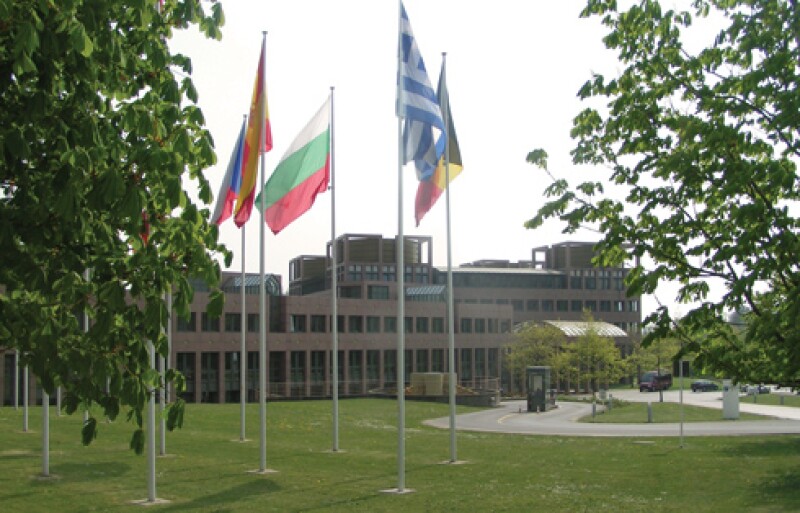
CJEU

The Court (right) yesterday gave its judgment in a dispute between the Technische Universität Darmstadt and publisher Eugen Ulmer, referred from Germany’s Bundesgerichtshof, on the interpretation of Article 5(3)(n) of the Copyright Directive.

This provides that member states may provide exceptions to the rights of reproduction and communication to the public for “use by communication or making available, for the purpose of research or private study, to individual members of the public by dedicated terminals on the premises of establishments … of works and other subject-matter not subject to purchase or licensing terms which are contained in their collections”.

However, the Court added that this does not extend to acts such as the printing out of works on paper or their storage on a USB stick.

Such acts maybe authorised under national legislation implementing the exceptions or limitations provided the conditions in the Directive are met. In practice, this means providing fair compensation.

The case arose after Eugen Ulmer sought to prevent the university from digitising a book in its library collection and to prevent users from being able to print the book or save it on a USB stick via electronic reading points.

The Advocate General’s opinion was published in June.

Darmstadt University was represented by Nils Rauer and Diana Ettig of Hogan Lovells in Frankfurt. Eugen Ulmer was represented by Ulrich Karpenstein and Gernot Schulze of Redeker Sellner Dahs in Berlin.

more from across site and SHARED ros bottom lb

More from across our site

Boehringer Ingelheim has instructed a team from Kirkland, while Teva is being represented by Pinsent Masons
The Delhi High Court’s latest directions offer an opportunity to move beyond remedies against bad-faith registrations and address how suspicious applications are identified in the first place, says Fatima Baig at Lexlinc
Camilla Hamrin describes how the acquisition by Acapo Onsagers will impact Bergenstråhle’s trademark practice – and reflects on changes she has seen over 30 years in IP
On a recent trip to the French capital, we learned that the UPC is squeezing domestic litigation while firms are chasing senior talent, experimenting with AI and considering new ways of organising their practices
Daniel Law says a string of lateral hires and broader expansion plans will strengthen its position to capitalise on Brazil’s burgeoning IP and patent litigation market
Jason Raeburn’s arrival will expand the firm’s London footprint in AI, copyright and tech disputes
The firm is shaping its AI strategy around partnerships with Harvey and Legora alongside internally developed tools from its legal technology company, Eltemate
A dispute Down Under shows why trademark lawyers cannot afford to wait on the sidelines when a rival brand gathers momentum
The Third Circuit’s decision in Thomson Reuters v ROSS marks the first appellate-level decision addressing AI and fair use, prompting copyright counsel to consider arguments around potential licensing markets
Injunctions for HandsFree Labs and Align Technology come as the Court of Appeal warns that busy teams must have the staffing and resources to meet UPC deadlines
Gift this article