
During today’s discussion, attention focused in particular on the costs of opting out of the court. Owners of the new Unitary Patents and classical European patents will be able to opt their patents out of the new system after it comes into effect (expected to be 2016). But there will be a cost to do so.
Catriona Hammer of GE Healthcare said it is difficult to make the opt-in/opt-out decision until the fees are published: “Until we know the level of the fees, it’s hard to be organised. We don’t even know the basis of the fees at the moment, nor do we know the timing.”
In particular, it’s not known whether the fee will apply per patent, or whether it will be purely administrative. As Hammer pointed out, this means companies that opt out will have to pay “an unknown amount at an unknown time” – something that financial controllers cannot plan for.
Pharmaceutical companies are widely expected to opt-out many of their valuable (so-called crown jewel) patents, fearing that they could be invalidated by an inexperienced court.
But Ian Hiscock of Novartis said things might not be that simple: “If we sit back, we risk doing ourselves a disservice. We need to be part of the system to shape it.” In particular, he hoped that courts would take a robust approach to allowing cross-examination of witness evidence and challenging of expert evidence.
Hiscock said the introduction of the new system “has the potential to radically change the patent landscape in Europe, on a scale not seen since 1978 [the introduction of the EPC]”.
Hammer added that many practical aspects of the system remain uncertain, despite the recent publication of the 16th draft of the rules of procedure. In particular, she said, we don’t know the court fees or the outside counsel fees – which could be substantial if cases are heard in different divisions. She said certainty about fees was her number one demand from the UPC Preparatory Committee.
Will courts bifurcate?

The panellists also discussed the possibility of bifurcation, where infringement and validity of a patent are heard in different divisions. This has become a key concern for certain technology companies, who fear it will allow patent trolls to enforce weak patents.
But Frits Gerritzen of Allen & Overy in Amsterdam (right) sounded a note of caution, observing that many judges are likely to prefer to hear both aspects of a case together: “I think clients are getting used to the idea. Will bifurcation actually happen? If the Germans don’t do it, who will?”
David Por of Allen & Overy in Paris agreed: “Judges will want to rule on cases if they can. One question is: will the Court of Appeal be able to play a harmonisation role?”
But Hammer warned that if injunctions are granted quickly at first instance, that might encourage parties to settle – meaning fewer cases make it to appeal.
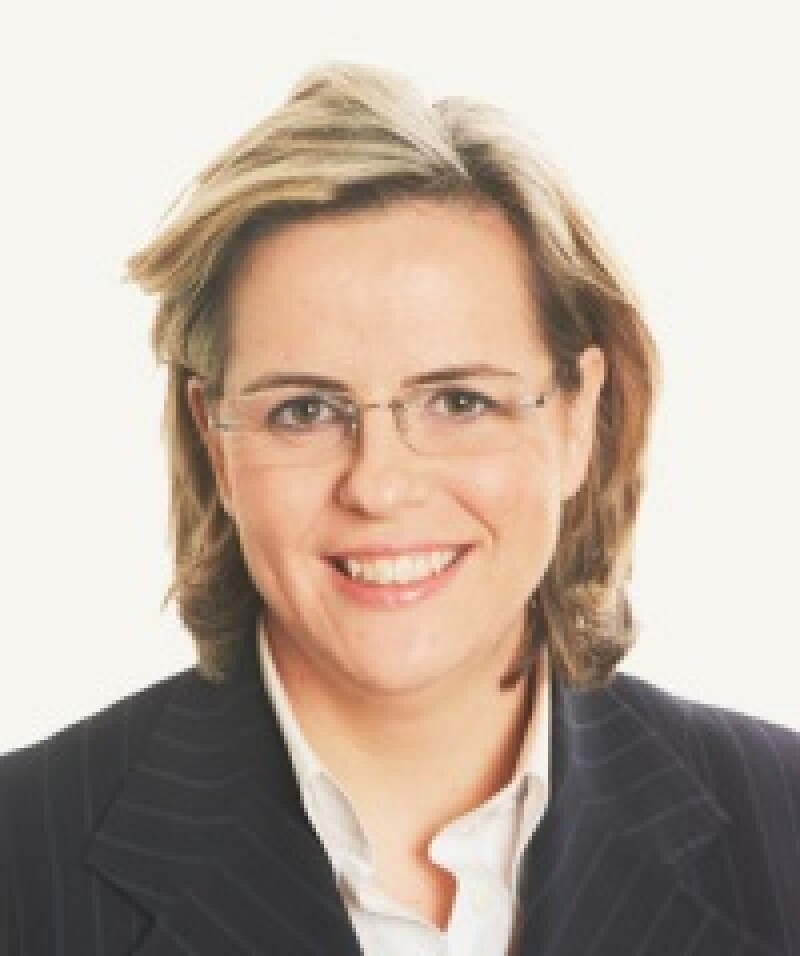
Questions from the audience suggested that concerns about trolls remain strong, following a recent letter sent by various high-tech companies to European lawmakers.
Moderator Nicola Dagg of Allen & Overy (right) said defendants need to think about what to put on the record to minimise the chances of bifurcation, or to show the plaintiff is a troll: “Rule 19 [concerning the possibility to raise preliminary objections] has a lot of grey areas. Is that the moment to say a claim is abusive?”
Now for the good news
The panel agreed on one thing: the UPC would be good news for patent lawyers and UPC judges. It would also ensure that patent litigation in Europe is likely to remain fundamentally different to (and cheaper than) that in the United States – despite the possibility of an “Eastern District of Tallinn” being created.
They also concurred that EPO oppositions will continue to play an important role. Gerritzen even dared to hope that competition between the EPO and UPC might speed up opposition cases.
The Forum concludes tomorrow. For information about the event, click here. Look out for more reports on www.managingip.com
For more information on the UPC see:
Latest draft of Unified Patent Court rules released
Unified Patent Court - latest developments explained
Europe: Opting out under the UPC - which law applies?





