

The Protocol entered into force in Mexico in February this year. Yesterday Margain, as well as representatives of the Colombian and New Zealand offices, spoke to the INTA Daily News about the international trademark system.
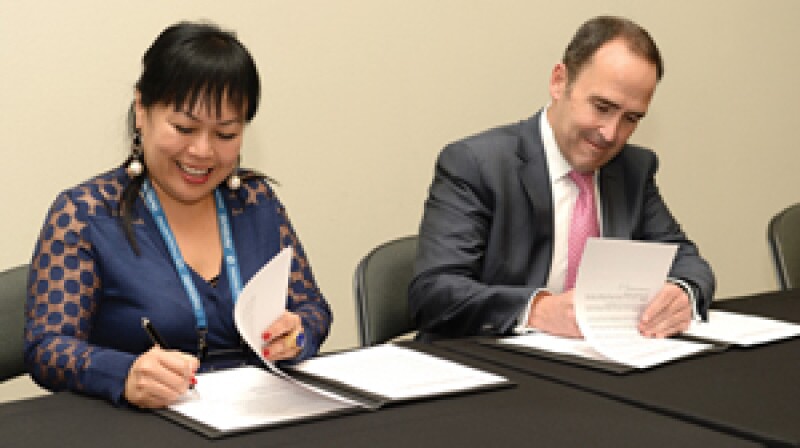
Colombia deposited its instrument of accession in May 2012 and the Protocol entered into force in August last year. Jose Luis Londono Fernandez, Deputy for Industrial Property in Colombia’s Superintendency of Industrial Property, said that the first International Application based on a Colombian registration was filed last week: “We are on the map now. Our key objective going forward is that the Madrid Protocol should be used by domestic companies. We will do a seminar about it in July in three of the main industrial cities in Colombia.”
Since the Protocol entered into force in Mexico, there have been at least 12 international applications filed by national applicants, and the country has been designated in about 100 international applications.
“We had to implement some changes to the law to accommodate the Madrid Protocol. For example, we are a single class country—we didn’t have multi-class applications. Our data system had to include the Madrid system applications,” said Margain. “We don’t have a trademark opposition system, but that’s not a requirement to be part of the Madrid Protocol. We are talking to the industry associations about whether an opposition system is needed,” he added.
Since joining the System in October last year, New Zealand has been designated about 1,400 times and some 100 applicants have used the country as the basis for an international application. Ingrid Bayliss, National Manager of New Zealand’s Intellectual Property Office, said the system has been popular with domestic applicants, including small businesses, as it also covers most of New Zealand’s main trading partners, such as Australia, China and the United States.
She added that the Office used accession as an opportunity to update its IT systems. It now has a 100% online case management system, which is compulsory for applicants. “This has enabled us to cut a number of costs from the Office, and we have passed those savings on to applicants,” said Bayliss.
Margáin said Mexico is following a similar path: “The Madrid Protocol has also helped us to build the e-filing system. By 2014, we will have the whole process available electronically.”
Global Brand Database
Find out more about the Madrid Protocol and the Global Brand Database at WIPO’s booth in the Exhibition Hall. The Database includes records of more than 11 million marks from 10 offices, including the United States and WIPO. Enhancements, including a link with OHIM’s TMview database, are expected to be added soon. Glenn Macstravic, Head of the Brand Data Base Unit at WIPO, said he welcomed feedback from users at the Annual Meeting: “Don’t be afraid to come and tell us what we can do better to help you.”





