Foreign companies cannot ignore the risk of being involved in Japanese IP litigation when they conduct transactions where their products are intended to be distributed in Japan or when they perform sales activities for the Japanese market.
Japanese courts have been conservative in granting international jurisdiction against foreign companies outside of Japan. However, recently judgments granting international jurisdiction have appeared.
Case 1: Judgment of May 14 2001, Tokyo District Court (Presiding Judge Iimura)
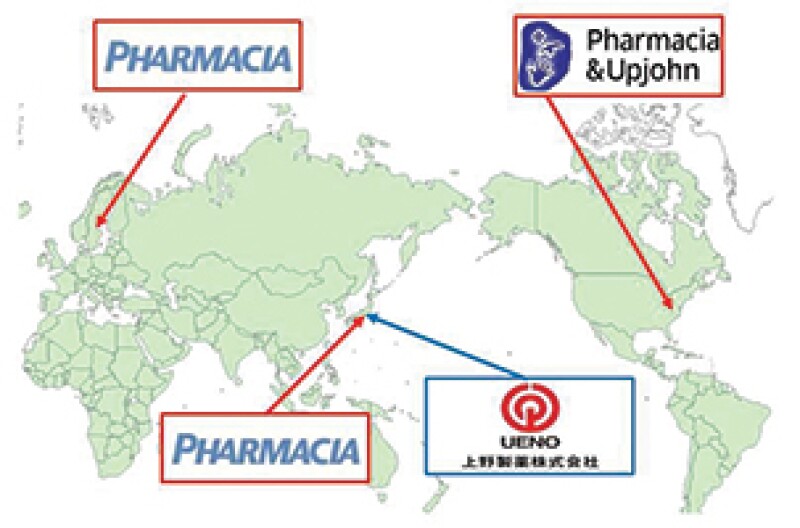
Pharmacia Aktiebolaget (a Swedish corporation) manufactured latanoprost, an active ingredient of Xalatan eye drops (glaucoma and ocular hypertension treatment agent), outside of Japan. Pharmacia corporation (a Japanese corporation), a wholly owned subsidiary of Pharmacia & Upjohn (a US Delaware corporation), imported latanoprost into Japan and sold Xalatan eye drops in Japan.
Ueno Fine Chemicals Industry, an exclusive licensee of a patent for an invention titled "Ocular hypotensive agents", sought an injunction and damages against Pharmacia Aktiebolaget, Pharmacia & Upjohn, and Pharmacia corporation.
The Court denied the international jurisdiction against Pharmacia Aktiebolaget and Pharmacia & Upjohn because Ueno did not argue and prove these foreign companies had conducted a specific act constituting infringement of Ueno's exclusive licence (concrete act which constitutes individual or joint tort). In addition, the Court stated that compelling these foreign companies who have no management foundation in Japan to respond to the lawsuit only because they are the parent company (Pharmacia & Upjohn) or they have manufactured in the foreign country and they are the group company (Pharmacia Aktiebolaget) will impose on them an undue burden and will be against the principle of fair, proper and prompt trial.
Case 2: Judgment of April 28 2015, Tokyo District Court (Presiding Judge Okinaka)
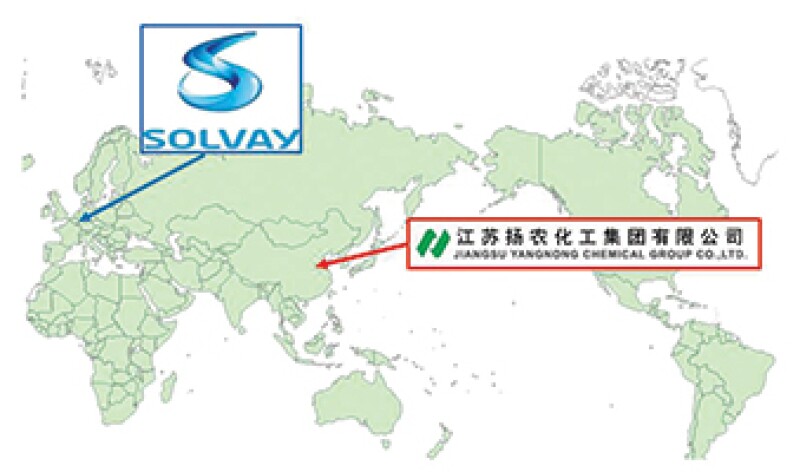
Jiangsu Yangnong Chemical Group (a Chinese corporation) manufactured and sold epichlorohydrin in China. Jiangsu Yangnong sold epichlorohydrin to Chori (a Japanese corporation) and Chori imported and sold it in Japan.
Solvay (a Belgium corporation), the owner of a patent for an invention titled "process for producing dichloropropanol from glycerol, the grycerol coming eventually from the conversion of animal fats in the manufacture of biodisease", sought damages against Jiangsu Yangnong.
Solvay argued the following objective facts serve as the basis for objective association and collaboration of joint tort, or accessoryship or abetment: (i) Jiangsu Yangnong recognised Chori's importation and sale of epichlorohydrin in Japan; (ii) Jiangsu Yangnong represented to Chori it would solve the patent infringement issue in Japan; (iii) Jiangsu Yangnong strongly encouraged Chori to purchase epichlorohydrin; and (iv) Chori purchased epichlorohydrin to be sold in Japan exclusively from Jiangsu Yangnong.
The Court affirmed (i) and (ii), but denied (iii) and (iv). The Court stated that (i) and (ii) do not support association and collaboration of joint tort, and accessoryship and abetment because such facts are usually seen in the international commercial trade between manufacturers and distributors. Therefore, the Court denied the international jurisdiction against Jiangsu Yangnong.
Case 3: Judgment of November 28 2007, Tokyo District Court (Presiding Judge Shimizu)
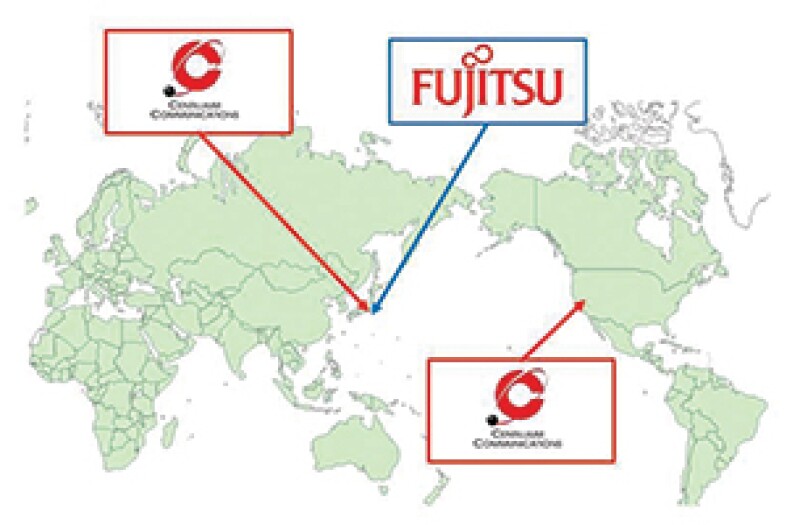
Centillium Communication (a US Delaware corporation located in California) (CCI) manufactured and sold an ADSL modem chipset. Sumitomo Electric and NEC imported an ADSL modem chipset or ADSL modem including such chipset, and sold ADSL including such chipset in Japan.
Fujitsu, the owner of a patent for an invention titled "data transmission method", sought Y3.23 billion ( $32.3 million) in damages against CCI and its subsidiary Centillium Japan (CJ).
The Court found CCI's association and collaboration of joint tort with Sumitomo and NEC and regarded CCI's sale of ADSL modem chipset and its promotion as accessoryship or abetment of tort. The Court reasoned that there was a joint development agreement between CCI and Sumitomo/NEC, and CCI seemed to have recognised their products will be imported and sold in Japan if they sell them to Sumitomo and NEC, and promoted actively to Sumitomo and NEC under such recognition.
The Court stated that CCI was able to fully anticipate that the ADSL modem chipset they manufactured and sold would be distributed in Japan and may infringe the Japanese patent, and that Japan was a major market for CCI because the sales to Sumitomo and NEC occupied 80% of CCI's total sales. Thus, the Court concluded that affirming jurisdiction in Japan will not be against the principle of fair, proper and prompt trial.
Therefore, the Court affirmed the jurisdiction against CCI.
Case 4: Judgment of September 15 2010, IP High Court (Presiding Judge Nakano)
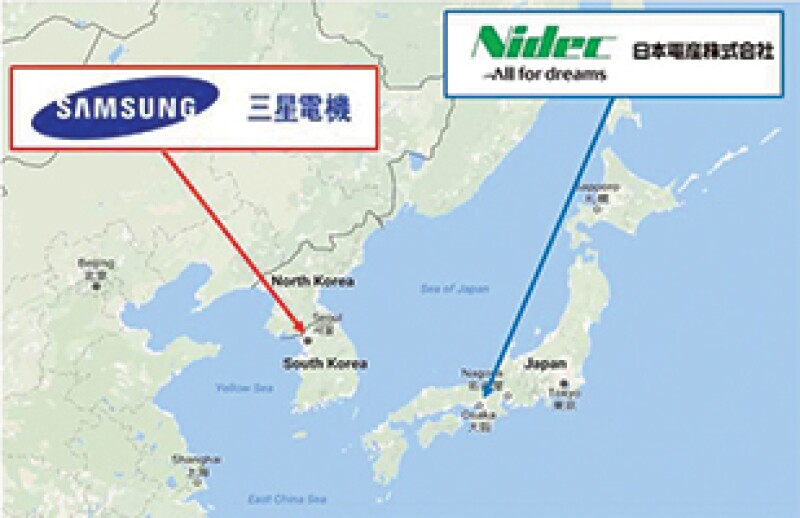
Samsung Electro-Mechanics (a Korean corporation) (Samsung) introduced Slim ODD Motor on their website where the accused product was posted.
Nidec Corporation (Nidec), the owner of the patent for an invention titled "motor", sought an injunction and damages against Samsung.
The Court found Samsung's act of transmitting an offer for assignment or the receipt of the offer in Japan based on the following facts: Samsung posted the accused products on their English website; Samsung identified Japan as "Sales Inquiry'' and introduced the address, phone number and fax number in Japan as "Sales Headquarter'' on their English website; it is possible to create an inquiry form regarding the sale of Slim ODD Motor on their Japanese website; sales manager of Nidec stated in his declaration that the sales staff of Samsung performed sales activities in Japan; Samsung's management advisor used his business cards with his title, corporate name and address in Tokyo in Japanese; a DVD multi-drive including one of the accused product is likely to be manufactured and sold by the Japanese company and distributed in Japan.
The Court stated that Samsung should have anticipated there will be a patent infringement lawsuit in Japan regarding the accused product because Samsung had introduced the accused product on their English website and acknowledged that those products are distributed in Japan and because Samsung enabled customers to enquire about the purchase of the ODD motor including the accused product on their Japanese website. The Court further stated that Samsung belongs to the Samsung group, the largest global company in Korea. Thus, the Court concluded that affirming jurisdiction in Japan will not be against the principle of fair, proper and prompt trial.
Therefore, the Court affirmed the jurisdiction against Samsung.
Practical tips
Now the Japanese courts are somewhat liberal regarding international jurisdiction against foreign companies outside of Japan. Foreign companies should be aware of the risk that they will be forced to defend themselves in the Japanese court under certain fact scenarios. On the other hand, as Solvay challenged, foreign companies may be able to sue their competitor outside of Japan in the Japanese courts if the conditions are met.

|

|
Takanori Abe |
Tomohiro Kazama |
ABE & PartnersMatsushita IMP Building1-3-7, Shiromi, Chuo-ku, Osaka, 540-0001, JapanTel: +81 6 6949 1496Fax: +81 6 6949 1487abe@abe-law.comwww.abe-law.com