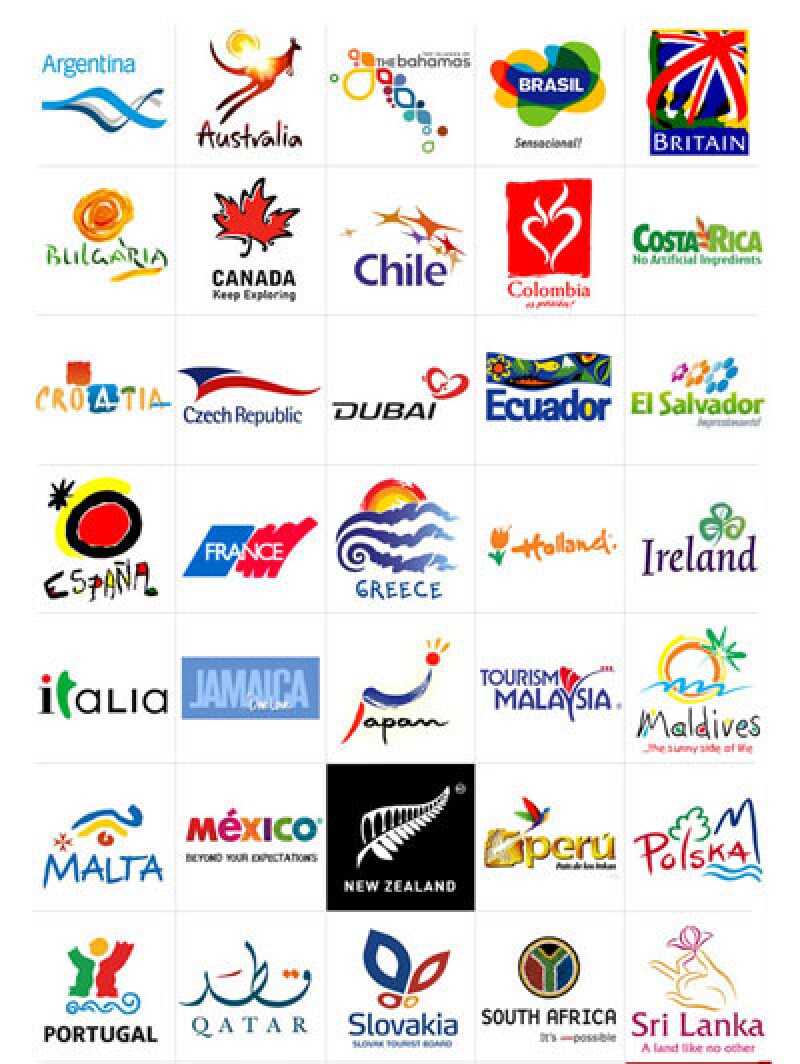
One of the most interesting sessions at last month’s ASIPI Congress concerned nation brands. As anyone who travels regularly knows, many countries have stepped up their efforts to promote business, investment and tourism in the press, online and on TV. Many of them have created distinctive logos (see right) and even annoying jingles (such as “Malaysia – Truly Asia” which always seems to be playing on hotel TVs when I’m travelling).
One of the questions raised at the ASIPI meeting was whether there should be some sort of sui generis protection for nation brands, on the basis that they cannot be effectively protected under most national trade mark laws. I understand ASIPI is setting up a committee to address this question, which probably reflects its importance to many emerging markets in the region.
Nation brands often of course incorporate country names, which raises questions about both protection and prevention of misuse. Jamaica has been pursuing this issue at WIPO’s Standing Committee on Trademarks, Industrial Designs and Geographical Indications in recent years. The topic is again on the Committee’s agenda for its meeting in March this year, and WIPO published a study on it in 2013.
According to its latest proposal for an international agreement, published in September last year, Jamaica’s recommendation aims to promote harmonisation by “protecting country names against conflicting marks, conflicting business identifiers and conflicting domain names, preventing the use of indications consisting of or containing country names in relation to goods or services which do not originate in the country indicated by the country name, and harmonizing the examination and determination of applications for the registration of trademarks which consist of or contain country names, in order to promote consistent and comprehensive treatment and protection of country names among Member States”.
Specifically, it proposes that states shall “protect country names against conflicting marks, business identifiers and domain names and prevent use of indications consisting of or containing country names in relation to goods or services which do not originate in the country indicated by the country name”.

This (revised) proposal is uncontroversial in many respects, though some national representatives have raised fundamental questions about it. The United States, for example, expressed concern that it was based on the principle that “governments owned and controlled their names including nicknames, abbreviations, assigned ISO country codes, etc”. The US delegation also pointed out that the draft text placed a burden on trade mark applicants to “rebut the presumption of deception”.
More fundamentally, the proposal raises a question about whether countries should be given rights at the expense of trade mark owners. Many well-known brands include country names (notably in the transport and utility sectors) and with globalisation many operate outside of their native territory: would they be affected by Jamaica’s proposals? And how far should protection be extended? What about country names in different languages or adjectival versions – think of brands such as French Connection or El Corte Inglés – or abbreviations, historic names or nicknames (such as Kiwi for New Zealand)?
There was considerable interest among the ASIPI audience in this issue and clearly there are many questions relating to nation brands and country names that need to be debated. We look forward, as ever, to receiving your comments.