


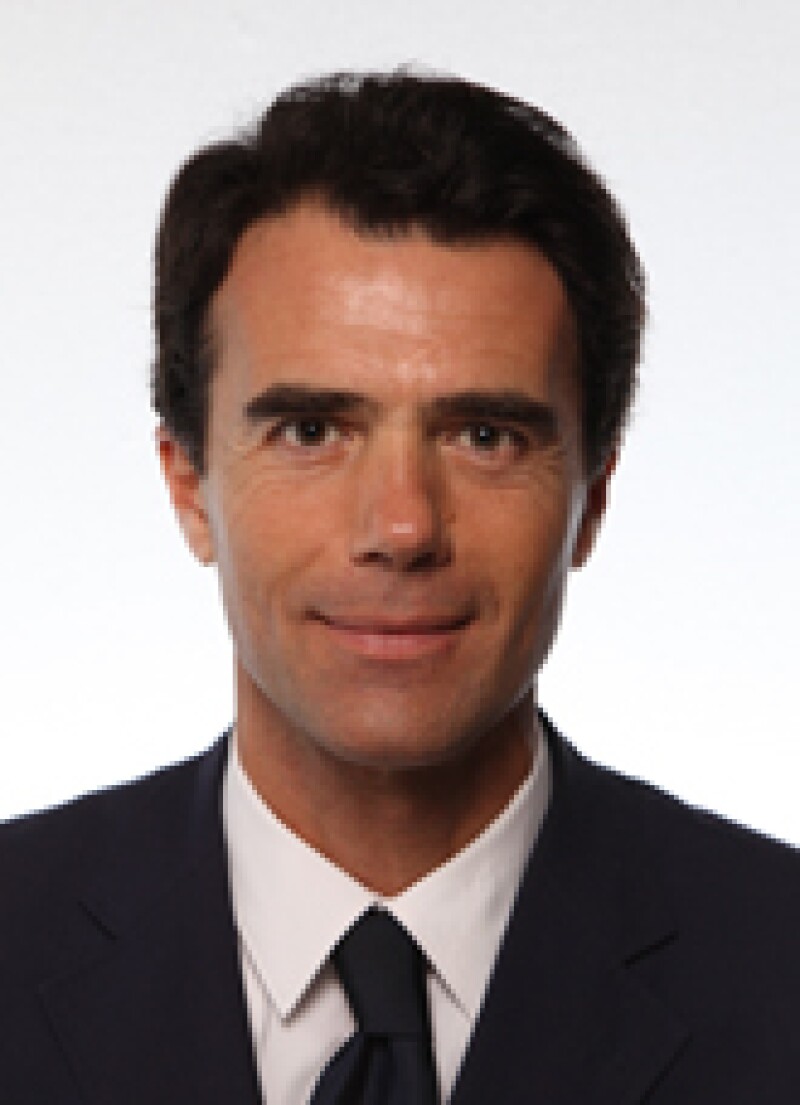
Gozi (below left) intervened during a discussion on the EU trade mark reform package today, saying he had to leave the meeting shortly.
He said (English translation): “The Italian government has decided to agree to enhanced cooperation on the Unitary Patent. We have also started a procedure to amend the court procedure and we hope that this will move forward very fast.”
“We felt it was necessary to do this because the conditions were ripe. This has no impact on the language discrimination point. We still think this is something which is a dividing factor rather than a unifying factor and the Unitary Patent shouldn’t be seen as a precedent on this linguistic matter.”
Gozi's speech starts at about 2 hours 41 minutes into the video recording of the meeting. He gave more details on Italy’s position in a video interview after leaving the meeting (in Italian).
Italy was one of two countries along with Spain that did not take part in the enhanced cooperation that led to the Regulations on the Unitary Patent. Both countries had concerns about the English/French/German language regime.
Despite this, Italy had signed the UPC Agreement and planned to host a local division of the Court in Milan.
However, its opposition had weakened in recent years and there were strong rumours that it would sign up to the Unitary Patent after the CJEU rejected Spain’s challenge earlier this month.
Spain remains outside the system, and Poland and Croatia are unlikely to take part at least at the beginning.
Trade mark package
Also during the meeting, UK Parliamentary Under Secretary of State for Business, Innovation and SKills Baroness Neville-Rolfe (below right) said the UK was not able to support the recently agreed trade mark package in its entirety since “it enables future revenue surpluses at OHIM to be transferred to the general budget and this is a red line for the UK. As IP minister, I would prefer any surpluses to be recycled to support innovation, enforcement etc.”

Germany’s State Secretary, Federal Ministry of Justice and Consumer Protection Gerd Billen added: “As to how the question of how national institutions will cooperate, I think we have come up with a valid proposal on this.”
EU Commissioner Elżbieta Bieńkowska welcomed the agreement, saying it would help to more effectively tackle counterfeit products. “The Commission did have concerns about the financial aspects and governance of OHIM, and these concerns remain. We have issued a statement and will still discuss it. In the view of true added value for users, the Commission has decided to support it even with those concerns,” she said.
More details about the trade mark reform package are expected to be revealed next month.
Also on the Council’s agenda today was the Digital Single Market, which was discussed off-camera.





