
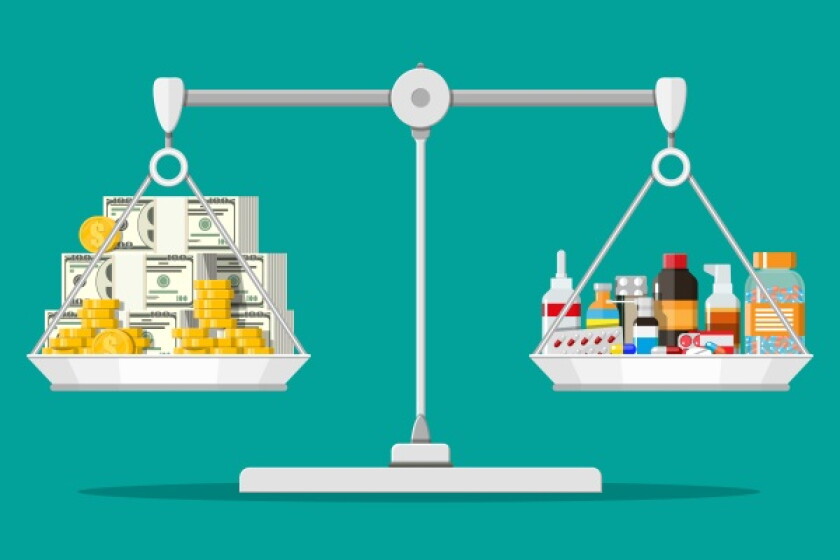
In the run up to the UK and US elections, delinkage policy proposals are quickly gaining momentum among left-wing candidates.
Presidential candidate Bernie Sanders proposed legislation in 2017 to replace the current patent system with government funded awards for drug research. His proposed Medical Innovation Prize Fund would deny monopoly rights to pharma innovators and create a fund equal to 0.55% of GDP in the form of research grants amounting to $102 billion for drug research.
His ideological counterpart in the UK, Labour Party leader Jeremy Corbyn, presented his Medicines for the Many policy proposal this year, which suggested running a feasibility study to test the benefits and mechanisms of delinkage. In response to the proposal, the Association of the British Pharmaceutical Industry (ABPI) issued a statement criticising delinkage and arguing it would dry up funding for innovation.
With heated discussion about escalating drug costs and rising inequality in access to medicine, delinkage has indeed gained some political momentum, leaving many in the pharmaceutical industry wondering how it could work in practice.
In response to critics, James Love of the Washington DC-based think tank Knowledge Ecology International describes delinkage as a policy that would reform the current incentives for drug development.
He tells Patent Strategy: “Rather than use a temporary monopoly and high prices as a reward for successful development to entice investment, governments would use a combination of very large cash market entry rewards and R&D subsidies so that prices could be very low, without undermining innovation.”
When asked whether the large sums of tax payer money would be feasible in the real world, Love responds by saying that although delinkage would require robust funding and a strong political will, it would still be cheaper than the current pricing system.
“Much of what is spent today has little to do with prompting investment in R&D, and certainly not for the most important innovations. Delinkage offers you the opportunity to pay as much as you want for innovation.
What changes is that patients are no longer hostage to price negotiations, and they would not be at risk of high costs like they are today. Governments could decide how robust the incentives were, but delinkage would only work if the numbers were sufficient,” he says.
An argument against delinkage is that the money generated from patent monopoly rights is re-invested into new drug research, and that the industry would not be able to bring new medications to market without the patent system.
The pharma industry also claims to reinvest the highest amount of any sector in R&D. According to the ABPI, the pharmaceutical industry invested 20.4% of revenue into R&D in 2016.
But a recent study from the cancer research centre Memorial Sloan Kettering in the US compared the price difference between the US and Europe for the 20 best selling drugs, and found the cumulative revenue from those drugs more than covered all the R&D costs conducted by the 15 pharmaceutical companies that brought the drugs to market.
The study claims that lowering drug costs in the US to match the global R&D expenditures spent by the 15 companies would have saved US patients $40 billion in 2015. To put the figure into perspective, the US Centers for Medicare and Medicaid Services reported in 2017 that prescription drug spending was $334 billion, and the US national health expenditure was equal to 17.9% of GDP.
The delinkage journey
James Love does not recommend moving immediately from a patent system to delinkage. Rather, he suggests a progressive approach that would gradually decrease the years of monopoly rights granted through patents, while simultaneously increasing the market entry awards and incentives given for drug research.
One method of delinking the R&D costs from prices would be to expand the government subsidies already provided for drug research. In 2018 the Orphan Drug Tax Credit (ODTC) was reduced from 50% to 25%, even though a report from the FDA this year stated that 60% of breakthrough drugs granted since 2013 were for rare diseases.
Love argues that if tax incentives like the ODTC expanded to include a higher percentage of the cost of clinical trials and were available to non-profit research groups, the cost of drug research could decrease. His website, delinkage.org, argues: “In a world with full delinkage and no monopolies, increases in the subsidies for conducting clinical trials will reduce the amount of money needed to fund the incentives to invest in trials.”
Delinkage’s supporters are not just left-wing political candidates. Andrew Witty, former CEO of GSK, proposed delinkage as a way to fund rare diseases. Joseph Stiglitz, 2001 winner of the Nobel Prize for economics, argued that the current patent system is not the best method to reward innovation.
Writing in 2007 for The Guardian, he explained: “The fundamental problem with the patent system is simple: it is based on restricting the use of knowledge. Because there is no extra cost associated with an additional individual enjoying the benefits of any piece of knowledge, restricting knowledge is inefficient. But the patent system not only restricts the use of knowledge; by granting (temporary) monopoly power, it often makes medications unaffordable for people who don't have insurance.”
Love says that Jeremy Corbyn’s proposal to begin with a feasibility study into the mechanics of delinkage would be a good place to start. “A feasibility study of delinkage would be cheap, but if we do it, regardless of the quality of the analysis, many policy makers would not believe us,” he says.
“They’d call us Marxists for attempting to change the system. Any feasibility study would need to be done by entities that are competent and could answer some tough questions, and are perceived as objective.”
He also argues that the current system of drug pricing is not sustainable. With an aging population in need of more health care and a shrinking work force there are fewer able bodied people to foot the bill for escalating drug costs.
“In the US, if you buy a house it could take you 30 years to pay off the mortgage. It’s the biggest asset somebody owns. But the cost of one three-week treatment for CAR-T is more than that, which is insane. The sheer crushing costs as a share of the health care budget is going to be problematic if we continue with the current system. Also, inequality is something that is becoming less acceptable over time,” he says.
And drug prices are getting higher. Novartis won approval from the FDA for the most expensive medication in the world in May of this year. Zolgensma is a medication that treats infant spinal atrophy, and is priced at $2.1 million. This comes in after the second most expensive drug, Luxterna, a treatment for river blindness by Roche, at $850,000.
According to Love, escalating drug prices means sick patients cannot always afford the medication needed to save their lives. In response to his critics he says: “People think delinkage can’t be done because it’s never been done before. The irresponsible thing is to say the current system is awesome so let’s not experiment with changing it.”





