Despite momentum in the US Senate for the STRONGER Patents Act, in-house counsel from companies and organisations for and opposed to the bill say it is unlikely to get through, and suggest that it has been reintroduced largely to open a dialogue on IP change.
Last month, the Senate Judiciary Committee on Intellectual Property held a hearing on the latest iteration of STRONGER, which is intended to buttress US patent rights by reforming the law around injunctive relief and inter partes reviews (IPRs) at the Patent Trial and Appeal Board (PTAB).
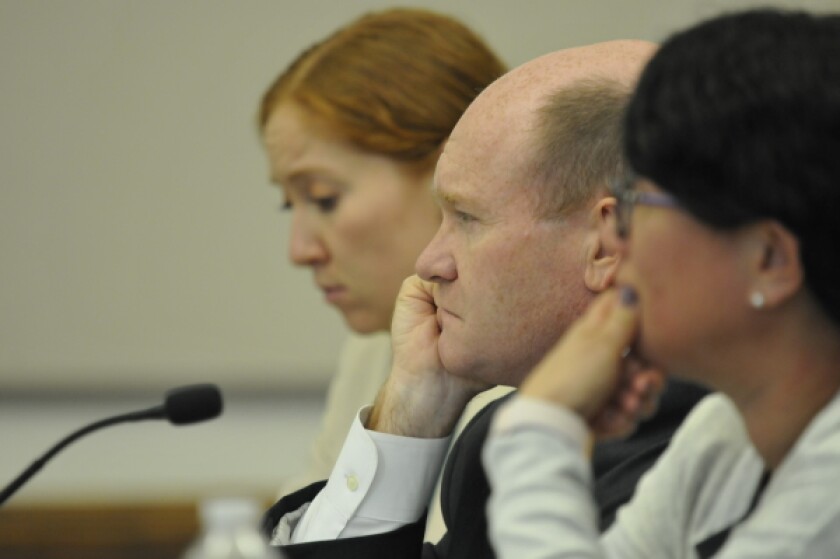
According to the office of Chris Coons, the Democratic Delaware senator and ranking member of the IP subcommittee, there is strong bipartisan support in the Senate and the House.
But the senior patent counsel at a large tech company says the extreme nature of this bill, which she says would essentially destroy the effectiveness of IPRs, makes it clear that its reintroduction is more about messaging than an attempt to drive real reform.
She says that there is bipartisan support for this bill in the sense that it has Republican and Democratic co-sponsors. She adds, however, that there is certainly not far-reaching support in Congress for a bill that would dismantle the PTAB, a body that congressmen spent a lot of time and energy putting together as a pillar of the America Invents Act (AIA).
“If you watch the recording of the Senate hearing, you will see there was not a lot of interest in attending or having other folks from the Judiciary Committee do so,” says the patent counsel.
“We really do not agree with some of the rhetoric around IPR. Our concern is not with STRONGER specifically, but with correcting the record on what some are saying is happening with IPR, and countering an incorrect narrative.”
David Jones, executive director at the High Tech Inventors Alliance in Washington DC, agrees that STRONGER is not politically viable, adding that the bill has always been about messaging and generating attention and discussion.
“There is not a reasonable chance that it will move. It keeps coming back because Senator Coons is committed to it and takes it very personally. He keeps introducing it because it keeps generating conversations that are helpful to his views on IP without risking a lot politically.”
Despite being pro-STRONGER, Fallbrook Technologies' Jeffery Birchak in San Diego says it might be a “tall order” to expect the bill to pass at the moment. He adds, however, that it is a breath of fresh air to see a pro-patent bill being presented that might open a more genuine and credible dialogue about the US IP system.
“If they bring STRONGER to committee while the other side is opposing Section 101 reform, as it is now, people in Congress might start to see high tech’s real agenda. I would be happy to see a change in dialogue from the fallacy-based patent troll narrative.”
The STRONGER Patents Act was first introduced in 2017 with the stated intent of strengthening the position of the US as the world’s leading innovator by amending title 35 of the US Code, to protect the property rights of inventors.
Some of the more controversial provisions outlined in the bill include raising the stakes for potential petitioners by providing for a presumption of validity during post-grant proceedings (Section 102b) and reducing “repetitive and harassing attacks” on patents by limiting the review power of the USPTO and eliminating repetitive challenges by the same petitioner (Section 102d).
The narrative
In terms of the dialogue businesses want to create around STRONGER, in-house counsel at high tech firms say they want to ensure that the effectiveness of the PTAB is not stifled any more than it already has been by the USPTO over the past three years.
The high tech senior patent counsel says the USPTO has used its discretion to deny or allow IPR petitions to steadily limit the number of cases that make it through to the PTAB, but for procedural reasons rather than on the merits of those cases.
“To me that is one of the biggest shifts we are seeing at the PTAB that is making it harder to use the system.” Another, she says, is the change in claim construction, which is now based on the district court standard.
She adds that in terms of provisions laid out in the STRONGER act itself, the ‘run-and-done rule’ set out in Section 102d would be the single most detrimental change and make the IPR system unusable.
“Only being able to file one petition on one claim is an extreme reaction to the repetitive and harassing attacks argument. The result would be that patent owners would go after the weakest target first, which would challenge patent validity in an IPR, so that a stronger opponent could no longer challenge said patent later on.”
In a letter written to Congress shortly before the Senate hearing on STRONGER, professors – including Mark Lemley of Stanford Law School, Santa Clara University School of Law's Colleen Chien, and Melissa Wasserman at the University of Texas School of Law – posed a similar argument.
They said that the provision ignores the realities of patent litigation and noted that numerous entities could still be sued by the same plaintiff.
Chee Zhuo, senior IP manager at BASF in New York, says she agrees with these professors, who set out very straightforward arguments for why STRONGER should not go through in its current iteration. She adds that the bill’s reintroduction does signal the swinging back of the pendulum in the US from the decidedly anti-patent stance that emerged in the wake of Alice v CLS Bank and the AIA.
While not wanting to comment on STRONGER’s provisions, the senior IP counsel at an insurance company says it is a good thing that the act is creating a dialogue around the state of the US patent system, particularly now that Section 101 is being looked at.
He says that the Federal Circuit has clearly overreached in matters of eligibility because of the Mayo v Prometheus, AMP v Myriad and Alice decisions, and STRONGER might help drive the resolve in the legislature to help solve the problem.
While STRONGER, it seems, is unlikely to become law, it might just serve as the right messaging platform to help bring broader patent reform along.