
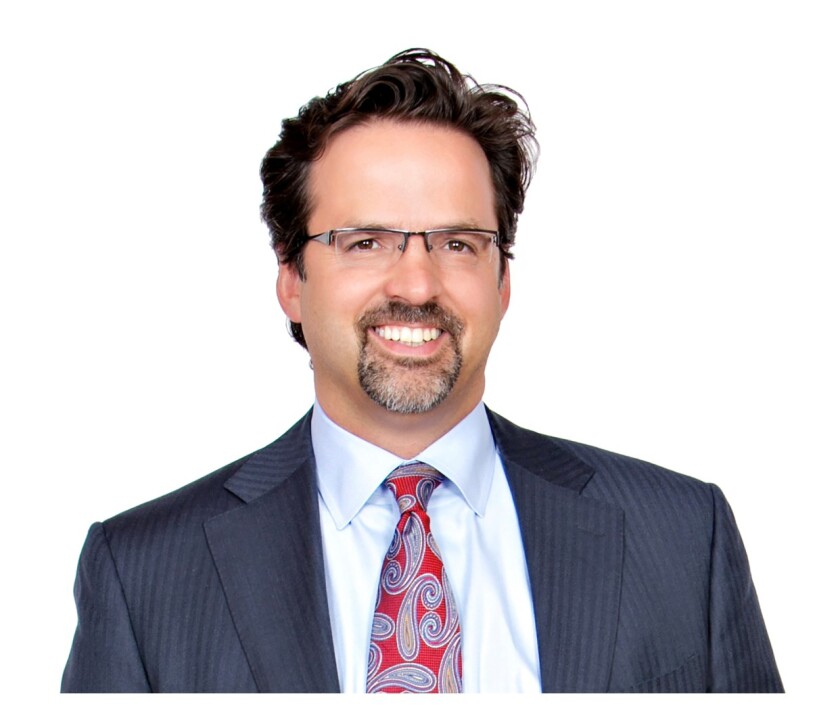
Welcome to the latest instalment of Managing IP’s new series, ‘Five minutes with’, where we learn more about IP lawyers on a personal as well as a professional level. This time we have Mike Keyes, IP litigator at Dorsey & Whitney in Seattle.
Someone asks you at a party what you do for a living. What do you say?
I am a consumer survey consultant, as well as a trial lawyer, focused on trademark, copyright, and advertising litigation. Hopefully, they don’t run for the hills after hearing that!
Talk us through a typical working day.
I’m definitely an early riser. That’s when I get a lot of non-billable work completed and off my desk. I also do research and writing in those early hours depending on the day. I have a LinkedIn publication called Lanham Act Surveys for Lawyers where I discuss recent case law developments on the admissibility of survey research in trademark and advertising disputes. So, I try to focus on those sorts of things before the day starts.
Then, like everyone else, I’m off to the races. Zoom meetings, calls, remote hearings, new client and/or survey research inquiries—a varied symphony of tasks depending on the day. We have two kids in college and one on the cusp, so that new freedom means I’m pulled in fewer directions personally.
What are you working on at the moment?
I have a number of consumer survey research projects in the works. As for my trial practice, I am engrossed in a couple of trademark cases for some technology companies and another one for an architecture company. Really fun and interesting engagements!
Does one big piece of work usually take priority or are you juggling multiple things?
It really depends. Right now I am juggling multiple research projects along with several litigation matters. There are times, though, when one matter is all-consuming and basically requires full-time caring and feeding. At that point, you do the best you can to (somewhat) clear the decks, bring in others to assist on existing matters as needed, and get ready for a fun and busy ride.
What is the most exciting aspect of your role and what is the most stressful?
Hmm. Most exciting is definitely preparing for a big preliminary injunction hearing or trial. Those times also tend to be the most stressful as there is a lot on the line and a ton of time and resources have been invested by the client and the trial team.
Tell us the key characteristics that make a successful IP lawyer.
Staying curious. Staying current. Staying focused.
What is the most common misconception about IP?
That patents, copyrights, and trademarks are all synonymous or interchangeable. We see it all the time (even among well-informed journalists and other professionals) when someone mistakenly refers to getting a 'patent' on a name, 'trademarking' a book, or otherwise 'copyrighting' a slogan.
What or who inspires you?
There are so many, but my latest inspiration is the classical pianist Yuja Wang. Earlier this year she played all five Rachmaninoff piano concertos in a single concert at Carnegie Hall in New York City. It’s a feat that no other human being on the planet could accomplish as those pieces are so massive and difficult. So, if I ever get feeling like things are a bit hectic or difficult, I just remind myself that “this is no five Rachmaninoff concertos at Carnegie Hall!” Thanks, Yuja Wang!
If you weren’t an IP lawyer, what would you be doing?
I’d be a full-time consumer survey expert in trademark and advertising matters. I have a master’s degree in survey research and data analysis. I have always found consumer attitudes and beliefs to be a fascinating area of inquiry. Either that or I’d be a starving pianist, teaching somewhere, with summers off, and toiling away on a Rachmaninoff piano concerto!
Any advice you would give your younger self?
Don’t forget that patience is the best teacher, and time is the best critic.




