Last year saw at least two big brands take on small businesses and lose miserably.
I’m talking about retailer Zara’s trademark battle against the UK boutique House of Zana and fashion magazine Vogue’s attempt to get The Star Inn at Vogue – a rural pub in the Cornwall village of Vogue – to change its name.
In the first case, the UKIPO rejected Zara’s opposition to a trademark application for ‘House of Zana’, finding that any link between the two companies was insubstantial.
In the second, Vogue the magazine, following a backlash and negative press reports, admitted it was wrong not to conduct further research before sending a cease-and-desist notice to the pub’s owners.
Despite this, it seems big brands have not learned their lessons.
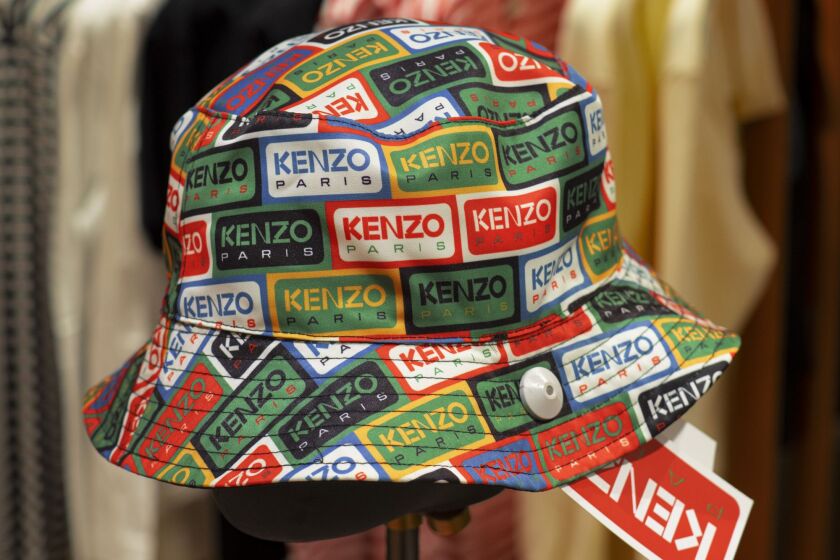
Last week, Moroccan-Australian entrepreneur Rim Daghmash was the subject of multiple press reports after she called out Kenzo, a subsidiary of luxury goods conglomerate LVMH, for coming after her micro business Kenz Beauty.
Kenz Beauty is a skincare business named after Daghmash’s autistic daughter Kenzie.
Daghmash, who also uses the brand to highlight the beauty of autistic children, claimed the fashion giant demanded she change her brand name immediately because of an apparent deceptive similarity with Kenzo. The French brand allegedly also threatened to sue Kenz Beauty.
She added that Kenzo's approach amounted to bullying.
LVMH has not responded to a request for mediation, said Daghmash.
Reasons for action
Before we come down hard on LVMH for unfairly going after the small business – and there are plenty of reasons to do that – let’s take a minute to consider what may have caused it to send a cease-and-desist notice in the first place.
To be fair, big brands aren’t always looking to crush small businesses when they send these notices or sue for trademark violation, although such ill-founded motivations are sadly quite common.
In many cases, what they are trying to do is prevent the dilution of their own brands – anything that could diminish the public perception of their trademarks or increase the chances of confusion in the minds of consumers.
Of course, Kenzo and Kenz Beauty may not sound even remotely similar to many.
But what the luxury brand is probably trying to prevent here is the chances of a bigger business coming up with a name even closer to Kenzo and arguing that if Kenz Beauty is able to co-exist in the market then so too should their mark.
Such an argument may not always fly in court, but even so, the more a business allows similar-looking marks to co-exist in the market, the more it increases the chances of consumers disassociating from its own brand.
Of course, in this case, Kenz Beauty is involved in the business of skincare products, while Kenzo is a clothing brand.
Several countries allow owners of well-known marks to enforce their rights against unrelated goods or services, so Kenzo's move wasn't unprecedented in that sense.
After all, if you were to see the name Adidas on bedsheets, you would probably still think of the sports brand and Adidas could well take action.
Proceed with caution
While there are fair arguments for what could have motivated Kenzo to go after the small business, it’s hard to ignore that the luxury brand’s approach to handling the issue was problematic.
For starters, it cannot treat a legitimate business owner who had genuine reasons to adopt the brand name Kenz Beauty the same way it deals with a counterfeiter or a bad-faith infringer.
Adopting an aggressive stance towards a well-meaning small business will only result in bad press for Kenzo.
When brands sue infringers, they often claim in their petitions that a simple search on the internet would have revealed details of their businesses.
Shouldn't brands themselves follow the same approach?
A simple search would have revealed why Daghmash came to adopt the name Kenz Beauty and that the brand was dedicated to celebrating the beauty of autistic children. You’d like to think had Kenzo known this at the outset it may have thought twice before taking action.
In fact, under the circumstances, wouldn’t it have been much better for everyone if Kenzo followed a softer approach and contacted Kenz Beauty to resolve the dispute amicably?
Big brands often proceed with trademark claims without considering whether a genuine business is on the other side, as demonstrated by Kenzo's claim and last year's Vogue dispute. It’s time for that practice to stop.
Daghmash’s claim that Kenzo neglected all her offers for mediation only further suggests the luxury brand’s thoughtlessness.
Kenzo has nothing to lose by agreeing to mediation, irrespective of how aggrieved it may feel. On the other hand, the small business will likely run out of money very quickly if it is dragged into endless legal battles.
This isn’t the first David v Goliath battle to be fought, nor will it be the last.
A big company has much to gain if it acts considerately when proceeding with intellectual property claims. First, it can avoid bad press and maintain its goodwill and reputation, all of which contributes to the overall value of its brand.
Second, the small business might just offer a better deal during mediation because of an absence of hostility that would inevitably be brought on by litigation.
The ball is in LVMH’s court now. They can either give up, or at the very least, accept mediation. I hope they see sense.
On a wider note, let’s just hope brands finally take a note of all this and we don’t find ourselves talking about another faux pas in the coming months.