UK IP minister moves on but questions remain over AI comments

Managing IP is part of Legal Benchmarking Limited, 1-2 Paris Gardens, London, SE1 8ND

Copyright © Legal Benchmarking Limited and its affiliated companies 2026

Accessibility | Terms of Use | Privacy Policy | Modern Slavery Statement

Cookies Settings

UK IP minister moves on but questions remain over AI comments

GeorgeFreeman.jpg

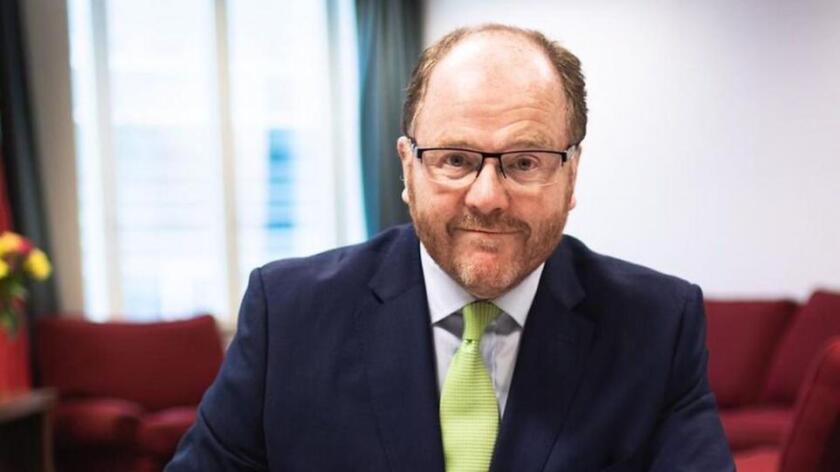
George Freeman claimed he had left office when now-binned AI proposals were first made, despite his resignation actually coming more than a week later

UK intellectual property minister George Freeman has been moved to a newly created Department for Science, Innovation and Technology, it was confirmed today, February 7, amid confusion over comments he made in Parliament last week.

The new department is expected to cover IP, though the exact nature of the brief had not been confirmed at the time of publication. Michelle Donelan will head the department as secretary of state while Freeman will continue in a junior ministerial position.

Meanwhile, Freeman has failed to clarify remarks he made in parliament on Wednesday, February 1, when the government announced it would not be pursuing part of the UKIPO’s artificial intelligence proposals.

Freeman claimed he was not in office when the now-dropped policy for a copyright exemption for text and data mining (TDM) purposes was published.

The Mid Norfolk member of Parliament was minister for IP until his resignation from Boris Johnson’s government on July 7 2022. But the UKIPO actually first published its TDM proposals more than a week earlier on June 28.

Freeman, who was subsequently reinstated as IP minister in October, told the House of Commons last Wednesday that the policy would not go ahead due to strong opposition from the creative industries.

He also appeared to criticise the process that led to the proposal being put forward.

“I hasten to say that they were published after I left government, and it was a period of some turmoil. One of the lessons from this is to try not to legislate in periods of political turmoil,” he added.

Managing IP contacted both Freeman’s parliamentary office and the Department for Business, Energy and Industrial Strategy (BEIS) for clarification on the remarks but has yet to receive a response.

Freeman was a minister at BEIS until the cabinet reshuffle this morning.

more from across site and SHARED ros bottom lb

More from across our site

IP boutique Petillion represented Ikea in the dispute, which concerned the use of the multinational’s trademarks in an immigration-focused campaign. The firm tells Managing IP how it secured the outcome.
The Pizzeys-Griffith Hack integration was designed to create a stronger Australian IP platform but with several ex-Pizzeys principals now gone, the deal's success may depend on where clients place their trust
Thomas Lonsdale and Hsu Min Chung of HGF explore the practical impact of the EPO’s Enlarged Board of Appeal’s decision in G1/25 and its interplay with G1/24
The firm’s recent IP hire and launch of a new robotics industry group signal an effort to capture work emerging from AI entering the physical world
Another firm sets up shop in Dallas, bringing its patent disputes capabilities to one of the US’s busiest litigation venues
Entrepreneurial IP lawyers are still launching specialist firms, but increasingly with larger teams, broader coverage and greater infrastructure than the boutique model once implied
Jevon Louis explains how Covid led to a focus on local clients, discusses why mediation is successful in Singapore and reflects on the growing demand for AI advice
An increase in instructions from domestic companies and litigation for international clients are driving success for the Chinese IP firm, according to two lead partners
Ankur Sangal said he wants his team, nearly 30-strong already, to respond to a growing demand for specialist, commercially focused IP advice in a ‘rapidly evolving’ Indian market
As AI adoption accelerates across corporate IP departments, Simon Webster, president of IP at Clarivate, argues that success will depend less on technology alone and more on data quality, workflow design, and organisational readiness
Gift this article
