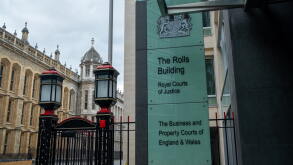
Carpmaels & Ransford has escaped a major damages claim in the England and Wales High Court after German company BASF unsuccessfully claimed the firm’s negligence resulted in the company suffering €1.05bn ($1.2bn) in lost profits.
In a judgment yesterday, October 29, Mr Justice Adam Johnson ruled that BASF should be entitled to only “nominal damages” after Carpmaels missed a deadline for filing an appeal against a patent revocation.
Those damages will be decided at a later date. The final amount could range anywhere between just a few pounds and several hundred pounds.
Carpmaels had already admitted it was responsible for the loss of the appeal but contended that the appeal had little chance of success.
The numbers claimed in the trial, which began in April this year, were eye watering. BASF alleged that the total loss of profits it suffered from Carpmaels missing the deadline to appeal was €1.05 billion.
Although BASF argued these were its calculated losses, it invited the court to conclude the precise losses suffered.
The dispute centred on European patent 1,663,458 (‘458 patent) which, according to the claim, occupied “vital space” in relation to complying with diesel emission standards.
BASF contended that Carpmaels, which admitted negligence on its part, failed to file an appeal in time after the EPO revoked the ‘458 patent in 2012.
BASF said that had the appeal succeeded, the revocation would never have taken effect and the company would have had a valid patent until July 2024.
It added that it would have been able to seek damages from other competitors adjudged to have allegedly infringed the ‘458 patent, and could have cemented itself as a “market leader at a crucial time for NOx emissions products”.
However, Mr Justice Johnson was unconvinced.
“I am not persuaded that overall the claimants lost any real chance of achieving greater awards of business or negotiating more favourable licence terms,” he found.
The judgment came despite the best efforts of BASF’s counsel Roger Stewart QC, who during proceedings quoted Brutus in William Shakespeare’s Julius Caesar, exclaiming: “There is a tide in the affairs of men, which, taken at the flood, leads on to fortune.”
Johnson said: “According to Mr Stewart QC, the tide would have been in for the claimants. Because of Carpmaels’ negligence, they missed it.”
The judge agreed with Carpmaels’ defence, namely that any appeal against the patent’s validity was unlikely to succeed in the first place.
“The likelihood of BASF’s case succeeding on its appeal was less than 50/50,” Johnson found.
“While accepting that there were arguments in both directions, including arguments in favour of validity which could be (and were) properly made, I am persuaded that there were fundamental difficulties with the ‘458 patent which, overall, would have made it less likely than not that any appeal would succeed.”
He added: “My overall assessment is that the claimants are entitled only to nominal damages resulting from Carpmaels’ admitted breach.”
Stewart QC and Pippa Manby of 4 New Square and Miles Copeland of Three New Square, instructed by Reed Smith, acted for BASF. John Wardell QC of Wilberforce Chambers, Henry Ward of 8 New Square and Nick Zweck of Hogarth Chambers, instructed by Clyde & Co, represented Carpmaels & Ransford.