Kit Kat trade mark case sent back to EUIPO by General Court

Kit Kat trade mark case sent back to EUIPO by General Court

kit-kat

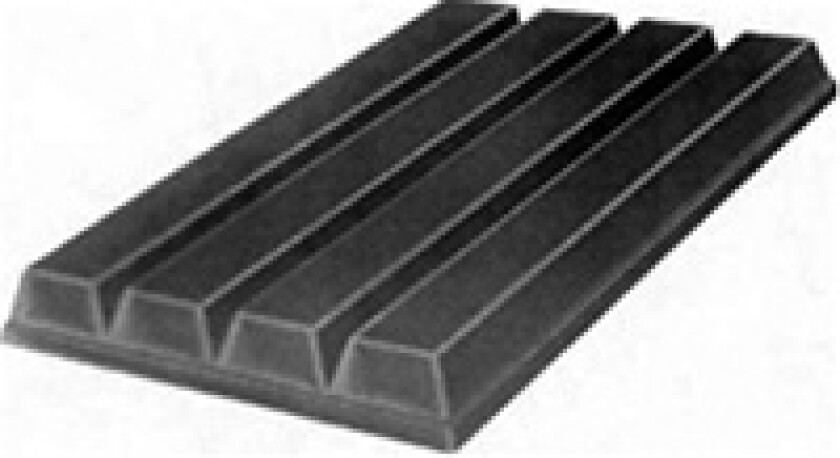
The EUIPO will have to reconsider a trade mark dispute between Nestlé and Mondelez, over the shape of the Kit Kat bar, after the General Court said that distinctive character must be proved in all EU member states

kit-kat-image.png

In its decision (T-112/13) published today, the Court partly upheld an appeal brought by Mondelez (formerly Cadbury) that arose from an invalidity action it filed in  2007.

Mondelez argued that in considering the application to register the Kit Kat shape as a trade mark, the EUIPO Board of Appeal had only considered evidence of distinctiveness acquired through use in 10 member states. 

At the time of Nestlé's trade mark application (2002), the EU had 15 member states. Today, it has 28.

The Court said that in a case such as this one, where the mark does not have inherent distinctive character throughout the EU, the distinctive character acquired through use "must be shown throughout the territory of the European Union, that is, in all the Member States concerned".

cjeu update
The trade mark applied for

But Nestlé had shown distinctiveness "only in a substantial part of the territory of the European Union". Specifically, the Court said that, thanks to Nestlé's surveys and other evidence, the Board had rightly established that the trade mark had acquired distinctive character through use in Denmark, Germany, Spain, France, Italy, the Netherlands, Austria (though this was contested), Finland, Sweden and the UK. These 10 countries represented almost 90% of the population of the EU at the time.

But it had not reached a conclusion on the perception of the mark by the relevant public and assessed the evidence in respect of Belgium, Ireland, Greece and Portugal. (The 15th EU member state at the time was Luxembourg.)

Therefore, said the Court, the Board had erred in law in concluding that the Kit Kat shape had acquired distinctive character through use.

EUIPO will now have to reconsider the case and assess the evidence available from all the member states.

Chocolate case law

lindt.jpg
The Lindt bunny

In its ruling, the General Court referred extensively to another chocolate-related trade mark case, Chocoladefabriken Lindt & Sprüngli v OHIM (C-98/11) from 2012 as well as Louis Vuitton Malletier v OHIM (T-360/12). It concluded that the Lindt case held that there is no requirement that distinctive character acquired through use be proved for each member state but that "such proof may be adduced globally for all the Member States concerned or separately for different Member States or groups of Member States".

Therefore, if the evidence submitted by the trade mark applicant does not cover part of the EU, even if that part is only one member state, "it cannot be concluded that distinctive character has been acquired through use of the mark throughout the European Union".

Sub-categories of goods/services

The General Court also said that proof of genuine use affords protection only for the sub-category or sub-categories of goods/services for which the mark has actually been used.

In this case, the evidence of use was only in relation to sweets and biscuits and cannot cover the other categories applied for, such as bakery products, pastries, cakes and waffles, the Court said.

This case is just one part of extensive litigation between Nestlé and Mondelez. The parties are also fighting over a UK registered trade mark, and the appeal in that case is due to be heard early next year. 

To read more on all the Kit Kat cases, see the list of articles on our dedicated topic page.

more from across site and SHARED ros bottom lb

More from across our site

The court plans to introduce a system for expert-led SEP mediation, intended to help parties come to an agreement within three sessions
Paul Chapman and Robert Lind, who are retiring from Marks & Clerk after 30-year careers, discuss workplace loyalty, client care, and why we should be optimistic but cautious about AI
Brantsandpatents is seeking to boost its expertise across key IP services in the Benelux region
Shwetasree Majumder, managing partner of Fidus Law Chambers, discusses fighting gender bias and why her firm is building a strong AI and tech expertise
Hady Khawand, founder of AÏP Genius, discusses creating an AI-powered IP platform, and why, with the law evolving faster than ever, adaptability is key
UK firm Shakespeare Martineau, which secured victory for the Triton shower brand at the Court of Appeal, explains how it navigated a tricky test regarding patent claim scopes
The firm’s managing partner said the city is an ‘exciting hub of ideas and innovation’
In our latest podcast, Deborah Hampton talks through her hopes for the year, INTA’s patent focus, London 2026, and her love of music
Tech leads at three IP service groups discuss why firms need to move away from off-the-shelf AI products and adopt custom solutions
IP firms say they have been educating some clients on AI use, with ‘knowledge-sharing’ becoming more prevalent
Gift this article