Well that’s caused some debate. A brief write-up about Managing IP’s forthcoming Women’s Forum on the IPKat blog has prompted comments about CIA conspiracies, anti-feminist backlashes and Margaret Thatcher’s motherly (or otherwise) qualities, as well as a Mike Giggler-esque suggestion for boosting the number of women in the patent profession (hiring the Sun’s newly-redundant Page 3 models).
But back to the real world. Here’s why Managing IP decided to launch events aimed at women: we thought it would meet a demand.
We looked at the statistics about the number of men and women beginning their careers in law firms and those that made partnership or took on chief IP counsel roles and saw a gap in the figures and in the market.
We don’t know why more women leave the profession than men: perhaps they can’t (or no longer want to) hack it. Perhaps their priorities change. Perhaps they can’t see a way of returning to law after a career break (even as white collar careers might soon stretch to 50 years).
Perhaps they face systemic and unconscious (or conscious) bias that undermines their commitment and ambition. Perhaps they find it hard to find sponsors (not surprising, given the innuendo about “silver spoons” given by “sugar daddies” detailed by one anonymous IPKat commentator). Perhaps they just need to Lean In.
But we do know that many law firms and companies want to limit the number of smart and expensively-trained staff that choose to leave them and are asking questions about how their culture, practices and policies can help them do that. We thought we could organise events and set up a network that would facilitate the process.
So far our efforts have proved quite popular. Our network has hosted interviews with senior women in the profession and case studies on issues including mentoring and sponsorship. Offering a platform for innovative firms to showcase their own practices and share their experiences helps people at more conservative law firms (of which, we know, there are many) to petition for change.

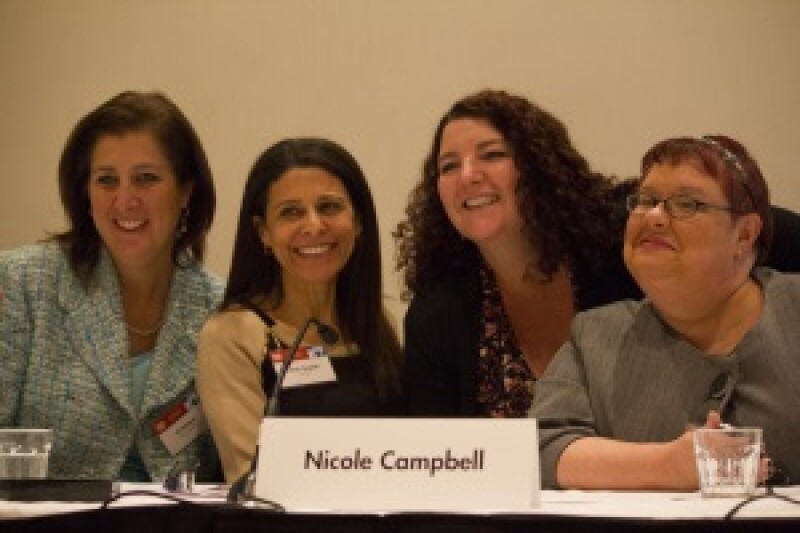
We had more than 200 women (and men) attend our inaugural Women’s International Leadership event in New York last year. The audience was even bigger at our second in San Jose (pictured) and we received more enthusiastic feedback about them than any other IP event I have been involved with. We hope our forum in London on February 24 will be equally well-received.
Our events have given a new platform for senior women in the profession to talk about substantive law issues (and with a roster of speakers like this, there is no compromise on quality) as well as talk about strategies for managing career progression. That has proved helpful for senior professionals who want to share ideas about bringing on and retaining junior staff, as well as offering a whole range of role models for younger women.
This role model effect, we have found, has proved immensely popular. There are many successful people who put their career achievements down to individual capability and ambition. In doing so they often dismiss the importance of having role models in their own likeness. In my experience, these people’s role models often look and sound very much like themselves.
Find out more about the International Women’s Leadership Forum in London on February 24.