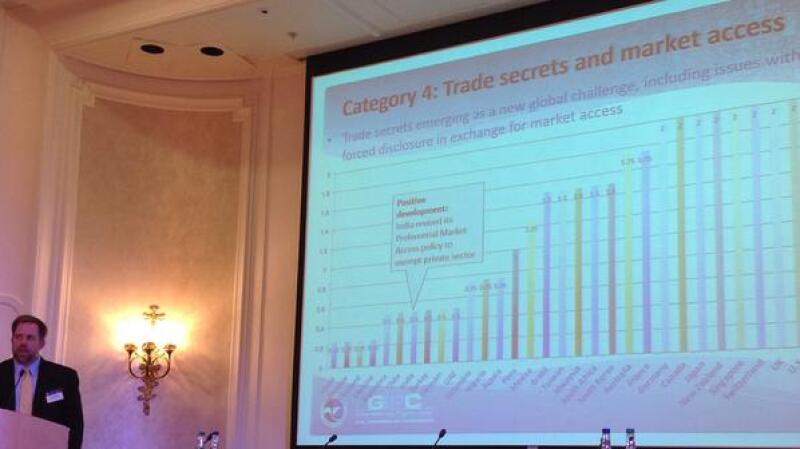
Day two of the International Patent Forum kicked off with a keynote speech from Patrick Kilbride from the Global IP Center at the US Chamber of Commerce (pictured right). He outlined the centre’s International IP index, which seeks to measure the national IP environments in 11 countries.
Industry views on monetisation
The first panel discussion focused on IP monetisation and the speakers (pictured left) considered the advantages and disadvantages of licensing, divestment and litigation as methods for turning IP into an income earner for companies. Andrew Spicer, InterDigital’s senior patent counsel, urged in-house counsel to seek advice from external lawyers and consultants who have expertise in both the law and the technology of the asset class under consideration. “You want them to have instant command of the technology,” he said. “It may be very important in evaluating the non-patent prior art.”

Gavin Clarke, vice-president of IP licensing for the EMEA for Rovi, said that companies that want to acquire or sell IP assets that are no longer part of the seller’s core business often face a big challenge: the seller no longer has much expertise in the technology that is being sold. In these cases, he said, it can be helpful for the buyer and seller to use a third-party broker to help them understand the value and nature of the assets in question.
BRICS and branded drugs
The next three sessions, chaired by lawyers from Adams & Partners, Anand & Anand and Gün + Partners respectively, considered the pharmaceutical patent landscape in three BRICS economies: South Africa, India and Turkey. IP lawyers from Sanofi, Novartis and GSK outlined their own experiences of navigating the patent landscape there and explained why drugs companies should handle licensing negotiations carefully and develop transparent policies on patient access programmes if they want to avoid reputation-damaging litigation.

Later, lawyers from Licks Attorneys provided an overview of the patent landscape in Brazil and declared the country to be far from anti-patent. Despite individual congresspeople submitting plenty of proposals to amend the patent law, they all “lack momentum”, said Otto Licks.
TOP4 and the bottom line
Talk over lunch was dominated by the EPO’s proposals for fees for the new Unitary Patent – at least in conversations I had. The feeling from users and their representatives was, unsurprisingly, that the EPO’s so-called TOP4 and TOP5 proposals are too high, and would make the system unattractive for those companies whose filing strategies are largely dictated by increasingly tight budgets.
The first post-lunch session focused on an alternative to patent protection: trade secrets, with speakers comparing levels of protection on offer in key jurisdictins and explaining the likely impact of a change in the rules in the European Union. Calum Smyth, global head of IP at Barclays (who had generously agreed to speak on the panel with just a few hours’ notice after another speaker was unable to attend), added a strong dose of realism to the discussion: “We can sit in ivory towerstalking about the finer points of trade secrets rules, but in practice you would be surprised by how much leakage in the supply chain there is.” What was important to try and limit it, said Smyth, was an understanding of what secrets you have, and how they can be protected.
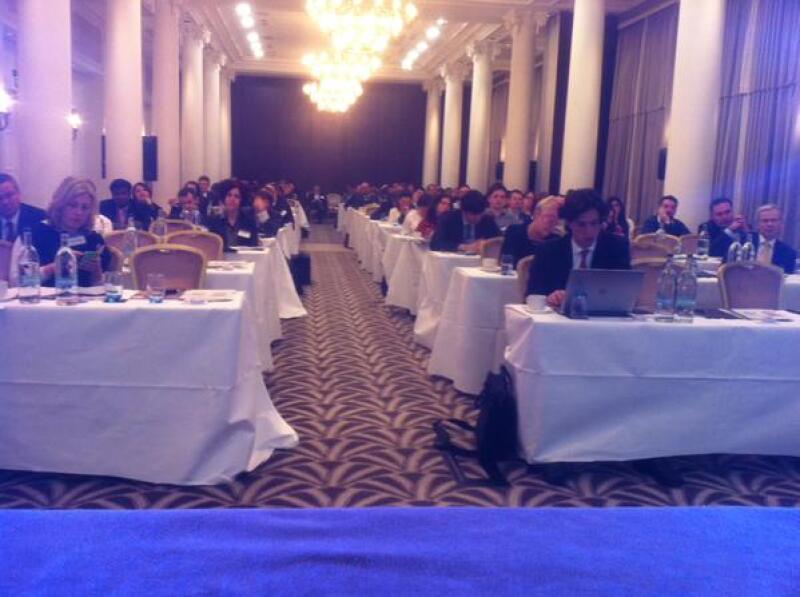
The final session on tax and transfer pricing saw Adrian Gregory of PwC explain how governments use tax competition to attract business – but pillory businesses that are attracted by lower rates elsewhere. He outlined some of the measures that national governments and bodies such as the OECD are taking to close tax loopholes and respond to criticism about the tax practices of multinational companies. “Your tax colleagues will be thinking ‘do we have a potential problem?’,” he said. Despite being the last session at the end of the two-day event the topic received plenty of interest: it garnered more questions than any other. The role of IP in the bottom line is clear.
For more news from the Forum, view #patentforum2015 on Twitter.