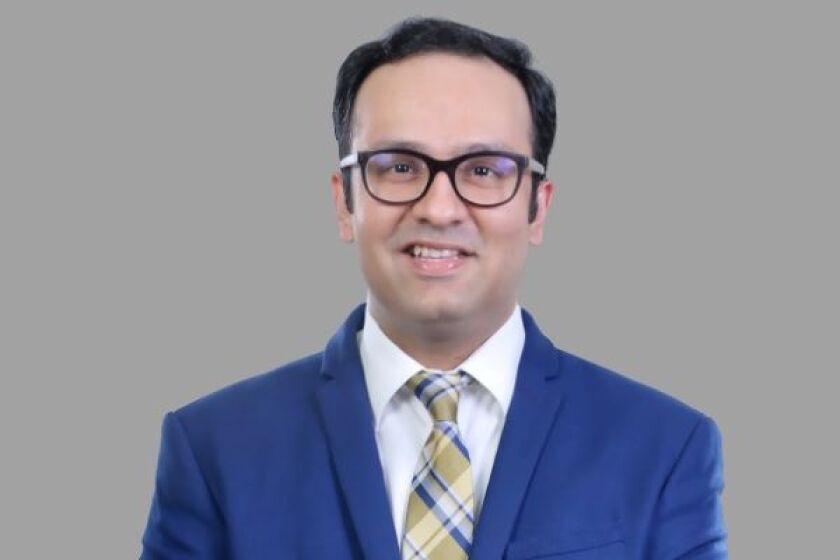
The Indian Copyright Office has issued a notice of withdrawal to Ankit Sahni, the man who secured India's first-ever copyright registration recognising an artificial intelligence tool as the co-author of an artwork, it was revealed to Managing IP today.
The withdrawal notice, sent on November 25, asked Sahni to inform the Copyright Office about the legal status of the AI tool Raghav Artificial Intelligence Painting App, and invited his attention to Section 2(d)(iii) and Section 2(d)(vi) of the Copyright Act.
Section 2(d)(iii) sets out that the term ‘author’ in relation to an artistic work means an artist, and Section 2(d)(vi) states that the person who causes an artistic work to be created shall be its author.
Sahni responded to the notice on December 8 by stating that the Copyright Act did not contain any express provision for the registrar of copyright to review his own decision, unlike Section 127 of the Trade Marks Act and Section 77 of the Patents Act.
On top of that, there was no provision under the act that allowed the registrar to withdraw a copyright registration after its grant, Sahni argued.
“This is probably why the notice, notably, does not place reliance on any provision of the act,” Sahni told Managing IP.
Related stories
The artwork co-author said he also believed the registrar couldn’t withdraw the entire registration as the Copyright Act provided for the protection of computer-generated works.
As far as AI-authorship was concerned, he pointed out, the Copyright Act and the Copyright Rules didn’t define the term ‘person’ under Section 2(d)(vi), and the General Clauses Act defined the term in an inclusive manner to cover artificial and juristic persons.
The registrar’s only option now is to file a rectification petition before a high court under Section 50 of the Copyright Act, said Sahni.
He added: “But the Copyright Office is unlikely to approach the high court as prescribed under law.”
“If it does, that by itself, would be a first in more ways than one. I also do not expect the registrar to pass a speaking or reasoned order addressing the legal issues raised in our 17-page response.”
Sahni and his team will explore legal options once they receive a conclusive decision from the registrar.
He told Managing IP: “Our goal remains to keep the AI-authorship debate alive until the decision-makers reach a tangible policy or legislative change.”