Is the B word now less of a curse?

Managing IP is part of Legal Benchmarking Limited, 1-2 Paris Gardens, London, SE1 8ND

Copyright © Legal Benchmarking Limited and its affiliated companies 2026

Accessibility | Terms of Use | Privacy Policy | Modern Slavery Statement

Is the B word now less of a curse?

Last September one of the speakers at our first European Patent Reform Forum described the fear of bifurcation at the UPC the "British angst". One year on and it seems that there is rather less angst around

Part of the reason for that is that lawyers from outside Germany ­– which already operates a bifurcation system for patent litigation – are finding our how the rules are likely to operate in the new Unified Patent Court.

But it is also because judges themselves are beginning to clarify the kinds of patents and patent cases that are likely to be subject to bifurcation ­– and suggesting the volume may be lower than many IP lawyers feared.
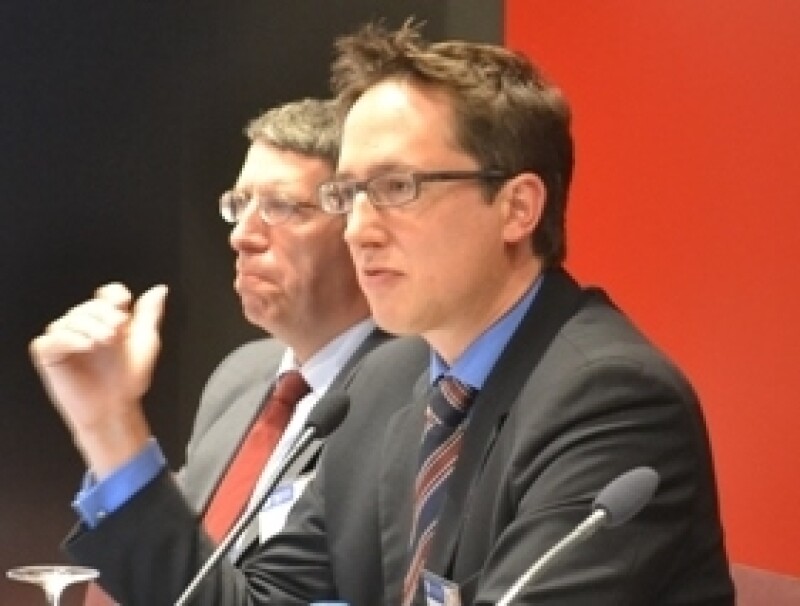
judge-buttner.jpg

At our Forum in Munich in September 2013, for example, German judge Tilmann Buttner of the Regional Court of Düsseldorf  (pictured) explained to the audience which cases he might bifurcate if he were a UPC judge.

A year later at our Forum in Paris, Buttner said that over the past 12 months he had revised his thinking and was now less inclined to bifurcate.

“Last year I talked about some cases being “bifurcation cases” and others not. I would rather not bifurcate. [UPC] courts are in a good position to render good and reasonable decisions on revocation as well as infringement because they will have a technical judge.”

“My message is that we may not bifurcate. But even if we do, it’s not all bad. The courts are likely to hand down a conditional decision that is subject to the revocation decision.”

But there is also a sense that lawyers are becoming more adept at developing new strategies to deal with new patent litigation rules.

Speaking about the two-year-old US Patent Trial and Appeal Board, Charles Larsen of Ropes & Gray told the audience: “We Americans used to fear bifurcation. Now we’re doing it”.

You can read more about the popularity of the PTAB’s procedures for parties seeking to invalidate a patent in the latest issue of Managing IP.

more from across site and SHARED ros bottom lb

More from across our site

After five IP partners left the firm for White & Case, the IP market could yet see more laterals
The court plans to introduce a system for expert-led SEP mediation, intended to help parties come to an agreement within three sessions
Paul Chapman and Robert Lind, who are retiring from Marks & Clerk after 30-year careers, discuss workplace loyalty, client care, and why we should be optimistic but cautious about AI
Brantsandpatents is seeking to boost its expertise across key IP services in the Benelux region
Shwetasree Majumder, managing partner of Fidus Law Chambers, discusses fighting gender bias and why her firm is building a strong AI and tech expertise
Hady Khawand, founder of AÏP Genius, discusses creating an AI-powered IP platform, and why, with the law evolving faster than ever, adaptability is key
UK firm Shakespeare Martineau, which secured victory for the Triton shower brand at the Court of Appeal, explains how it navigated a tricky test regarding patent claim scopes
The firm’s managing partner said the city is an ‘exciting hub of ideas and innovation’
In our latest podcast, Deborah Hampton talks through her hopes for the year, INTA’s patent focus, London 2026, and her love of music
Tech leads at three IP service groups discuss why firms need to move away from off-the-shelf AI products and adopt custom solutions
Gift this article
