Plavix case settled before Supreme Court of Canada hearing

Managing IP is part of Legal Benchmarking Limited, 1-2 Paris Gardens, London, SE1 8ND

Copyright © Legal Benchmarking Limited and its affiliated companies 2026

Accessibility | Terms of Use | Privacy Policy | Modern Slavery Statement

Cookies Settings

Plavix case settled before Supreme Court of Canada hearing

A case that was expected to provide guidance on Canada's "promise" doctrine of utility and the test for sound prediction of utility has been settled a day before it was due to be argued at a Supreme Court hearing

plavix.jpg

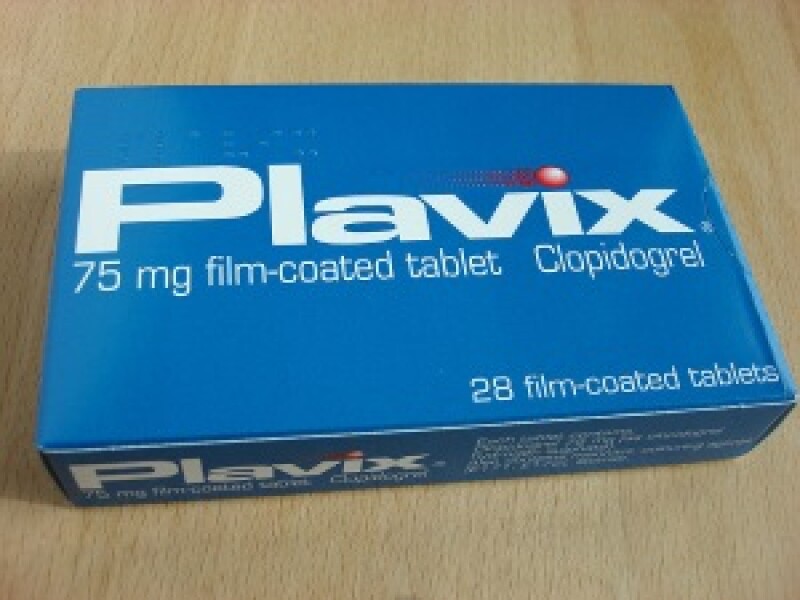
On November 3, Apotex discontinued its appeal to the Supreme Court of Canada regarding the validity of Sanofi-Aventis' patent claiming clopidogrel bisulfate, which is marketed as Plavix. As a result, the Supreme Court hearing scheduled for November 4 has been cancelled.

Plavix is used to prevent blood clots after a heart attack or stroke.

Observers were hoping the case would provide some certainty around the scope of the utility requirement. In an amicus brief in the case, AIPPI noted that following the Supreme Court of Canada’s decisions in AZT in 2002 and Viagra in 2012 “there has been uncertainty with respect to the precise scope of the utility requirement under Canadian law and in particular the extent to which the utility of a patented invention should be disclosed or supported in the patent specification.”

In AZT, the Court stated that utility must either be demonstrated or be a sound prediction based on information and expertise available at the filing date. In Viagra, the Court declined to decide the scope of any disclosure requirement associated with “sound prediction”. The brief stated that this “remains an open question in the jurisprudence of this Court, and an area of significant uncertainty in Canadian law”.

Other organisations that filed briefs in the case include BIOTECanada, Canada’s Research-Based Pharmaceutical Companies, the Centre for Intellectual Property Policy, the Canadian Generic Pharmaceutical Association and FICPI.

more from across site and SHARED ros bottom lb

More from across our site

Armstrong Teasdale’s Jim Heinen Jr discusses the challenge of balancing billables, business development and family life and explains why not all patent lawyers are science nerds
From cross-border jurisdiction to the end of the transitional period, Powell Gilbert’s Ioana Sabau and Bryce Matthewson predict the biggest talking points ahead
A wave of office launches and lateral hires reflect the draw of patent disputes, but booming AI, semiconductor and data centre markets are offering an even bigger IP opportunity
The hire of Frederick Nicolle as a partner continues Pinsent Masons' expansion while reducing Simmons’ patent prosecution offering in London to zero
The expansion into Granada forms part of a national ‘decentralisation’ strategy focused on providing proximity to research and tech businesses away from traditional hubs
Three successive wins have got the firm eyeing additional opportunities as ITC work booms
While many firms remain focused on generative AI, recent hires and practice launches suggest the next battle may be for lawyers who understand how AI is moving into the physical world
The explosion of data centres has prompted patent pool operators to create new licensing opportunities
The court struck out copyright claims brought by Ladbrokes owner Entain, saying that ownership details should have been completed before litigation began
Düsseldorf has overtaken Munich as the UPC's busiest division, while firms including Winston Taylor, Clifford Chance, and Hoyng Rokh Monegier featured in disputes involving Abbott, Essity, Amazon and Hurom
Gift this article