Rea outlines USPTO future after Kappos

Managing IP is part of Legal Benchmarking Limited, 1-2 Paris Gardens, London, SE1 8ND

Copyright © Legal Benchmarking Limited and its affiliated companies 2026

Accessibility | Terms of Use | Privacy Policy | Modern Slavery Statement

Cookies Settings

Rea outlines USPTO future after Kappos

Following the departure of USPTO director David Kappos on Friday, the organisation will continue efforts to improve consistency internally and between patent offices around the world, said acting director Teresa Stanek Rea on Saturday

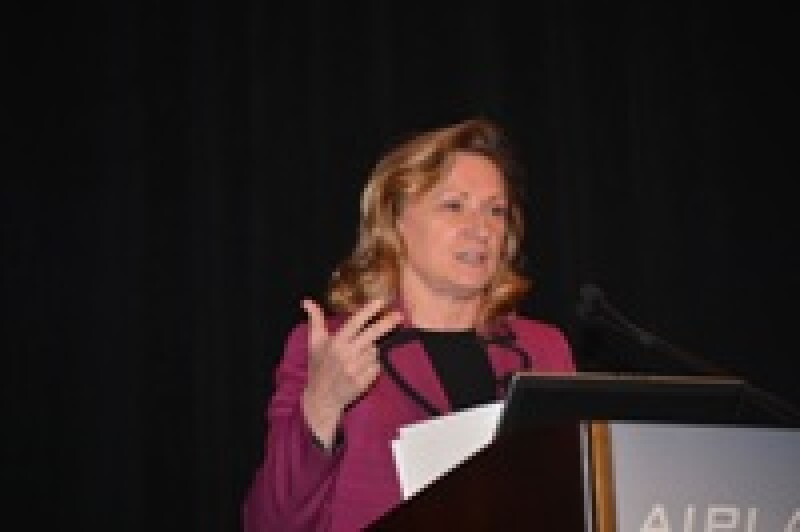
USPTO acting director, Teresa Stanek Rea

“While perfect harmonisation is not achievable, we are going to keep chipping away little by little,” said Rea. “We are trying to gain efficiencies for businesses so that people will file more patent applications with us - and that’s our end-game goal.”

Rea was addressing attendees at AIPLA’s Mid-Winter Institute conference in Tampa on Saturday. Quoting leaders from the 2011 USPTO-hosted Asia-Pacific Cooperation in the 21st Century Forum, she said: “The time for substantive harmonisation is now.”

In an effort to improve patent examination standards around the world, the USPTO has introduced what Rae described as a “train the trainers” programme. Under the scheme, senior examiners from the USPTO coach examiners from developing nations, who then pass on the knowledge they have gained to colleagues in their home countries.

Rea said the USPTO is also working with economists to quantify the financial benefits of a strong IP system to a country’s economy.

She told attendees that, subject to budgetary approval, the Office hopes to hire an additional 1,000 patent examiners this year, which will help to decrease the backlog of applications. The backlog was reduced by 20% under Kappos, despite an average increase in patent applications of 5% per year.

Rea described Kappos as a “true visionary” who made “dramatic changes” to the patent office.

“He made the USPTO a model for the 21st Century – an efficient and customer-friendly organisation,” she said.


more from across site and SHARED ros bottom lb

More from across our site

Boehringer Ingelheim has instructed a team from Kirkland, while Teva is being represented by Pinsent Masons
The Delhi High Court’s latest directions offer an opportunity to move beyond remedies against bad-faith registrations and address how suspicious applications are identified in the first place, says Fatima Baig at Lexlinc
Camilla Hamrin describes how the acquisition by Acapo Onsagers will impact Bergenstråhle’s trademark practice – and reflects on changes she has seen over 30 years in IP
On a recent trip to the French capital, we learned that the UPC is squeezing domestic litigation while firms are chasing senior talent, experimenting with AI and considering new ways of organising their practices
Daniel Law says a string of lateral hires and broader expansion plans will strengthen its position to capitalise on Brazil’s burgeoning IP and patent litigation market
Jason Raeburn’s arrival will expand the firm’s London footprint in AI, copyright and tech disputes
The firm is shaping its AI strategy around partnerships with Harvey and Legora alongside internally developed tools from its legal technology company, Eltemate
A dispute Down Under shows why trademark lawyers cannot afford to wait on the sidelines when a rival brand gathers momentum
The Third Circuit’s decision in Thomson Reuters v ROSS marks the first appellate-level decision addressing AI and fair use, prompting copyright counsel to consider arguments around potential licensing markets
Injunctions for HandsFree Labs and Align Technology come as the Court of Appeal warns that busy teams must have the staffing and resources to meet UPC deadlines
Gift this article