Several years ago, a company registered a trade mark no 616808 on application no 2015721705 with priority of June 14 2015 for services in Class 41.

The image contained a stylised picture of a lion under which there was a wavy ribbon with the inscription DOCENDO DISCIMUS.
The owner of international registration no 1198888 valid in Russia in respect of the same services in Class 41 appealed against the registration no 616808. The trade mark of the appellant is also a combined designation including a stylised picture of a shield with an image of a lion. The shield is inserted into a circle resembling a fastened belt with the inscription KING′S COLLEGE. A stylised picture of a crown is located above the whole image while under it there is a wavy ribbon with the word elements HONESTY FAITH COURAGE.

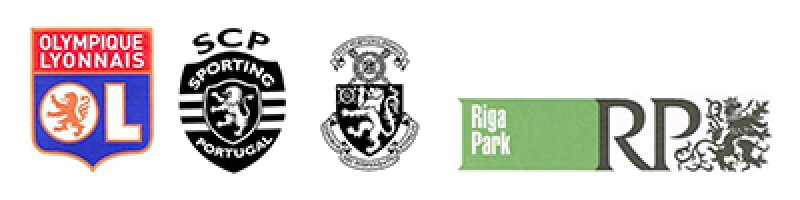
The owner of the contested trade mark, in response to the appeal, argued that the picture of the lion is not decisive when comparing both trade marks because the image of the lion has lost distinctiveness resulting in a number of trade marks which have been registered with the image: nos 917640, 1217015, 1167712, 393919.
Despite this, the Chamber of Patent Disputes upheld the appeal and cancelled registration no 616808. Why did it do this?
The designations under comparison include word elements different in their pronunciation: DOCENDO DISCIMUS, KING′S COLLEGE and HONESTY FAITH COURAGE respectively. On the other hand, the compared designations should be recognised as similar due to the overall visual impression they create; they include similar compositions laid out in the same graphic manner.
In the first place, stylised pictures of lions placed in the central part of the designation strike the eye. The lions are practically the same. They stand on their hind paws and are pictured in profile. The designations include lions in the same location standing against the background of a shield placed in a circle. Ribbons curved at their ends occupy the same position and both include word elements.
As a result of the above, and considering that most of the essential individual pictorial elements in the designations are similar, the Chamber of Patent Disputes came to the conclusion that they are similar despite their insignificant differences.
The owner of the disputed trade mark argued that the image of the lion should not be decisive when comparing the designations because the image had lost its distinctiveness. The Chamber dismissed this argument and stated that other cited trade marks include images of lions that are different from those in the compared designations.
Both trade marks were registered in relation to Class 41 and the owner of trade mark no 616808 did not dispute this.
There were also arguments regarding relevant trade marks and court judgments outside Russia. However, these arguments were dismissed as irrelevant.

|
Vladimir Biriulin |
Gorodissky & Partners
Russia 129010, Moscow
B. Spasskaya Str
25, stroenie 3
Tel: +7 495 937 6116 / 6109
Fax: +7 495 937 6104 / 6123