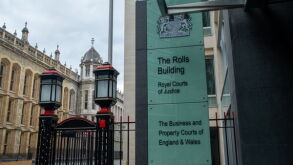
Nestlé has lost its latest legal battle against Cadbury over the shape of its KitKat chocolate bar at the Court of Appeal.
Nestlé has fought tirelessly against Cadbury (owned by Mondelez) to register the shape of its KitKat bar, a four-fingered chocolate wafer, as a trade mark in the UK.
Nestlé applied for the current registration in 2010. Its application was opposed by Cadbury and subsequently refused by the UK Examining Officer in 2013. Nestlé appealed the decision to the High Court.
In January 2017, the High Court found in favour of Cadbury, ruling that the bar's shape was not protectable. Nestlé appealed the decision to the Court of Appeal.
The Court of Appeal dismissed Nestlé's attempt to overturn the High Court's decision. The Court held that the shape was not protectable as it lacked distinctive character and the evidence put forward by Nestlé did not show that the shape had acquired a distinctive character in the eyes of the consumer. Accordingly, the decision was upheld by the UK Court of Appeal in May 2017.
Nestlé is unsurprisingly disappointed with the Court of Appeal's decision and is considering its position, with the possibility of appealing to the UK Supreme Court.
Nestlé has warned competitors that "this judgment does not mean that our four finger-shape is now free for use in the UK or elsewhere".
This decision is exacerbated by the fact that Nestlé lost the latest leg of its battle against Mondelez in December 2016 over the validity of its EU trade mark for the shape of its KitKat when the General Court of the European Union annulled an earlier decision to register the shape.
This is not the first time that Nestlé and Cadbury have been embroiled in legal battles over trade marks, with Nestlé successfully preventing Cadbury from registering its iconic tone of purple as a trade mark in 2013.
This case emphasises the difficulties that can ensue when attempting to obtain trade mark protection for a product's shape and the high threshold of evidence required to show that the shape has in fact acquired a distinctive character through use.

|
Helga Chapman |
Chapman + Co
Kings Park House, 22 Kings Park Road
Southampton SO15 2AT
United Kingdom
Tel: +44 (0) 23 80000 2022