In Philip Morris Brands Sarl v Rothmans Brands Sdn Bhd & Anor, the court held that collating information and gathering insights does not amount to "use" under the Trade Marks Act 1976 (TMA).
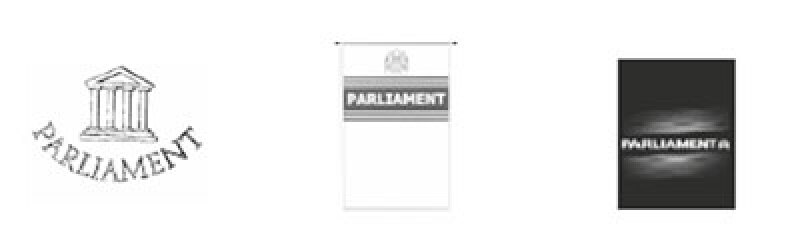
The case related to expungement of the defendant's marks for the word Parliament and the three logos (shown above), all registered for tobacco products and smokers articles in Class 34. The plaintiff, as an aggrieved party, has made an application to expunge the defendant's Parliament marks on grounds that there was no use in good faith by the defendant pursuant to section 46(1)(b) of TMA.
The plaintiff has established that it is an aggrieved party by virtue of its worldwide use of the Parliament mark with the intention of expanding its business in Malaysia under the same mark.
In establishing non-use, the plaintiff relied upon investigation reports and information obtained from the defendant's website including annual report of the BAT Malaysia and BAT Malaysia's price list report. The judge held that this information is sufficient to establish prima facie non-use and that there is no requirement in law that requires the plaintiff to conduct a market survey.
The first defendant's only evidence of use of the Parliament marks was the launch of cigarettes bearing the Parliament mark in January 2008 and sales of 8½ cartons. The first defendant contended that it has made a commercial decision to temporarily halt the sale of cigarettes bearing the Parliament mark to review and revise its launch strategy. As the application to expunge was made on April 9 2014, the use in January 2008 is beyond the relevant statutory period which is between March 9 2011 and March 9 2014.
The defendant contends that it has used the Parliament mark during the statutory period by way of conducting research and development to ensure the commercial success of Parliament cigarettes. The judge held that "studying and collating information" and "gathering insights" for purposes of a revised launch plan does not amount to use of the Parliament mark. Section 3(2) of the TMA and the case of Godrej Sara Lee v Siah Teong Teck & Anor (No 2) [2008] 7 CLJ 24 provide that use of a mark must be physical use and would include affixing the mark to goods or advertising material.
In Lam Soon Edible Oil v Hup Seng Perusahaan Makanan (M) Sdn Bhd [2010] 5 CLJ 975, the judge had similarly considered the issue of continuous development, research and collation of information during the relevant statutory period when considering the question of use. The judge in the present case however distinguished this case with that of Lam Soon as there was continuous advertising, finalisation of packaging artwork and acquisition of raw materials of goods during the statutory period which were absent in the present case.
The judge further held that the defendant cannot rely on the special circumstances of non-use under section 46(4) of the TMA on the basis that the Control of Tobacco Products Regulations prohibits tobacco advertising. The defendant had made a commercial decision to halt sales of the cigarettes bearing the Parliament marks for purposes of collating information and gathering insights hence it is concluded that there is no physical use by the defendant.
The Court's decision affirms that use under the TMA must be in relation to physical use of a mark and merely collating information, conducting research and development for commercial strategy is not sufficient to prevent expungement on the basis of non-use.

|
|
Chew Kherk Ying |
Woo Wai Teng |
Wong & PartnersLevel 21, The Gardens South Tower, Mid Valley City, Lingkaran Syed Putra59200 Kuala LumpurMalaysiaTel: +603 2298 7888Fax: +603 2282 2669www.wongpartners.com