

The USPTO on May 19 released a final rule containing amendments to the regulations for Patent Trial and Appeal Board (PTAB) proceedings.
The changes include increasing the page limit for motions to amend and the petitioner’s reply brief to 25 pages from 15, as well as allowing an appendix in motions to amend.
Changes welcomed
The increases to the page numbers were welcomed by patent owners, who are frustrated by the limited space effectively making motions to amend impossible to get. Other changes such as clarifying that the number of claims in a petition must be included when calculating fees and making clear that more than one back-up counsel is allowed are modest.
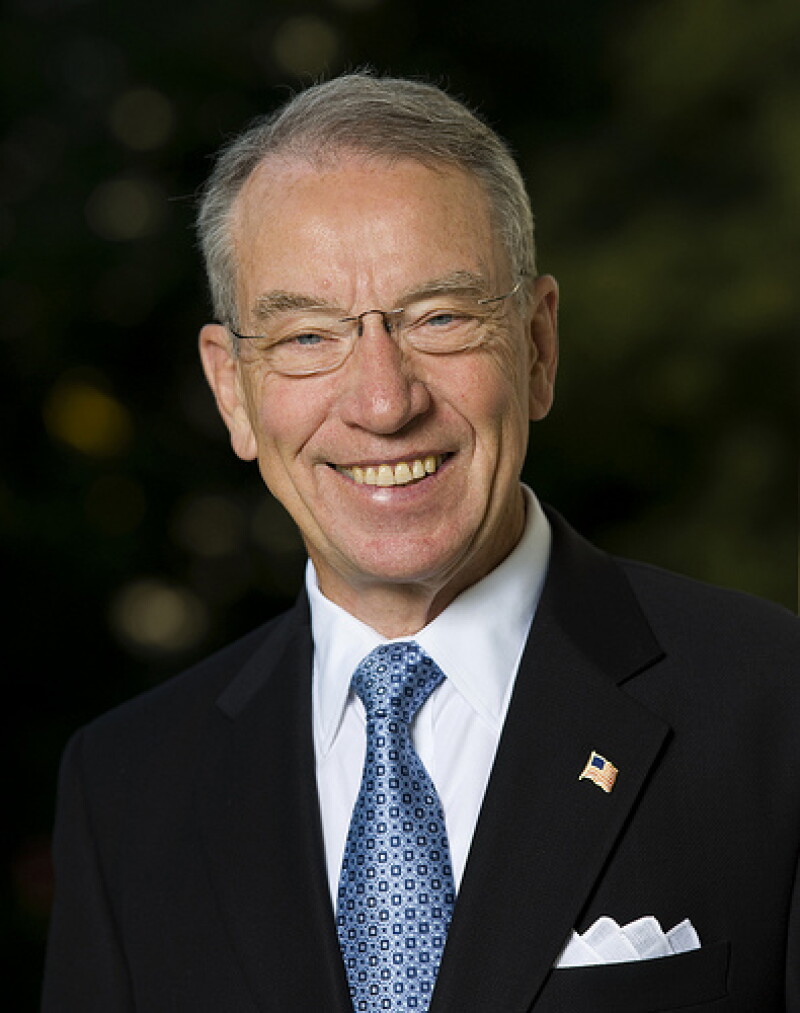
Calls are being loudly made for much bigger changes to PTAB proceedings. Two days after the final rule was issued, Engine, Public Knowledge, Electronic Frontier Foundation and R Street wrote to Senators Chuck Grassley (below left) and Patrick Leahy to proclaim support of their PATENT Act. The organisations noted that conversations were underway about the inter partes review programme, and suggested some “areas where these proceedings could be strengthened”.
The suggested changes were:
Lowering petition fees for small and micro entities, rather than everyone paying $23,000 to institute an IPR.
Allowing petitioners to file replies, instead of the situation now that, according to the letter, “unfairly allows a patent owner to raise new, unexpected arguments that will go unanswered”.
Allowing petitioners the right to appeal, rather than the old inter partes reexamination system of a petitioner not being allowed to appeal, which the letter said “creates an unfair symmetry that should be addressed as it runs directly contrary to congressional intent in the AIA”.
Allowing petitioners to raise challenges under Section 101 and 112.
Extending covered business method reviews to cover all pre-Alice patents instead of completely closing the CBM programme in 2020.
Horrifying
Some of this sounds sensible. Allowing lower fees for small and micro entities is something the USPTO already does for patent filings, for example. But most of these provisions would horrify patent owners, who are already unhappy at the degree to which PTAB proceedings have shifted the balance of power.
For their part, more pro-patent groups are also calling for wide-ranging adjustments to the PTAB that they believe would even things up a bit. BIO, for example, said it could not support any patent litigation such as the PATENT Act “that does not meaningfully reform the IPR system”. PhRMA also said it “would have to oppose patent legislation that does not include changes to more fairly balance post-grant proceedings at the PTO”.
Pro-patent groups prefer the STRONG Patents Act, which would make sweeping changes to the PTAB. These includes first amendments being granted as a matter of right, eliminating the broadest reasonable interpretation standard for claim construction, including evidence in preliminary responses with the petitioner able to respond with a reply, mandating different panels be used for the institution determination and the actual trial, and not allowing an IPR or PGR if a reissue or reexamination is pending.
These are radical changes. The STRONG Act is unlikely to go anywhere but as the letter from Engine, Public Knowledge, Electronic Frontier Foundation and R Street made clear, the PTAB is now very squarely a part of discussions about all patent reform.
Constant change
The question now is whether Congress has time to pass any reform this term and to what degree the PTAB gets caught up in it.
For its part, the USPTO is mulling making further adjustments. The changes made last week were deemed “quick fixes” by the Office. It is considering proposing a number of other revisions to rules including further modifications to the motion to amend process, adjustments to the evidence that can be provided in the patent owner preliminary response, and clarification of the claim construction standard as applied to expired patents in AIA proceedings.


