
Also on the blog this week:
Signs of our times: introducing universal sign marks
DSM, patent box, WIPO and EPO: European news roundup
Guest post: UK and China join forces to strengthen IP protection
Eight highlights from the AIPPI Congress in Rio de Janeiro
The rise of “efficient infringing”
The New York Times had an interesting op-ed by business columnist Joe Nocera called “The Patent Troll Smokescreen”. He was responding to the recent victory by The University of Wisconsin-Madison over Apple, and asked whether what had happened in this case was any different to the actions of a patent troll.
“But, of course, nobody thinks a university is a patent troll,” he wrote. “Universities are supposed to come up with new ideas, not manufacture new products. That’s what companies do. If a university holds a scientist’s patent, the main way it gets the innovation into the hands of a company is through a licensing agreement.”

WARF, the university’s licensing unit, is known for fiercely defending its patent portfolio. This month a jury ordered Apple to pay it $234 million in damages. But Nocera argued that, although this sounds like a lot of money, Apple was actually the big winner in this.
Nocera said the effort to crack down on trolls through the AIA was also hurting “legitimate inventors”, and that a series of Supreme Court rulings had putting onerous burdens on inventors, while making it easier for big companies to take advantage of innovations unlicensed.
“Of course, they don’t call it stealing,” he said. “But according to Robert Taylor, a patent lawyer who has represented the National Venture Capital Association, a new phrase has emerged in Silicon Valley: ‘efficient infringing.’ That’s the relatively new practice of using a technology that infringes on someone’s patent, while ignoring the patent holder entirely. And when the patent holder discovers the infringement and seeks recompense, the infringer responds by challenging the patent’s validity.”
Big win in Big Pimpin’ trial
The copyright trial over Jay Z’s 1999 hit Big Pimpin’ was abruptly ended by Judge Christina Snyder in the Central District of California this week.
Baligh Hamdi’s song Khosara Khosara is sampled in Big Pimpin’. Osama Fahmy, the nephew of the Egyptian composer, claimed Jay Z and producer Timbaland did not have permission from his family to use the distinctive flute notes from the 1957 song.
Jay Z and Timbaland argued that they believed did have permission after paying EMI Music Arabia $100,000 in 2001.
Judge Snyder ruled Fahmy lacked standing to pursue the claim and it wold not be necessary to ask the jury for a verdict. Fahmy also argued that the lewd lyrics of the rap song violated his moral rights under Egyptian law. The judge ruled the lyrics were irrelevant.
“We and our clients obviously are very pleased with this decision. The court correctly ruled that the plaintiff had no right to bring this case and cannot pursue any claim of infringement in connection with Big Pimpin’ whatsoever,” the Guardian quoted Jay Z’s attorney Christine Lepera as saying. Fahmy’s attorney said he would appeal.
The same day that the ruling was released Beyoncé, Jay Z’s wife, also won her own copyright case, reports Techdirt. Ahmad Javon Lane had claimed that her song “XO” infringed on his song “XOXO”.
Pandora playing on android Pandora settles
Pandora and a coalition of record companies have agreed a $90 million settlement for the music streaming service’s use of recordings created before 1972.
The settlement involves ABKCO Music & Records, Capitol Records, Sony Music Entertainment, UMG Recordings, and Warner Music Group.
“Major settlements with SiriusXM and now Pandora means that an iconic generation of artists and the labels that supported them will be paid for the use of their creative works,” said Recording Industry Association of America chairman and CEO Cary Sherman in a statement. “That is a significant milestone and a big win for the music community.”
SiriusXM agreed a $210 million settlement with the coalition in June this year.
PTAB institutes another Kyle Bass IPR
The Patent Trial and Appeal Board has instituted another Coalition for Affordable Drugs inter partes review petition challenging a Shire patent. The most recent institution involves a patent protecting Gattex, a short-bowel syndrome treatment, following institution of an IPR challenging a patent covering Lialda in September.
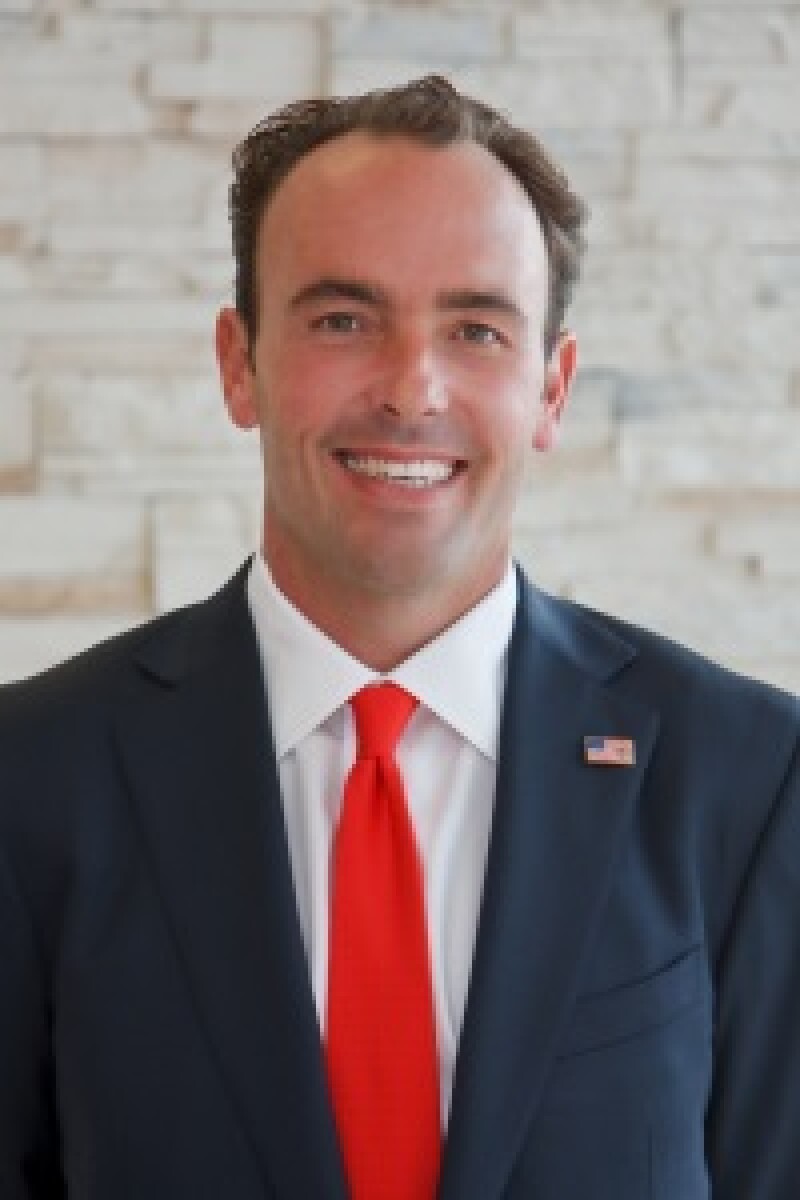
As Mimesis Law noted in a blog post, Shire paid $5.2 billion earlier this year for the company that developed Gattex.
The PTAB rejected Shire’s attempt to differentiate the invention from the prior art presented and its argument that secondary considerations favoured a finding of non-obviousness.
“Also failing was Shire’s attempt to have the petition bounced for failure to name all the real-parties-in-interest (“RPI”),” said Mimesis. “In particular, Shire argued that investors in Bass’ funds should have been named in the petition, but the PTAB responded that such ‘passive investors’ did not render themselves RPI’s, because they were not shown to control the petition, or to have paid to ‘initiate any particular’ IPR. On this issue, the PTAB indicated that its core focus is on those entities that could ‘control’ the petition or the subsequent proceeding, and felt that Shire failed to come forward with evidence to show that Bass’ petition missed naming any such party as an RPI.”
Cheerleading case Is cheerleading spat heading to SCOTUS?
The Sixth Circuit Court of Appeals recently ruled in Varsity Brands v Star Athletica that Varsity Brands’ designs could be separated from the utilitarian aspects of cheerleading uniforms.
Foley Hoag published a good analysis of the case on its Trademark & Copyright Law blog, and noted it is possible the Supreme Court could weigh in on the question of whether clothing designs are sufficiently severable from the utilitarian aspects of the clothing so that the designs can be protected by copyright.
Varsity Brands had sued Star, alleging that Star had copied its two-dimensional stripes, colours and other ornamentation familiar to cheerleading uniforms.
Foley Hoag concluded: “Following the Sixth Circuit’s decision, Star filed a petition for rehearing en banc, which was denied. Star now intends to take the case to the Supreme Court and has filed a motion requesting that the Sixth Circuit stay the issuance of its mandate while Star prepares its petition for a writ of certiorari. It remains to be seen whether and how the Supreme Court will answer what Star has argued is ‘the single most vexing, unresolved question in all of copyright: determining whether an element of a useful article is conceptually separable from the article and therefore protectable.’”
In our news and analysis this week:
Best practices for PTAB success
Judges slam useless objections at AIPLA Annual Meeting
Interview: Lisa Jorgenson, AIPLA Executive Director
Ninth Circuit flips in MTM v Amazon trade mark case
Judge Alan Lourie: An evolving IP landscape
Michelle Lee outlines USPTO priorities at AIPLA Annual Meeting
Interview: Sharon Israel, AIPLA President
Reaction: the Google Books ruling
Sponsored roundtable: China’s evolving patent system
The universal language of non-verbal design marks
Sponsored roundtable: How to patent your computer-implemented inventions in China
SIPO and EPO highlight IP cooperation


