Is the B word now less of a curse?

Managing IP is part of Legal Benchmarking Limited, 1-2 Paris Gardens, London, SE1 8ND

Copyright © Legal Benchmarking Limited and its affiliated companies 2026

Accessibility | Terms of Use | Privacy Policy | Modern Slavery Statement

Is the B word now less of a curse?

Last September one of the speakers at our first European Patent Reform Forum described the fear of bifurcation at the UPC the "British angst". One year on and it seems that there is rather less angst around

Part of the reason for that is that lawyers from outside Germany ­– which already operates a bifurcation system for patent litigation – are finding our how the rules are likely to operate in the new Unified Patent Court.

But it is also because judges themselves are beginning to clarify the kinds of patents and patent cases that are likely to be subject to bifurcation ­– and suggesting the volume may be lower than many IP lawyers feared.
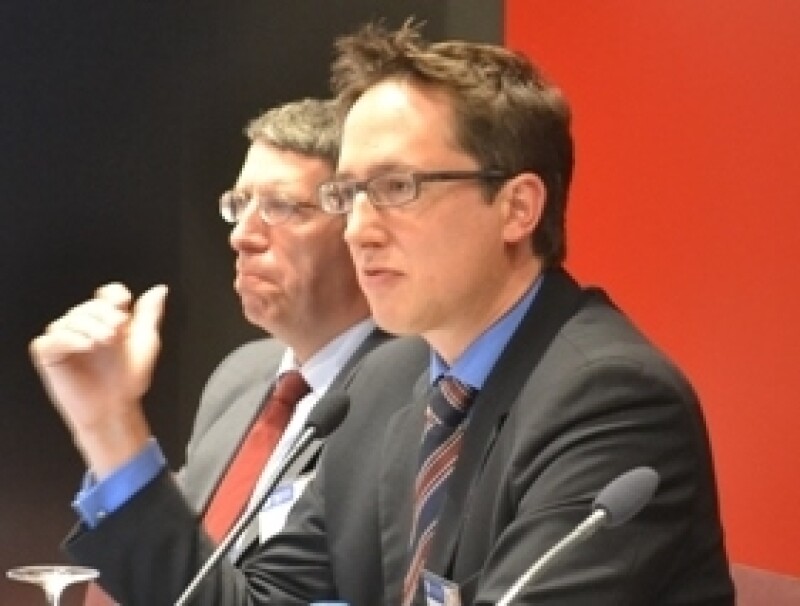
judge-buttner.jpg

At our Forum in Munich in September 2013, for example, German judge Tilmann Buttner of the Regional Court of Düsseldorf  (pictured) explained to the audience which cases he might bifurcate if he were a UPC judge.

A year later at our Forum in Paris, Buttner said that over the past 12 months he had revised his thinking and was now less inclined to bifurcate.

“Last year I talked about some cases being “bifurcation cases” and others not. I would rather not bifurcate. [UPC] courts are in a good position to render good and reasonable decisions on revocation as well as infringement because they will have a technical judge.”

“My message is that we may not bifurcate. But even if we do, it’s not all bad. The courts are likely to hand down a conditional decision that is subject to the revocation decision.”

But there is also a sense that lawyers are becoming more adept at developing new strategies to deal with new patent litigation rules.

Speaking about the two-year-old US Patent Trial and Appeal Board, Charles Larsen of Ropes & Gray told the audience: “We Americans used to fear bifurcation. Now we’re doing it”.

You can read more about the popularity of the PTAB’s procedures for parties seeking to invalidate a patent in the latest issue of Managing IP.

more from across site and SHARED ros bottom lb

More from across our site

Despite a broader slowdown in US IP partner hiring in 2025, litigation demand drove aggressive lateral expansion at select firms
Winston Taylor is expected to launch in May 2026 with more than 1,400 lawyers across the US, UK, Europe, Latin America and the Middle East
News of White & Case asking its London staff to work from the office four days a week and a loss for Canva at the Delhi High Court were also among the top talking points
With boutiques offering an attractive alternative to larger firms, former Gilbert’s partner Nisha Anand says her new firm will be built on tech-smart practitioners, flexible fees, and specialised expertise
IP specialists Jonathan Moss and Jessie Bowhill, who worked on cases concerning bitcoin, Ed Sheeran, and the Getty v Stability AI dispute, received the KC nod
Hannah Brown, an active AIPPI member, argues that DEI commitments must be backed up with actions, not just words
A ruling in the Kodak v Fujifilm dispute and a win for Google were among the major recent developments
Nick Aries and Elizabeth Louca at Bird & Bird unpick the legal questions raised by a very public social media spat concerning the ‘Brooklyn Beckham’ trademark
Michael Conway, who joined Birketts after nearly two decades at an IP boutique, says he was intrigued by the challenge of joining a general practice firm
The private-equity-backed firm said hires from DLA Piper and Eversheds Sutherland will help it become the IP partner of choice for innovative businesses
Gift this article
