

In 2003, when we first compiled a list of the most influential people in IP, the list included “politicians, judges, industry leaders, regulators, authors and campaigners”. It was dominated by important people, such as heads of IP offices, members of Congress and business executives.
In the decade since, the nature of influence has changed: today, a smart blogger, a passionate campaigner or an entrepreneur is as likely to shape the development of the law and business of IP.
This year’s top 50 list reflects that change. Ten of the 50 are included on the basis of their activity in social media – a concept that did not even exist in 2003. Another 10 are “advocates” – academics and policy-shapers influencing issues such as plain packaging, IP enforcement and internet governance.
The remaining 30 comprise the legal eagles (judges and legislators), policy makers (heads of IP offices) and business leaders. The people included span the full range of IP issues and perspectives, and come from all regions of the world.
Having said that, we recognise that certain areas are under-represented in the MIP 50. In particular, there are too few representatives from Latin America and Africa. To remedy that, we invite readers to suggest who they think should have been included and why. After all (and as our 50th inclusion indicates) in the new world of informal influence, everyone – without exception – has the opportunity to influence the development of IP law and policy.
Find out more about the MIP 50 (free access).
Read the top 10 lists of social media, legal, policy, business and advocacy figures (subscription or free trial required)
Join the debate on twitter (#MIP50) and LinkedIn.
Case study: Caterpillar
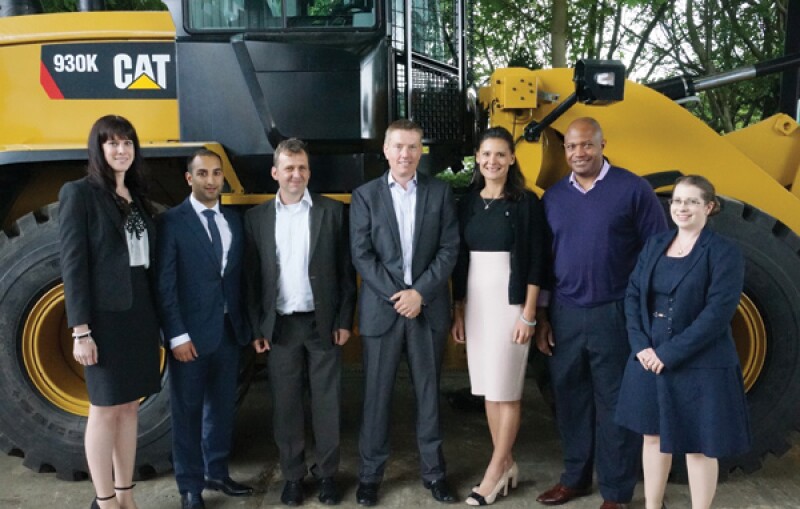
Among the other articles in this month’s issue (all of which are of course available online to subscribers):
A profile of Caterpillar’s European team by Managing IP’s magazine editor Simon Crompton
IP Clinic: three perspectives on “My company is rebranding. What are the priorities from an IP point-of-view?”
FRAND – analysis of the recent AIPPI report, including an interview with BlackBerry’s Michael Fröhlich
How to protect well-known marks in Russia – with case studies and statistics
Effective strategies for fee motions after Octane

China’s developing approach to Swiss-style claims
Understanding open source software
Trade mark damages in Europe – a guide
Latest trends in Bolar exemption rules in Europe
International briefings
The international briefings section in Managing IP is sponsored by the firms listed for each jurisdiction/region. All articles are free access. For more information, contact the authors/firms listed.
Argentina: Supreme Court considers search engine liability
Australia: Injunction granted to block second medical use
Austria: Descriptive use of a trade mark
Belgium: Google may forget what you did last summer
China patents: Excessive pricing and standard-essential patents
China trade marks: New measures to address online counterfeiting
EPO: An independent patent court at the EPO?
Europe: Black and white no longer covers all
Germany: CJEU addresses inactivity of trade mark owners
Greece: Court rules on abuse of process in trademark matters
India: Supreme Court rules on multiple patent revocation proceedings
Indonesia: Provisional decision on IP case
Japan: IP High Court confirms validity of essential patent for blue LED
Malaysia: Trade mark delimitation agreements and competition law
Mexico: Swiss-type and purpose-limited product claims
Netherlands: Failure to pay fee appreciated, patent right restored
New Zealand: Generic computer implementation not a cure for software patentability
Philippines: First-to-file rule clarified
Russia: Bulls clash without loss for either
Singapore: IP financing scheme launched
Switzerland: Venus rejected by Federal Administrative Court
Taiwan: IP Court rules on employees’ inventions
US Patents: Test for indefiniteness remains indefinite after Nautilus v Biosig
US Trade marks: Seventh Circuit rules on trade mark abandonment





