
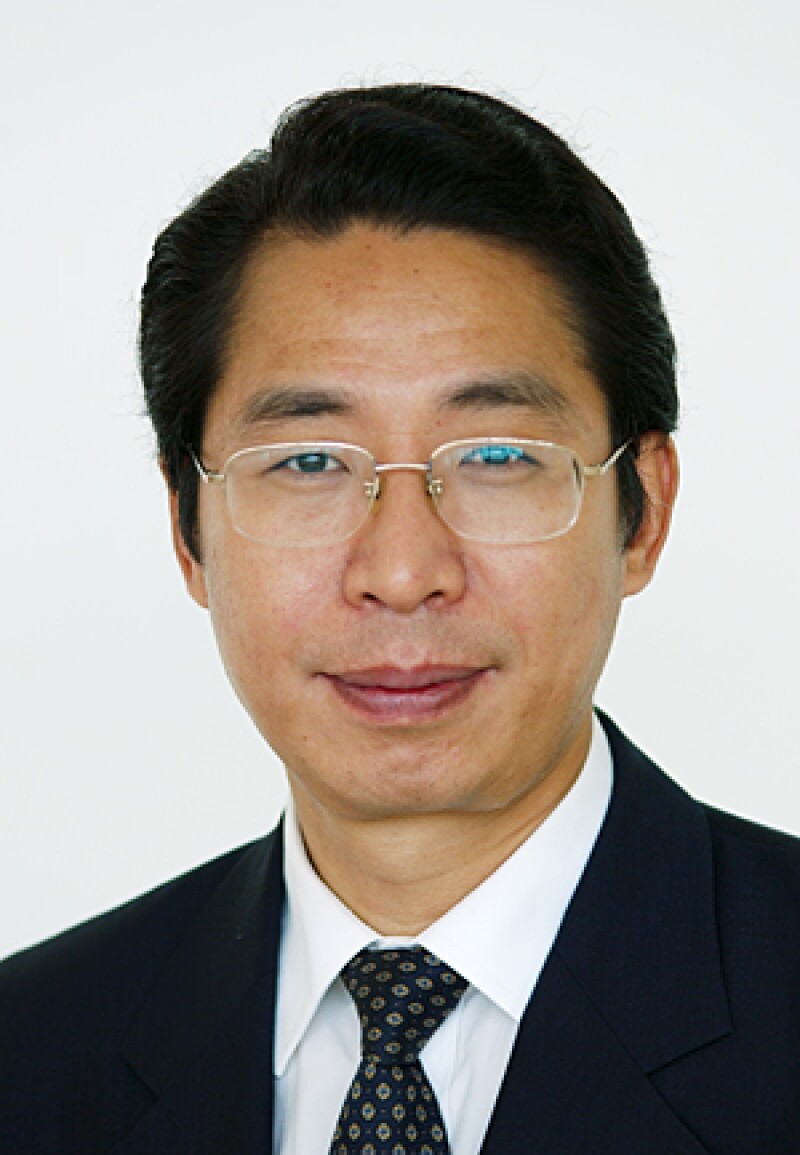
Last week, SIPO announced that Shen Changyu, previously the president of the Dalian University of Technology, has been picked to take the helm. There had been much speculation about who would replace Tian Lipu, who faced mandatory retirement after turning 60 in October. The fact that the leadership transition happened smoothly with no real gap (he continued in the role until December) is likely a relief to patent filers in China and stands in contrast to the USPTO, where the director role has been empty for over a year, though Teresa Stanek Rea was well-regarded in the role of acting director.
|
Shen Changyu |
That said, Shen’s appointment came as somewhat of a surprise to several observers. Tian had spent much of his career at SIPO, starting in 1981 and having including deputy director general of electrical invention examination department and head of the Patent Reexamination Board. Last year, some expected that deputy commissioner He Hua would succeed him, in part because He is also an old SIPO hand dating back to the 1980s. Similarly, Tian’s predecessor Wang Jingchuan had served as the deputy commissioner before ascending to the top role.
Shen’s background is much different. He is a scientist with a specialisation in plastics and has spent considerable time in academia, serving as a professor and then in administrative roles including president at both Zhengzhou University and Dalian University of Technology, and was a delegate at the 18th National Congress. Interestingly, he is credited in leading a team that developed plastics technology in helmets used by Chinese astronauts.
What this difference means is unclear. There is thus far little indication that he has experience with patent practice or innovation policy, leading at least one practitioner to ask if he will be addressing more difficult issues facing SIPO such as patent quality concerns.
“While Shen appears to be a well-respected scientist and a seasoned academic, with academic administrative experience, his background does not hint at extensive dealings with patents, patent practice or patent policy with respect to development,” he says. Without this experience, he wonders whether Shen will be confronting some of the bigger challenges facing SIPO.
However, Shen’s background may also have some advantages, For example, Haifeng Huang of Jones Day points out that while Shen may have to get acclimated to this new area, his experience as a practising scientist may allow him to bring a user’s perspective to the role.
Indeed, given the complexity of the patent system and its effect on the marketplace, it is perhaps fair to ask whether there is any particular background that would adequately prepare someone for such a demanding role. Some of the most important contributions to discussions about IP have come not just from lawyers and government officials, but from economists, business executives and scientists bringing their own unique perspectives. As Huang notes, Shen’s experience as a scientist may provide valuable insights about how inventors interact with the patent system.
Perhaps more interestingly, does Shen’s non-SIPO background indicate a change in the government’s approach to IP? Businesses bringing in outside leadership often do so as a catalyst for more drastic change, so Shen’s appointment may be a sign of bigger shifts to come. Given that the National IP strategy appears to be moving onto its next phase, the thought may be that this is an opportune time to bring some new ideas into the organisation.
What do you think? Does Shen’s status as a SIPO outsider mean a change of direction for the office?





