
Over the past few years, the Chinese and Hong Kong governments have touted progress in fighting counterfeits, and many agree that there has been improvement. In Hong Kong, the general belief is that counterfeit goods are no longer available in physical stores, though may still be found in some street markets. in China, the 2011 US Trade Representative’s Section 301 Report highlighted Taobao, the largest online marketplace in the country, as an example to follow for its anti-counterfeiting measures.
A new marketplace
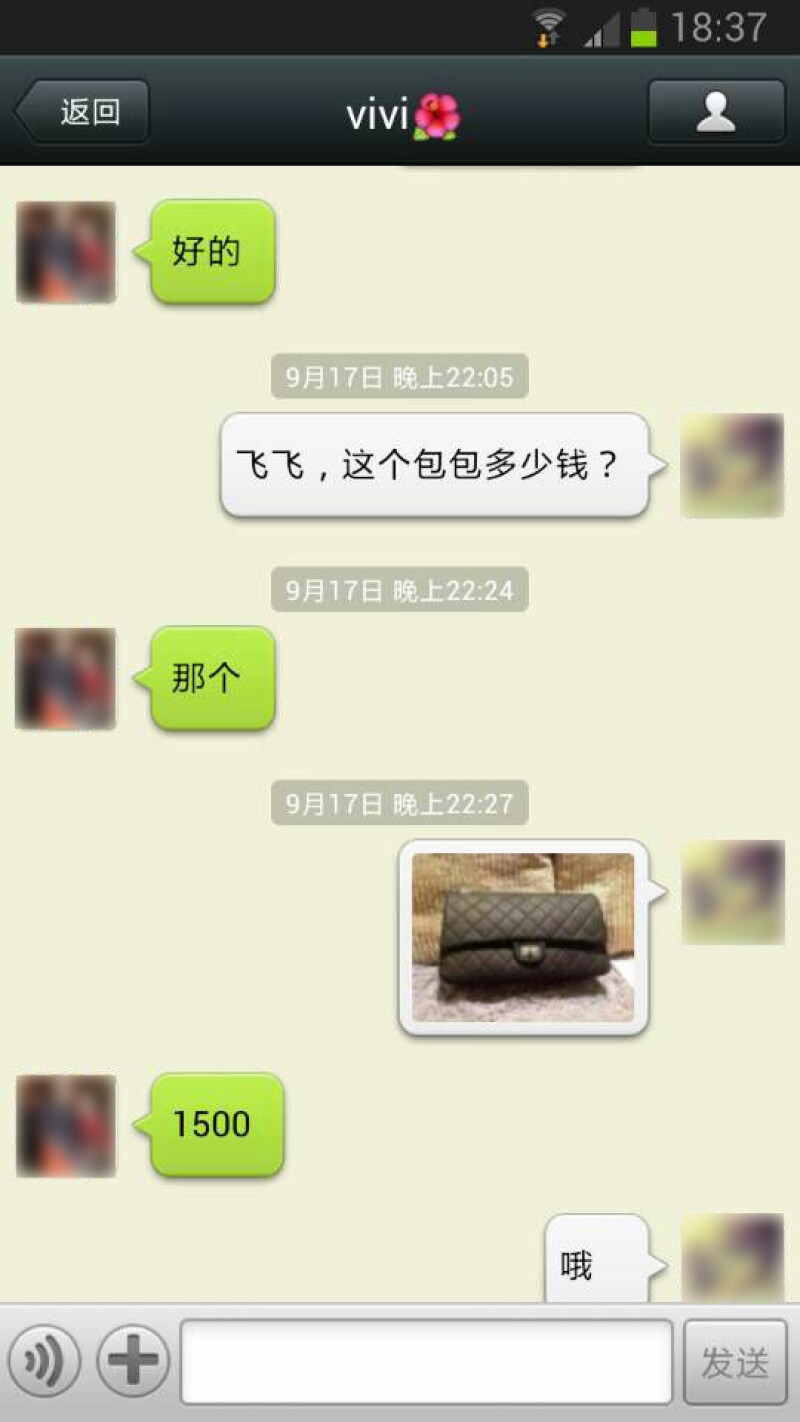
But not surprisingly, counterfeiters have found other ways to peddle their wares. In Hong Kong and southern China, sellers are now reaching out through word of mouth. Interested customers get a phone number, and they communicate directly through the instant message service WhatsApp or the similar Chinese program WeChat. Customers can ask to see photographs and haggle via text messages and delivery is arranged.
One Hong Kong-based customer, who we will call Wilma, spoke to Managing IP about her experiences buying from one such vendor. Wilma says that a friend had purchased a bag from the same counterfeiter and passed along the contact information. Using WeChat, the seller, who goes by the name Vivi, provided a list of her stock along with pictures. Interestingly, Vivi had different tiers for fakes of the same product; the customer gets to choose the quality of the fake, with the most expensive version supposedly indistinguishable from the genuine article.
|
WeChat shopping: HK$1,500 ($194) seems pricey for a fake |
After Wilma picked out a bag, she made arrangements to pick up the product. Vivi agreed to meet near Wilma’s home, something that is logistically feasible given Hong Kong’s size but perhaps less practical in sprawling cities such as Beijing.
Wilma says that she was quite satisfied with the purchase and reached out again soon after to buy a higher-quality fake. Wilma and Vivi again arranged the purchase via WeChat then agreed to meet up. This time, however, Vivi said that she did not have the product in Hong Kong, and it would have to be shipped from China. The meet up, therefore, was for payment.
Wilma received the purse about a week later in a parcel, but whereas she was happy with her first purchase, this new purchase was of noticeably poorer quality, even though this was supposed to be a higher-quality imitation.
She complained to Vivi but, not surprisingly, no refund was forthcoming.
Know your consumer
Rights holders are aware that enforcement actions are just one tool to fight counterfeits, and that addressing demand is just as important. That’s why a recent report from the European Chamber of Commerce in Hong Kong on counterfeits had some good news for brand owners; it found that more than half of Hong Kong consumers say that the social stigma and negative self-image from owning a fake would be enough to stop them from buying one. If China, with its seemingly insatiable demand for luxury goods, is similar, then this may be a sign that brand owners are making progress in their fight against fakes.
Obviously, not all consumers are the same. Perhaps Wilma’s attempts to buy a higher-quality fake indicates that she may be worried about the social stigma of carrying a counterfeit. Reaching these consumers may be more of a challenge, though perhaps appealing to their desire for high quality may work: no matter what a vendor may say, brand owners need to show that no fake can match the quality of the real thing.
In the end, despite her desire for a fake bag, Wilma did her small part for brand owners’ rights. After Vivi refused to give her a refund, she filed a report with Hong Kong Customs.




