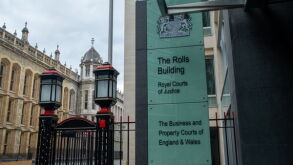
The panel on Brexit yesterday could not have been more timely: as demonstrators gathered in front of the nearby UK Supreme Court to protest against the temporary suspension of Parliament, the speakers in the QEII Centre kicked off a discussion on how Brexit will affect IP.
Adam Williams, director of international policy at the UKIPO, began the session by telling audience members that his office has been working diligently to ensure a smooth transition for Brexit.
Williams went on to explain that Parliament has only granted his office permission to fix any gaps in legislation and not to tinker with policy changes.
The panellists said patents will be the area of IP least affected by Brexit because of pre-existing international harmonisation.
“Our real focus is trademarks and designs,” Williams said. “After leaving the EU, coverage of these rights will no longer extend to the UK. In the event of no-deal we are committed to giving owners rights similar to the EU rights they had before. Similar arrangements are being made as part of the withdrawal agreement.”
One area of concern for patent owners in the event of a no-deal Brexit is supplementary protection certificates (SPCs).
Williams said: “We recognise that while not many are issued, we know how valuable they are to pharmaceutical companies. In the event of a no-deal we will maintain a functioning SPC regime along the lines of the current system with the same rules and same timing periods and rights for those certificates.”
Ewan Nettleton, senior patent counsel for oncology at Novartis in Switzerland, said he was very pleased with all the provisions made by the UKIPO in preparation for Brexit. As SPCs are of particular importance to his industry, he emphasised that many of the same rights will be extended after Brexit.
“For us at Novartis, thanks to Adam’s diligent work, I am here to say we feel less uncomfortable. It appears that IP is one of the least affected areas by Brexit,” he said.
The Unified Patent Court (UPC) was discussed as a potential Brexit-related concern. With the UPC’s fate lingering in Germany’s Constitutional Court, audience members speculated on how the timing of the court’s decision might be affected by Brexit.
Responding to an audience member’s concern, Williams said any conversation about whether or not the UK – which has ratified the UPC Agreement – would be part of an operational UPC would depend on when Germany issues a decision.
“In a perfect world you will like us to have the discussion while we are in the EU; logically that is a more pleasant environment. If we exit in October … the conversation is in a more different atmosphere. We are sure of the benefits of the UK to be part of the UPC. My experience says if there is a political will you will find a legal solution.”
Nettleton added that from an industry perspective the UPC would be much stronger with UK involvement.
“It was a surprise to me that I heard the UK would still want to participate in the UPC after Brexit. But then again, after Brexit, nothing can surprise you,” he said.
The Congress finishes today.
Image credit: Simon Callaghan Photography