Three letters on everyone’s lips
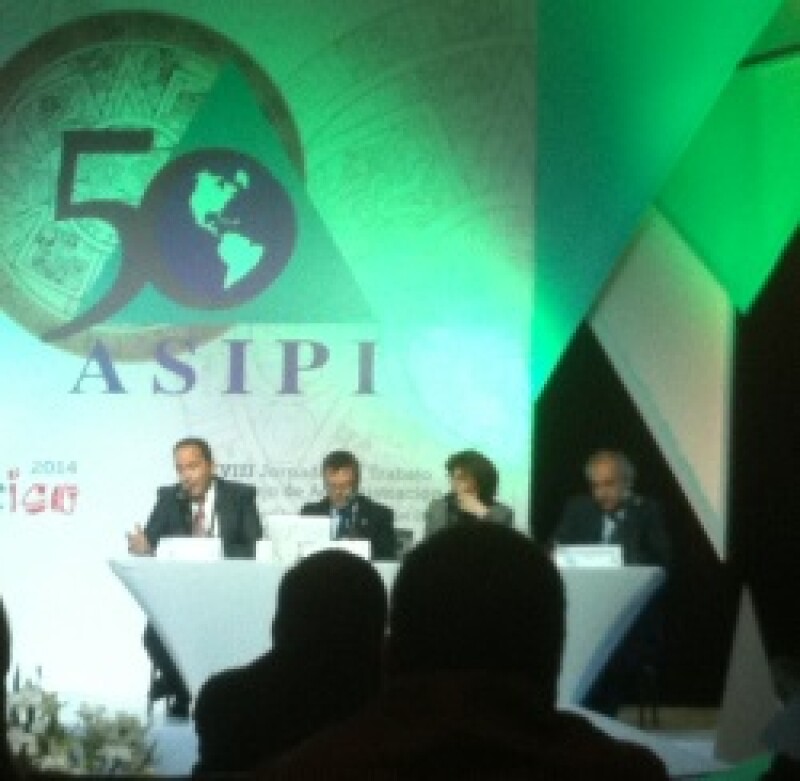
The first hour of today’s academic programme was spent discussing “the topic we cannot speak about” as Maximiliano Santa Cruz of Chile’s INAPI put it. The panellists either did not know, or could not reveal, details of the TPP talks or the latest draft of the treaty. But, as AIPLA President Sharon Israel of Mayer Brown said, it is a “high priority” for the Obama Administration and “the end [of negotiations] may be in sight”.
The 12 participating countries include Canada, Chile, Mexico, Peru and the United States and, as moderator Alfredo Montener of Sargent & Krahn said, once signed the TPP will “have a definite impact throughout the region”.
The IP chapter is thought to be one of the longer, more complex and more controversial ones, and is expected to cover issues as diverse as the Madrid Protocol, regulatory data protection, plant patents and cable broadcasting. Despite the concerns that many people have, Miguel Angel Márgain of Mexico’s IMPI predicted it would strengthen signatory states, harmonise protection and boost investment. “IP is not a hurdle,” he said.
new-item-2.jpeg Protecting cultural heritage
Lively and well-illustrated presentations from Doris Long of the John Marshall Law School and Ray Meloni of Peru’s INDECOPI highlighted the value and questions that arise over traditional knowledge and cultural expressions. Long provided some interesting examples from the US and Canada, and called for greater harmonisation of protection globally.
Meloni mentioned the important economic role that handicrafts play in Peru, where SMEs account for 80% of GDP, and 73% of “craftsmen” are in fact women. “IP adds value and helps to improve the quality of life,” he said, but added that existing rights such as trade marks and collective marks are too expensive and complicated for many people. Good news is coming though: INDECOPI will now register trade marks within two months if there is no opposition, and is planning to launch an electronic gazette.
new-item3.jpg Trade mark tricks
A strong clearance system; enforcing and preserving rights; consistency (see picture) and creating brand awareness: these are the four steps to building a strong brand, according to Sergio Barragán of Pepsico, one of three industry speakers on a panel looking at successful trade marks today. Trade mark counsel have a vital role to play in all four aspects, he added.
Philippe Claude of Nestlé provided a complementary perspective, explaining the revival and revitalisation of the Skinny Cow brand in the United States, while Caito Maia of Chilli Beans gave a presentation featuring Barbie, tattoos, rock music, TV reality shows, naked models and Lenny Kravitz (you needed to be there). If you don’t know the company he founded, which primarily makes sunglasses, you soon will: it is already the market leader in Brazil, with a 22% market share, and plans to have 1,200 stores worldwide within a few years.
Making your voice heard in court
Speaking yesterday, Arturo Jose Ancona of Mexico’s Attorney General’s office mentioned that Mexico is following other countries in the region by moving to a more inquisitorial court system. Anecdotal evidence from Mexican practitioners confirms that oral hearings are becoming more common in IP litigation, which has historically been more paper-based. We hope to bring more news on how this trend is developing, at what it means for parties in IP disputes, soon.
new-80s.jpeg Back to the future
Last night’s reception, held at the Indianilla Station, had an 1980s theme, though it must be said that some attendees seemed to have a better memory of music and fashion from that decade than others.
As you might expect, with free-flowing tequila and a large, lively band, the networking and dancing went on well into the night (4 am, according to some reports).
The event was hosted by a number of Mexican law firms, and it was striking to see the logos of rival firms all displayed alongside each other at the venue. After last night’s truce, expect professional competition for clients and cases to resume today.