Plavix case settled before Supreme Court of Canada hearing

Managing IP is part of Legal Benchmarking Limited, 1-2 Paris Gardens, London, SE1 8ND

Copyright © Legal Benchmarking Limited and its affiliated companies 2026

Accessibility | Terms of Use | Privacy Policy | Modern Slavery Statement

Plavix case settled before Supreme Court of Canada hearing

A case that was expected to provide guidance on Canada's "promise" doctrine of utility and the test for sound prediction of utility has been settled a day before it was due to be argued at a Supreme Court hearing

plavix.jpg

On November 3, Apotex discontinued its appeal to the Supreme Court of Canada regarding the validity of Sanofi-Aventis' patent claiming clopidogrel bisulfate, which is marketed as Plavix. As a result, the Supreme Court hearing scheduled for November 4 has been cancelled.

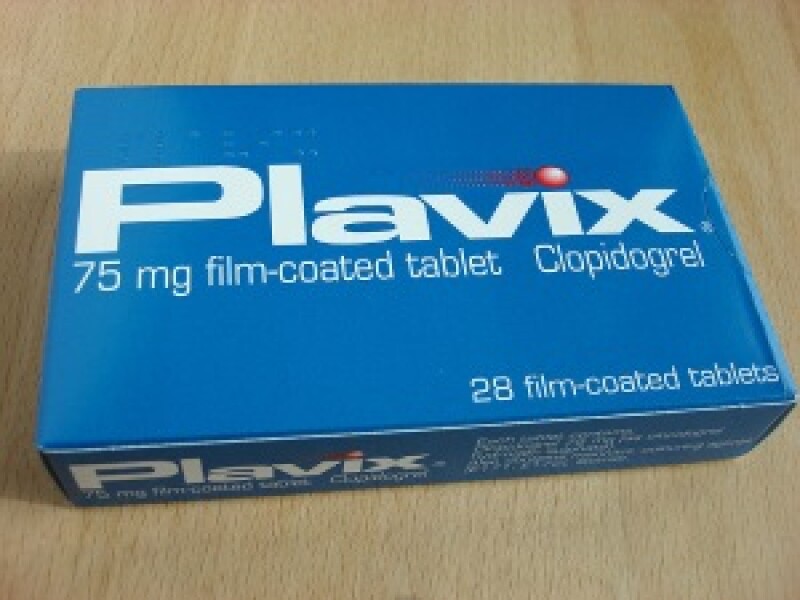
Plavix is used to prevent blood clots after a heart attack or stroke.

Observers were hoping the case would provide some certainty around the scope of the utility requirement. In an amicus brief in the case, AIPPI noted that following the Supreme Court of Canada’s decisions in AZT in 2002 and Viagra in 2012 “there has been uncertainty with respect to the precise scope of the utility requirement under Canadian law and in particular the extent to which the utility of a patented invention should be disclosed or supported in the patent specification.”

In AZT, the Court stated that utility must either be demonstrated or be a sound prediction based on information and expertise available at the filing date. In Viagra, the Court declined to decide the scope of any disclosure requirement associated with “sound prediction”. The brief stated that this “remains an open question in the jurisprudence of this Court, and an area of significant uncertainty in Canadian law”.

Other organisations that filed briefs in the case include BIOTECanada, Canada’s Research-Based Pharmaceutical Companies, the Centre for Intellectual Property Policy, the Canadian Generic Pharmaceutical Association and FICPI.

more from across site and SHARED ros bottom lb

More from across our site

News of Dolby suing Snap over AV1 and HEVC patents and SCOTUS offering guidance on the liability of internet service providers were also among the top talking points
Arrival of Caitlin Heard will bolster the soon-to-be-created Ashurst Perkins Coie’s IP presence in the capital
AI, cybersecurity and data practice group will provide clients with legal guidance around AI alongside a 'deep technical foundation’ in IP
Lawyers at Vondst and Biopatents say a ruling concerning the protected status of trade secrets could see the UPC flooded with requests to prevent access to confidential information
Sharad Vadehra of Kan & Krishme discusses why older IP firms still have an edge over up-and-coming boutiques and how the firm is using AI to provide quick and cost-effective service
Lawyers at Appleyard Lees share how they picked apart a plant breeder’s infringement claims concerning the ‘Tango’ mandarin
A further decision on long-arm status, and a new hire for Pentarc in Germany from Taylor Wessing were also among top developments
The US decision marks a rare grant of a request under the Uniform Fraudulent Transfer Act in a patent case
Stobbs has applied to strike out a contempt of court application filed against the firm and two of its lawyers
With trademark volumes surging, trademark teams need to think beyond traditional clearance searches, towards a continuous, intelligence-led workflow, says Meghan Medeiros of Corsearch
Gift this article
