
The UK scored 657 points (out of a possible 1000) based on a combination of 14,000 assessments from IP owners and users and 74 instrumental factors (which include data such as the number of filings, volume of cases and judges’ salaries). It came top of the 36 countries covered.
European countries scored particularly well in the Index, with Germany ranking second with 656 points, the Netherlands third with 655 and Sweden fourth with 653.
Sweden was one of 12 countries added to the Index this year. Others included Argentina, Indonesia, Saudi Arabia, Switzerland and Ukraine.
At the bottom of the table was India, with 565 points, just behind China (567) and Indonesia (572).
India scored poorly in all areas covered by the Index except for data protection, where it ranked first. The rankings for data protection were almost the reverse of the general rankings: Germany ranked 35th and Singapore, which has recently introduced new data protection regulations, fell 13 places to 36th.
Vinod Bange of Taylor Wessing said the data protection figures showed that individual data protection rules introduced by advanced countries are not popular with business: “The concern is what you might face from regulators.”
Overall, compared to the previous GIPI published in 2011, the range of scores between the highest and lowest ranking countries has narrowed, with the bottom countries scoring higher and the top ones remaining stable or declining slightly. Taylor Wessing partner Roland Mallinson, who coordinated the Index, said this is a welcome development: “It suggests there is some harmonisation and also perhaps that expectations have risen around the world.”
The Index covers trade marks, patents, copyright, designs and data protection and each right is assessed regarding obtaining, exploiting, enforcing and attacking it.
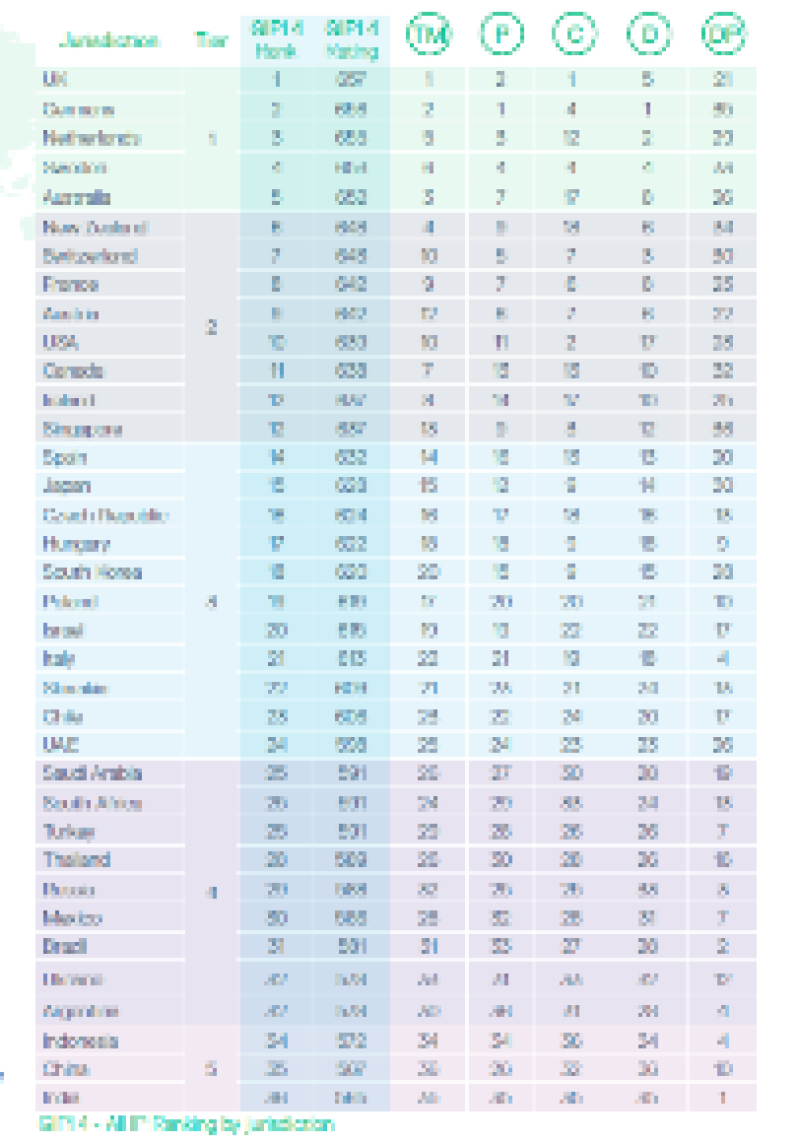
The biggest riser this year was New Zealand (up five places). Notable fallers were Mexico (down 16), Russia (down 10), the United States and Canada (both down six). (Note that the rankings are influenced by the addition of 12 countries.)
The US and Canada were both notably down in the patent ranking, which may be due to concerns about the implementation of the America Invents Act, the cost of litigation, patent trolls and some negative court decisions.
Respondents to the GIPI survey were also asked some general questions about their practice.
60% of them said the time their organisation spends dealing with IP has increased slightly or greatly, compared to 35% who said it had remained the same and just 5% who said it had decreased.
However, less than half (46%) of respondents said they were incurring greater costs, compared to 32% who said about the same and 19% slightly less, suggesting work is being done more efficiently.
68% of respondents considered that IP laws were not sufficiently developed to keep up with current technology, or were a hindrance to technology developments and business need. This is an increase on the last Index in 2011.
Read more, and view the interactive maps, at the GIPI4 microsite.
You can rate jurisdictions with which you are familiar at any time on the website of the Z/Yen group, which administers the research.


